

Media Buying Across Multiple Platforms
Media buying is the negotiation, purchase, trafficking, monitoring, and optimization of advertising inventory. A media plan defines the audience, channel roles, budget, creative, timing, and measurement.

Media buying is the negotiation, purchase, trafficking, monitoring, and optimization of advertising inventory. A multi-platform buy should give each channel a defined job, use consistent audience and measurement rules, and account for overlap between systems.
A list of search, social, CTV, linear television, display, audio, and outdoor placements is not yet a media strategy. The plan needs to explain what each channel contributes, how the creative fits, where the same audience may be reached twice, and which evidence can change the allocation.
Media planning versus media buying
Media planning comes first. It defines the business goal, audience, geography, channel roles, budget, flight, creative requirements, and measurement design. Media buying executes the plan through inventory selection, negotiation or auction participation, trafficking, quality assurance, pacing, and optimization.
| Planning question | Buying responsibility |
|---|---|
| Whom should the campaign reach? | Apply eligible targeting, exclusions, and geography |
| What job does each channel have? | Select inventory and buying method suited to that job |
| What message and format are required? | Map approved creative to specifications and placements |
| How much and when? | Set budgets, bids, schedules, pacing, and deal terms |
| How will success be judged? | Implement tracking, naming, reporting, and decision rules |
Types of media buying
| Approach | Useful when | Main tradeoff to inspect |
|---|---|---|
| Direct publisher or media-owner buy | Premium context, sponsorship, negotiated placement, or guaranteed delivery matters | Less flexible optimization and more manual coordination |
| Platform-managed auction | Search, social, retail media, or other platform inventory needs fast activation and native optimization | Reporting and identity remain inside the platform’s rules |
| Programmatic open auction | Scaled access and real-time bidding are useful | Supply-path, fee, quality, and transparency complexity |
| Private marketplace or programmatic guaranteed | Selected publisher access and defined deal terms matter | Deal availability, minimums, and delivery constraints |
An ad network aggregates inventory from multiple publishers. A buying platform may connect to networks, exchanges, publishers, or direct integrations. Ask what inventory path a proposal actually uses instead of treating the labels as interchangeable.
The media buying process
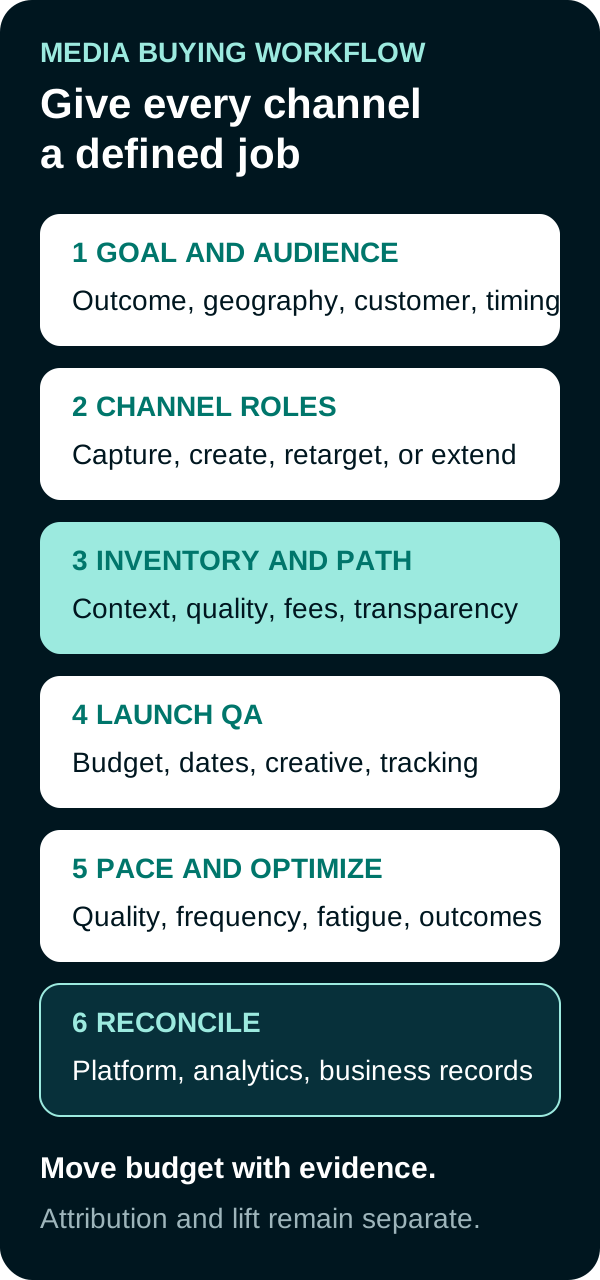
- Define the business decision. Specify the outcome, geography, customer, timing, and evidence that would justify continuing, changing, or stopping spend.
- Assign channel roles. Search may capture active demand, social may create or retarget interest, CTV may add large-screen reach, and outdoor may build physical-market presence. These are possible roles, not fixed rules.
- Estimate reachable audience and cost. Use platform forecasts, historical delivery, publisher proposals, and market constraints with their assumptions visible.
- Select inventory and buying paths. Compare context, audience fit, reach, frequency controls, fees, brand-safety controls, supply transparency, and reporting.
- Prepare creative and tracking. Match each asset to specifications, establish naming, apply approved URLs and parameters, and test conversion events.
- Launch with quality assurance. Confirm dates, geography, budgets, bids, exclusions, placements, creative, landing pages, and reporting before meaningful spend accrues.
- Pace and optimize. Review spend against plan, audience and inventory quality, search terms or placements, reach and frequency, creative fatigue, conversion quality, and documented decision changes.
- Reconcile the result. Compare platform reports with analytics, CRM, commerce, call, or other business records while preserving differences in attribution rules.
How to divide budget across channels
There is no universal percentage for search, social, CTV, or any other channel. Start with the job each channel must do and the size of the opportunity it can address.
Use these inputs:
- Audience and geography: How many qualified people or households can the channel reach in the target market?
- Demand state: Is the channel capturing active demand, creating awareness, or reconnecting with an eligible audience?
- Inventory economics: What are the expected costs, fees, minimums, and quality constraints?
- Creative readiness: Does the campaign have the formats and message variation required for the channel?
- Frequency and overlap: How much repetition will occur within and across platforms?
- Measurement: Which outcomes are observable, attributed, modeled, or suitable for an incrementality test?
- Marginal return: Does the next dollar still add qualified reach or outcomes, or mainly repeat delivery already purchased?
Budget movement should follow a written reason. Examples include exhausted qualified search demand, increasing audience saturation, poor inventory quality, a creative constraint, or stronger business outcomes at a comparable measurement standard.
Managing overlap and frequency
Each platform may report reach as if it operates alone. The same person or household can receive ads on multiple platforms, and simple addition overstates total reach.
- Use consistent geography, date ranges, and audience definitions.
- Apply first-party exclusions and consent rules where eligible.
- Plan frequency within each platform and assess overlap across channels where the measurement method supports it.
- Rotate creative for message coverage, not only visual variety.
- Treat modeled deduplication as modeled, and document the identity assumptions.
Linear TV and connected TV illustrate the overlap problem clearly: each can add television reach, but household identity and reporting methods differ.
Measurement for a multi-platform buy
Create a shared measurement spine before launch:
- One campaign naming convention and creative identifier structure.
- One set of business outcomes and conversion definitions.
- Platform-specific delivery metrics retained in context.
- Spend and outcome reconciliation against business records.
- Attribution windows and credit rules labeled by source.
- Incrementality tests for causal questions when scale and design allow.
Platform attribution is useful for optimization inside a system, but platform-reported conversions should not be added together without checking overlap and credit rules. First-party data can improve audience and outcome reconciliation when collection, consent, and matching are appropriate.
Anderson Collaborative’s approach: We assign every channel a job and define the evidence that can change its budget. That prevents each platform from declaring success with a different denominator while the combined plan duplicates reach or conversion credit.
Anderson Collaborative’s paid media capabilities cover cross-channel planning, buying, creative coordination, optimization, and reporting.
Current market context
The IAB and PwC Internet Advertising Revenue Report reported $162.4 billion in US programmatic advertising revenue for 2025. That figure describes market scale. It does not determine whether programmatic buying is the right path for a specific audience, inventory need, or campaign.
FAQs
What is media buying?
Media buying is the negotiation, purchase, trafficking, monitoring, and optimization of advertising inventory. It follows a media plan that defines the audience, channel roles, budget, creative, timing, and measurement.
What is the difference between media planning and media buying?
Media planning decides whom to reach, why, where, when, and how results will be judged. Media buying activates that plan through direct deals, platform auctions, programmatic systems, or other inventory arrangements.
How should budget be divided across media platforms?
Assign budget according to each channel’s job, reachable audience, inventory cost and quality, creative needs, measurement confidence, and marginal performance. There is no universal channel percentage.
How do you measure a multi-platform media buy?
Use shared naming and business outcomes, then retain channel-specific delivery metrics. Reconcile spend and conversions, identify audience overlap where measurement supports it, and separate attributed results from incremental lift.
Sources
- IAB and PwC, Internet Advertising Revenue Report: Full Year 2025, published April 2026, accessed September 19, 2026.
PUT THIS KNOWLEDGE TO WORK
NEED MORE HELP?
Talk with our team about applying Media Buying to your marketing.
Get a free marketing audit call