

Actionable Metrics: Examples and a Planning Worksheet
An actionable metric is a number paired with a decision, owner, threshold, segment, cadence, action, and guardrail. See the worksheet and a worked example.
An actionable metric is a measured result paired with a decision, an owner, a threshold, a segment, a review cadence, a planned action, and a guardrail. The metric itself does not explain why a result changed.
A conversion rate, retention rate, or resolution time becomes useful only when someone can say what they will do if it moves, for which audience, and what they will not do while they investigate. Treat these numbers as one input to reporting and analysis, alongside audience evidence, creative performance, and business outcomes.
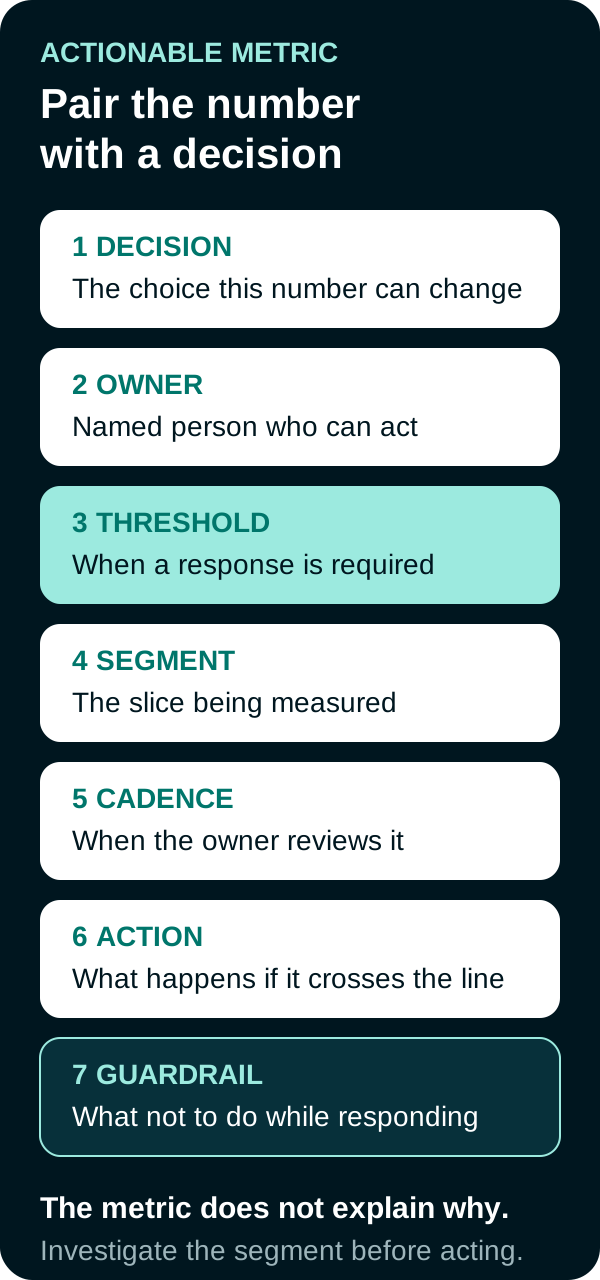
Planning diagram. The seven fields are a reporting contract, not a dashboard screenshot.
Why actionability is a contract, not a property of the number
Many scorecards imply that a “good” metric is automatically actionable. It is not. Actionability is the contract around the metric.
| Field | What it records |
|---|---|
| Decision | The choice the number is allowed to change |
| Owner | The named person who reviews and acts |
| Threshold | The level or change that requires a response |
| Segment | The channel, campaign, cohort, or issue type being measured |
| Cadence | How often the owner reviews it |
| Action | What the owner does when the threshold is crossed |
| Guardrail | The cost, quality, or policy limit that the response must not break |
If any field is blank, keep the number in a reference report. Do not put it on the weekly scorecard.
A movement still needs diagnosis. GA4 data thresholds can hide rows when a report is too sparse. Consent mode changes what Google tags store and what they model. Either condition can make a total look stable while the underlying collection changed.
Actionable metrics versus vanity metrics
Vanity metrics report attention or scale without a next step. Totals such as page views, downloads, or follower counts become useful only after they are tied to a segment, a decision, and a business outcome.
| Metric type | Example | Why it matters |
|---|---|---|
| Vanity | Total page views | Looks large, but does not name a response |
| Actionable | Conversion rate by channel against a named CPA guardrail | Shows which source to inspect before moving budget |
| Vanity | Raw follower count | Hides whether anyone takes a useful action |
| Actionable | Engagement rate by post format, with a test plan | Shows which format to keep testing |
A channel conversion rate is still not a cause. It tells the owner where to look. Click-through rate and conversion rate together can separate traffic quality from landing-page issues, which is diagnosis, not proof.
Compact worksheet
Copy this worksheet for each scorecard metric.
| Field | Record here |
|---|---|
| Metric and formula | |
| Decision | |
| Owner | |
| Threshold | |
| Segment | |
| Cadence | |
| Action if red | |
| Guardrail | |
| What this metric cannot explain |
Worked hypothetical example
Hypothetical weekly Search scorecard for a US ecommerce brand:
| Field | Recorded value |
|---|---|
| Metric and formula | Branded Search conversion rate = purchases / sessions from the branded campaign |
| Decision | Whether to change branded Search bids, query exclusions, or the landing page |
| Owner | Paid search lead |
| Threshold | Two consecutive weeks below 2.0%, or a week below 1.5% |
| Segment | US, branded Search campaign only; competitor and generic campaigns stay separate |
| Cadence | Monday, using Sunday-Saturday weeks in America/New_York |
| Action if red | Pull search terms, landing-page conversion rate, and product availability before changing bids |
| Guardrail | Do not raise bids if branded CPA is already above $28 |
| What this metric cannot explain | Why sessions converted. It does not separate stock-outs, price, creative, or attribution settings |
If branded conversion rate falls from 2.4% to 1.7% while competitor conversion rate is unchanged, the owner inspects branded query mix and the product page. The drop is a trigger, not an explanation.
Examples that can be made actionable
These common marketing numbers are actionable only after the worksheet is filled.
- Website conversion rate by landing page. Decision: which page to test. Guardrail: do not cut traffic until the sample and the offer are checked.
- Retention by signup week. Decision: whether onboarding copy or the first-week email sequence needs a test.
- Support resolution time by issue type. Decision: which queue gets staffing or a help-article fix.
- Email click-through rate by campaign. Decision: which newsletter format to keep. Guardrail: unsubscribe rate.
Customer feedback and surveys can supply the “why” that the metric does not. They still need an owner and a follow-up action.

Practical check
Write the decision before choosing the metric. Break the number down by segment before changing spend. Remove it from the weekly scorecard when the owner cannot name a response and a guardrail.
FAQs
What is an actionable measure?
An actionable measure is a metric paired with a decision, owner, threshold, segment, cadence, action, and guardrail. Movement in the number should trigger a defined response, not a search for a story after the fact.
What is the difference between actionable and vanity metrics?
A vanity metric reports scale or attention without a next step. An actionable metric names the slice, the decision, and the response if the number crosses a threshold.
What does actionable data mean?
Actionable data is complete enough for the owner to decide. Incomplete rows, mixed segments, or missing consent can make a precise-looking number unsafe to act on.
What is an actionable KPI?
An actionable KPI is a goal metric with an owner, a formula, a threshold, and a planned response. The KPI still does not explain why the result changed.
Sources
- Google Analytics, About data thresholds, accessed September 19, 2026. Used for report completeness limits, not as a definition of actionability.
- Google Analytics, Consent mode on websites and mobile apps, accessed September 19, 2026. Used for collection and modeling limits, not as a KPI framework.
PUT THIS KNOWLEDGE TO WORK
NEED MORE HELP?
Talk with our team about applying Actionable Metrics to your marketing.
Get a free marketing audit call