

Ad Network: Packaged Inventory, Fees, and Controls
An ad network connects advertisers to a pool of publisher sites and apps. It often sells a package, not a single impression. The useful test is whether you can see source, price, controls, and outcomes.
An ad network is an intermediary that aggregates publisher inventory and sells access to that pool. Publishers contribute sites, apps, or streams. Advertisers buy a campaign against that package. Some networks still sell remnant at a rate card. Some bid through the same pipes as ad exchanges. The label is less useful than the path in the insertion order.
Networks remain one way to buy banner ads and other units inside ad inventory plans. Paid media teams should treat the network as a supply path, not as a result.
Network, exchange, DSP, SSP
| Role | Typical job | What you are usually buying |
|---|---|---|
| Ad network | Packages or represents a publisher pool | Access to that pool, sometimes with targeting on top |
| Ad exchange | Matches eligible demand to a bid request | An impression-level opportunity, including deals |
| DSP | Advertiser or agency buying software | Decisioning, pacing, and bid submission |
| SSP | Publisher selling software | Offer, floor, and which demand may see the slot |
Those are tendencies. A network can run real-time bidding. An exchange can sell a guaranteed package. A platform can be DSP, SSP, and network under one brand. Read the contract in front of you.
How a packaged buy actually moves
- The publisher offers unsold or represented inventory to the network.
- The advertiser sets budget, creative, targeting, and brand rules.
- The network matches the campaign to eligible placements, or bids into those placements.
- Fees come out along that path. Your media cost is not always the publisher’s revenue.
- The user may see the ad, subject to viewability, consent, and quality filters.
If the network cannot name the site, app, or app bundle, you are buying a description, not a placement.
Buyer scorecard
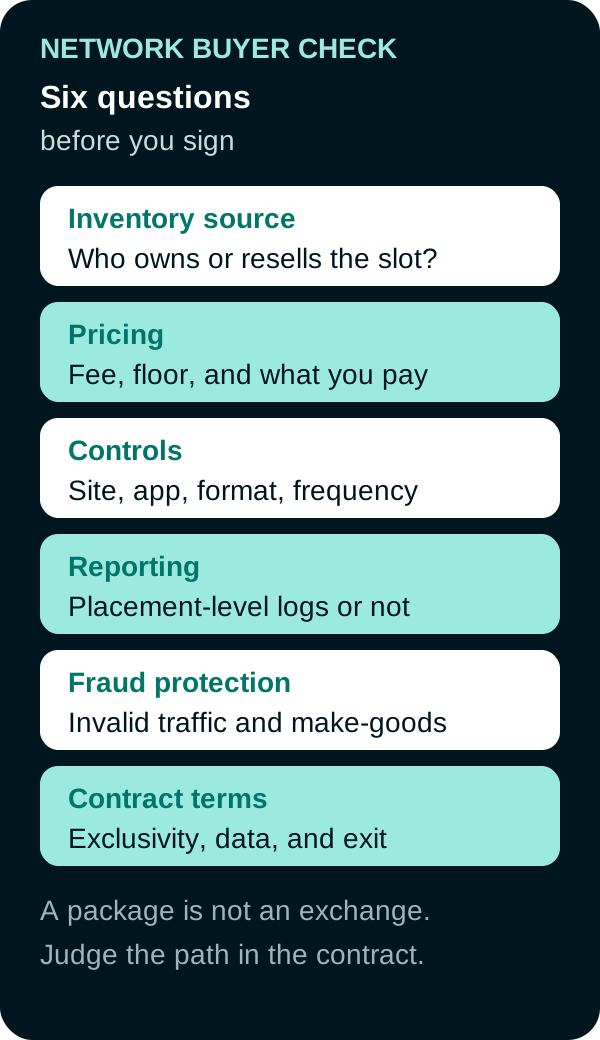
Score the path you will actually buy. A network average can hide a few strong sites and a long tail of waste.
| Check | Ask | Fail if |
|---|---|---|
| Inventory source | Direct, reseller, or mixed? Can you see ads.txt / app-ads.txt authorization where it applies? | The seller path is unknown, or it conflicts with available authorization files |
| Pricing | CPM, CPC, or outcome rate? Which fees sit on top of media? | You cannot reconstruct total cost |
| Controls | Site or app list, category blocks, frequency, format, geography | Brand and safety rules cannot be applied |
| Reporting | Placement-level impressions, clicks, and conversions you can export | Only blended network averages |
| Fraud protection | Invalid-traffic policy, verification partner, make-goods | No remedy when inventory is unusable |
| Contract terms | Data ownership, exclusivity, opt-out, audit rights, cancellation | You cannot leave or inspect the buy |
IAB Tech Lab’s ads.txt lets publishers list authorized sellers as DIRECT or RESELLER. sellers.json identifies who is selling or reselling. A missing or incomplete path is a reason to pause, not a reason to assume fraud.
Quality, fraud, and reporting
Low prices can reflect scale, format, audience, quality, or limited transparency. Price alone does not show whether the inventory is useful. Review:
- Domain or app mismatch against the IO.
- Injected ads, spoofed apps, and hidden slots.
- Consent signals when the campaign uses personal data.
- Duplicate offers of the same impression through several resellers.
Report outcomes at the grain you can act on: site, app, format, creative, and conversion. A network-wide ROAS figure can be true in the file and still hide the placements that produced it. Attributed conversions are not incrementality.

Video explainer
AppsFlyer published this video.
Video: AppsFlyer, What is an Ad Network? How to Choose the Right Ad Network.
Frequently Asked Questions
What is an ad network?
An ad network is an intermediary that aggregates publisher inventory and sells access to that pool. Some deals are packaged at a stated rate. Some now bid programmatically. The contract, not the label, decides what you are buying.
How is a network different from an exchange, DSP, or SSP?
A network typically packages supply. An exchange runs impression-level matching. Advertisers buy through a DSP. Publishers offer supply through an SSP. One company can play more than one of those roles.
When should an advertiser use an ad network?
Use a network when a packaged publisher pool, a format specialty, or a simpler insertion order beats building a full programmatic stack. Keep it only if placement reporting, fraud terms, and brand controls are good enough for the buy.
What should a buyer review before signing?
Inventory source, pricing and fees, placement controls, reporting grain, invalid-traffic handling, and contract terms. A cheap CPM with no site list is not a complete offer.
Sources
- IAB Tech Lab, ads.txt, last updated September 14, 2026, accessed September 20, 2026.
- IAB Tech Lab, sellers.json, accessed September 20, 2026.
- IAB Tech Lab, OpenRTB 2.6 specification, accessed September 20, 2026.
PUT THIS KNOWLEDGE TO WORK
NEED MORE HELP?
Talk with our team about applying Ad Network to your marketing.
Get a free marketing audit call