
Ad Copywriting: Frameworks, Examples, and Channel Limits
Ad copywriting is the work of writing a paid advertisement so a defined audience takes a clear next step: click, call, book, or buy. The writing is judged by whether that step happens and whether the destination keeps the promise.

Ad copywriting is the work of writing a paid advertisement so a defined audience takes a clear next step: click, call, book, or buy. Performance still has to be read with conversion quality, because a click that lands on a different promise is wasted spend.
This page is the channel-neutral craft guide: brief, audience, offer, proof, message hierarchy, frameworks, QA, landing-page continuity, and test design. Current Google responsive search ad and Meta Feed field limits live on What Is Ad Copy?. Place the work in the paid media workflow where the result can change execution.
What belongs in the brief before anyone drafts
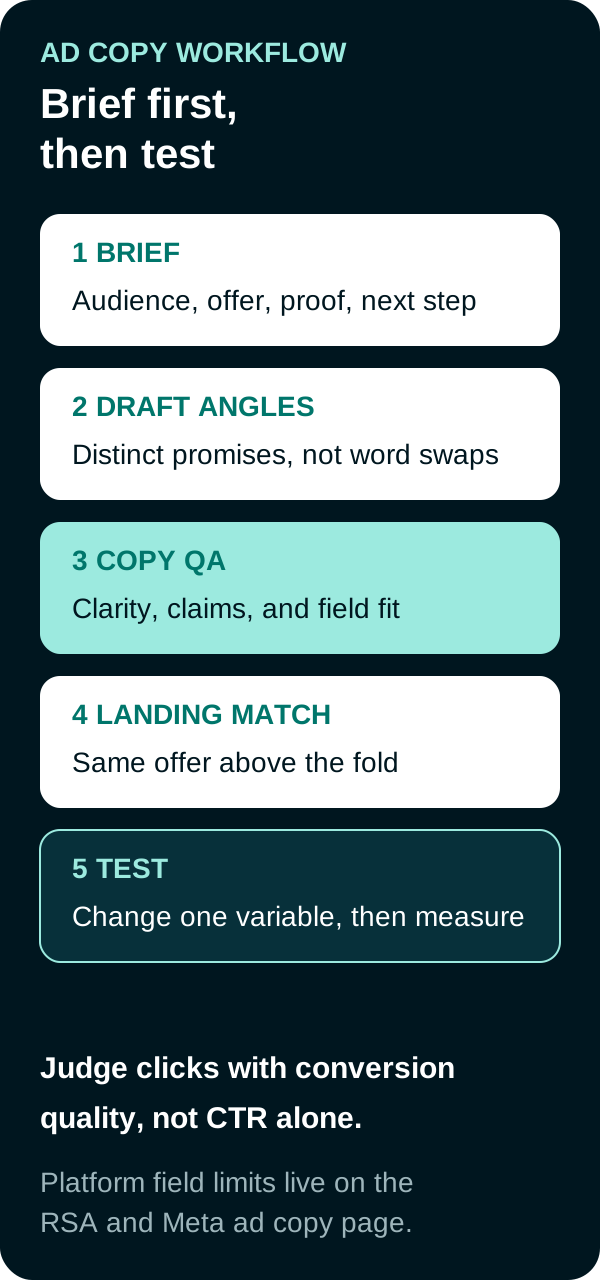
A usable brief names four things in writing:
- Audience and moment. Planned research is a different opening from an urgent failure, even when the service is the same.
- Offer. What the person gets if they act, including price, timing, eligibility, and what is not included.
- Proof. Operating history, response times, certifications, guarantees, or other evidence that can be verified. Do not invent specificity.
- Next step. Click, call, form, chat, or store visit, plus the page or number that receives it.
If those four are missing, word choice will not save the ad. Direct-response structure is covered in more detail in direct response advertising.
Message hierarchy
Write the argument in this order, then cut it to the container:
- Who it is for, in language that person would recognize.
- The offer, stated as a consequence, not a slogan.
- One proof point that makes the offer believable.
- The action and what happens after the click or call.
Supporting lines can add shipping, hours, geography, or exclusions. They should not bury the offer. Click-through rate is useful only next to conversion quality.
Ad copywriting vs content writing
Both are writing. They solve different problems.
Content writing answers a question, earns trust, and can be found through search. Success looks like useful sessions, rankings, and later pipeline. It has room to explain.
Ad copywriting compresses the same commercial argument into a container measured in characters or seconds, and it pays for every impression. It has to borrow attention that has already been rented. Break continuity with the landing page and the click is wasted spend, which is why landing page experience belongs in the copywriter’s scope.
Frameworks are checklists, not formulas that always win
PAS (Problem, Agitate, Solution) often fits demand capture, when the person already knows the problem. AIDA (Attention, Interest, Desire, Action) often fits demand creation, when you still have to earn the first second. Use the checklist that matches the moment, then judge the result. Neither framework is a ranking factor or a substitute for a true offer.
QA before the ad can run
- Every claim is true, current, and continued on the destination.
- The first line still makes sense if later lines are cut or reordered.
- Required legal lines are present in a field that will actually show.
- The call to action names one next step.
- The draft is distinct from the control. A synonym swap is not a test.
Landing-page continuity
The headline the person clicked should appear, close to verbatim, above the fold on the page they reach. If the ad offers a free assessment, the page should not open with a product tour. On Google Search, that mismatch is also a landing page experience problem. Confirm the destination before you scale spend.
How to design the test
- Freeze the audience, bid method, and landing page unless those are the variables under test.
- Change one commercial element: offer, angle, or call to action.
- Give the test enough delivery to read, then compare conversion quality, not clicks alone.
- Keep losers as a record so the next test does not repeat them.
Before you commit budget to a video test, run the numbers through a CPM calculator so impression cost is visible. Teams comparing paid-media partners can use the best paid media agencies in Dallas list as a starting point, not as a performance claim about this page.
How the job changes by format, without platform tables
| Format | Primary job | Writing priority |
|---|---|---|
| Search ad | Match active intent | Specific relevance and offer clarity |
| Social ad | Interrupt passive browsing | Immediate hook and useful context |
| Video ad | Hold attention over time | Spoken and on-screen message alignment |
Platform character limits, pinning, and truncation rules belong on the Google and Meta ad copy page.
For implementation, check the platform’s current source before trafficking: Google responsive search ads for asset behavior and pinning, the Meta Facebook Feed ads guide for Feed placement guidance, Microsoft Advertising’s ResponsiveSearchAd reference for its API fields, and Google video ad formats for video containers. These references define different products, so do not turn them into one universal limit table.
Common mistakes
- Burying the offer. Put the value in the first line that can show.
- A different promise on the landing page. The ad says free assessment. The page opens with a catalog.
- Testing noise. Five color adjectives are not five angles.
- Never refreshing. The same creative against the same audience decays. Rotate the argument before the report is already tired.
Frequently Asked Questions
What is ad copywriting?
Ad copywriting is writing paid advertising text so a defined audience takes a clear action, such as clicking, calling, booking, or buying. It is judged on measured response and whether the landing experience keeps the same promise.
How is ad copywriting different from content writing?
Content writing builds understanding over time and is measured on useful sessions, rankings, and later pipeline. Ad copywriting compresses the argument into a paid container, pays for every impression, and is measured on the action the ad asked for.
Should I use AIDA or PAS?
Use PAS when the audience already knows the problem, which covers much high-intent search. Use AIDA when you still need to earn attention, which covers much social and video. Treat both as checklists, then test the angle that matches the moment.
How many ad copy variants should I test at once?
Test variants that isolate the offer, angle, or call to action. Changing several elements at once makes the result hard to interpret.
PUT THIS KNOWLEDGE TO WORK
NEED MORE HELP?
Talk with our team about applying Ad Copywriting to your marketing.
Get a free marketing audit call