

Facebook Ads Frequency Cap: Meaning, Setup and Examples
A frequency cap limits repeat ad delivery to a person during a defined period. Meta documents the control for eligible Awareness campaigns using Maximize reach of ads.

A Facebook Ads frequency cap limits how often Meta should deliver an ad to the same person during a defined period. Meta currently documents the control for awareness campaigns that use the Maximize reach of ads performance goal. It is not a setting that appears in every campaign objective or account configuration.
That distinction matters. A team running a reach campaign may be able to set a direct cap, while a team running a sales or leads campaign may only be able to monitor frequency and manage repetition through audience, budget, exclusions, schedule, and creative decisions.
Can you set a frequency cap in Meta Ads?
Yes, in eligible awareness campaign setups. Meta’s current Awareness objective guide tells advertisers to select Awareness, choose a performance goal such as Maximize reach of ads, and adjust average frequency by changing the campaign length or the frequency cap.
Meta does not present that control as universal. Product options can vary by objective, buying type, account, market, and rollout. Confirm the setting in the campaign you are actually building before basing a media plan on it.
How to set a Facebook Ads frequency cap
- Create a campaign in Meta Ads Manager and choose Awareness as the objective.
- Choose Maximize reach of ads as the performance goal.
- During campaign setup, review the available frequency controls and select a cap only if Meta exposes the control for that configuration.
- Define the maximum impressions and time period in terms that match the flight and creative plan.
- Before publishing, confirm the audience, schedule, budget, placements, and creative rotation. Each affects how much delivery the cap can accommodate.
- After launch, compare actual reach, impressions, average frequency, cost, and the result the campaign was meant to influence.
If no frequency control appears, recheck the objective and performance goal. Do not copy instructions from an awareness campaign into a sales, leads, or engagement campaign and assume the same setting exists.
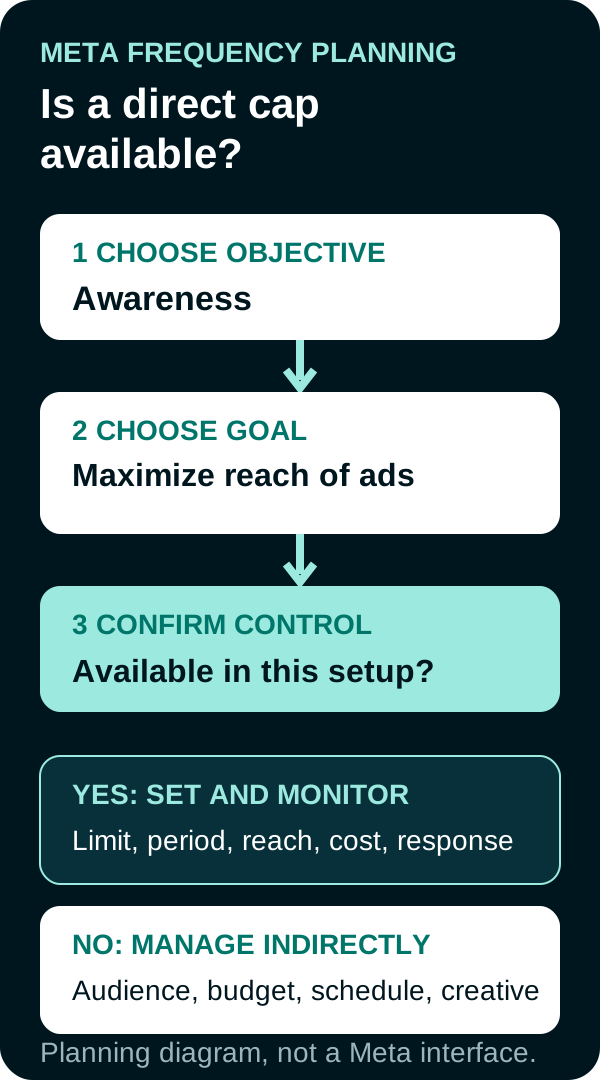
Planning diagram, not a Meta Ads Manager screenshot. Interface labels and availability can change.
Frequency cap versus average frequency
These two terms answer different questions:
| Measure | What it tells you | What it can miss |
|---|---|---|
| Frequency cap | The delivery limit requested for an eligible campaign | It does not guarantee every person receives that many impressions |
| Average frequency | Total impressions divided by reach | Averages can hide uneven delivery across people |
| Reach | The number of people or Accounts Center accounts reached | It does not show how repetition was distributed |
For example, an average frequency of 3 does not mean everyone saw the ad exactly three times. Some people may have seen it once while others received more impressions. That is why a tolerable account average can still conceal a high-frequency tail.
How to choose and evaluate a cap
There is no evidence-based cap that fits every campaign. Start with the business purpose and the cost of getting the balance wrong.
| Situation | What to protect | What to inspect before changing delivery |
|---|---|---|
| Broad market awareness | Unique reach | Reach growth, audience size, cost per person reached, creative recognition |
| Short launch or event | Enough repetition within a fixed flight | Flight length, schedule, audience scale, creative clarity |
| Small retargeting audience | User experience and efficiency | Audience window, exclusions, frequency distribution, conversion quality |
| Long-running evergreen campaign | Creative freshness | Fatigue signals, creative rotation, audience saturation, marginal response |
Use a tighter cap when the campaign is repeatedly reaching the same small group without adding useful coverage. Consider more repetition only when the message needs it, the audience can support it, and performance evidence justifies the tradeoff. A fixed rule such as “two impressions every seven days” is a test configuration, not a universal benchmark.
What to do when a direct cap is unavailable
A campaign without a manual cap still needs frequency management.
- Separate prospecting from retargeting so a small warm audience does not absorb the same delivery pattern as a broad audience.
- Use exclusions and audience windows that match the customer journey and consent available to the advertiser.
- Check whether spend is growing faster than reach. That pattern can indicate increasing repetition.
- Rotate creative based on message coverage and response, not a calendar alone.
- Compare frequency with cost, conversion quality, and incremental reach before changing budget.
- Review placements and audience segments for concentrations hidden by the account average.
Facebook Ads frequency is related to frequency in marketing and Facebook ad fatigue. Teams that need coordinated setup and monitoring can review Anderson Collaborative’s paid social capabilities.

FAQs
Can you set a frequency cap in Meta Ads?
Meta documents a frequency cap for awareness campaigns using the Maximize reach of ads performance goal. The control is not universal, so confirm that it appears for the objective, buying type, account, and campaign setup you are using.
How do you set a Facebook Ads frequency cap?
Create or edit an Awareness campaign, choose Maximize reach of ads as the performance goal, and review the available frequency controls during setup. If the control is absent, do not assume a different campaign objective has a hidden cap.
What is the difference between a frequency cap and average frequency?
A cap is a delivery rule intended to limit repetition over a period. Average frequency is a reported result calculated from impressions and reach, so it can hide people who received far more or fewer impressions than the average.
What is a good Facebook Ads frequency cap?
There is no universal cap. Choose a test based on campaign purpose, audience size, flight length, creative variety, and the cost of overexposure, then review reach, frequency, cost, and response together.
Sources
- Meta for Business, Awareness ad objective and performance goals, accessed September 19, 2026.
- Meta Audience Network glossary, frequency capping definition, accessed September 19, 2026.
PUT THIS KNOWLEDGE TO WORK
NEED MORE HELP?
Talk with our team about applying Facebook Ads Frequency Cap to your marketing.
Get a free marketing audit call