

Frequency Capping: How to Set and Test Ad Limits
Frequency capping limits how often ads from a campaign, ad group, or ad can be shown within a set period. The right setup depends on the campaign job, available inventory, creative, and platform controls.

Frequency capping is a delivery control that limits impressions or views from a defined scope during a stated window. Frequency in marketing covers the broader measurement topic. Here, the focus is choosing a cap, understanding where it applies, and evaluating the result.
Caps should vary with audience size, flight length, creative supply, and the cost of repetition. They are one response to suspected ad fatigue, not a diagnosis of it.
Cap versus average frequency
| Measure | What it is | What it hides |
|---|---|---|
| Frequency cap | The limit you requested on eligible inventory | People who never hit it, inventory it does not cover, and identity mismatches |
| Average frequency | Impressions / reach for the same window | People far above or below the average |
| Reach | Unique people, households, or accounts shown the ad at least once | How often each of them saw it |
| Frequency distribution | How many people sat in 1+, 2+, 3+, and higher buckets | Still only the identity the platform can join |
Google’s Measuring reach and frequency Help lists unique users, average impression frequency per user, and frequency distribution columns (1+, 2+, 3+, and higher). Use distribution when you have it. An average is not “everyone saw it that many times.”
Scope, window, and identity
A cap is incomplete until you name four things:
- Scope: campaign, ad group, ad, or another buying object
- Metric: impressions, viewable impressions, or views
- Window: day, week, month, or a combination
- Identity: person, signed-in user, cookie, device, or household
If any of those differ across campaigns, you cannot add the averages and call it person-level exposure.
Where official controls exist
Google Ads Display and Video
Google’s Frequency capping: Definition splits the product:
Display
- Limit impressions per user per day, week, or month
- Set the cap at campaign, ad group, or ad
- Third-party cookies by default; first-party cookies approximate when they are not available
For Display, only viewable impressions count toward caps. Other frequency reporting can look higher because it also counts unviewable impressions.
Video
- Limit impressions and/or views per day, week, month, or a combination
- Campaign level only
- Applies to signed-in users, or to devices if the user is signed out
- Inside that Video campaign, in-feed, in-stream, and bumper ads all count toward the cap
- If the same video runs in other Video campaigns, only in-stream and bumper impressions or views from those campaigns count toward the original campaign’s cap
- When the user reaches the cap, Google stops showing that campaign’s ads
The Video control follows Google’s stated user-or-device identity and campaign scope. It does not combine every exposure across Search, Display, and separate Video campaigns.
Google’s Target frequency campaign goal is a different control. It aims to achieve a chosen average frequency over a period, and Google notes that some people may receive more or fewer impressions than the target. Treat the target as a planning goal rather than a per-person cap.
Meta Ads
Meta documents a frequency cap for eligible Awareness campaigns that use the Maximize reach of ads performance goal. Setup, limits, and the cap-versus-average distinction for that product are on Facebook Ads frequency cap, which cites Meta’s Awareness objective Help. Confirm the control in the campaign you are building. Do not copy an Awareness cap into a Sales or Leads campaign and assume it exists.
Programmatic DSPs can cap the inventory they see. They cannot see every other campaign you are running. When paid media spans more than one buying door, overlap is a planning problem, not a single toggle.
Worked uneven-distribution example
Over one week, a campaign serves 10,000 impressions to 2,000 people.
Average frequency = 10,000 / 2,000 = 5.
The same average can describe this split:
| People | Times shown | Impressions |
|---|---|---|
| 1,000 | 1 | 1,000 |
| 800 | 5 | 4,000 |
| 200 | 25 | 5,000 |
| 2,000 | average 5 | 10,000 |
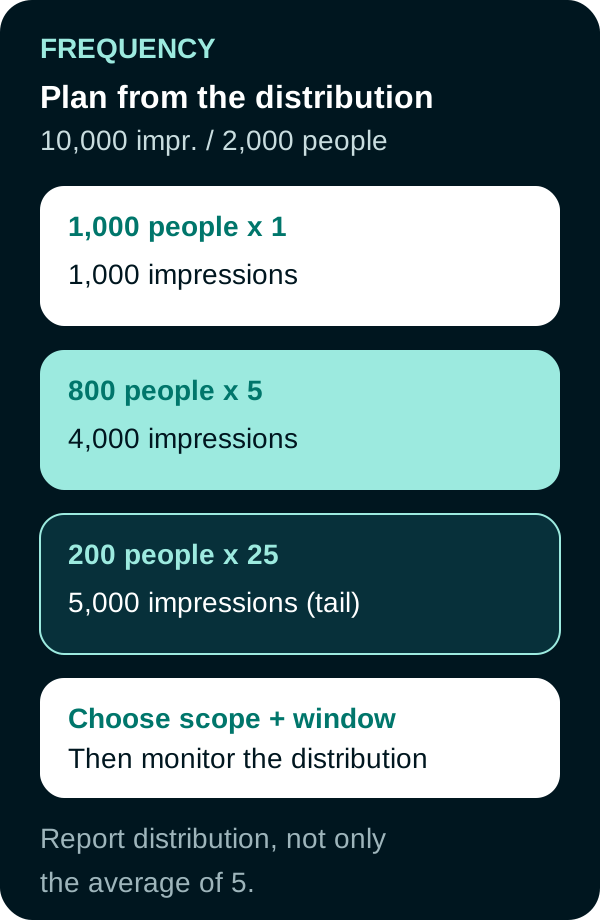
An average frequency of 5 can include people with one exposure and a smaller group with many more.
A cap of 8 impressions per week on this campaign, if identity matched, would clip the 25-exposure tail. It would not give the 1,000 people who saw the ad once any extra reach. If 200 of those high-frequency people were actually two cookies or two devices, the cap might never see them as one person. If another Video campaign ran the same video, Google’s documented cross-campaign rule would count in-stream and bumper delivery toward the original cap; other formats or unrelated campaigns could remain outside that control.
Google’s Unique Reach work is modeled, can include co-viewing on connected TV, and is not a promise that every person is known. Treat person-level language as the platform’s identity method, not as a census of humans.
How to choose and test a cap
Start from the campaign job. A two-week launch, an evergreen prospecting line, a small retargeting list, and a national reach buy need different exposure plans.
- Pick a campaign type that exposes a cap. When no cap is available, use exclusions, separate prospecting and retargeting, creative rotation, and distribution reports to manage repetition.
- Write the business job: unique reach, a short launch, or a small warm list.
- Predefine the primary metric (reach growth, qualified conversions, or cost per person reached) and the fatigue watchouts (falling response, rising CPA, negative feedback).
- Set one cap and window. Hold creative and audience definitions.
- Compare against a sibling campaign or prior flight with similar conditions. Use a platform experiment when available; a simple before-and-after can also reflect seasonality, auction pressure, or audience changes.
- Read unique reach, frequency distribution, spend, and the business metric together after the planned window.
Consider a tighter cap when spend grows faster than reach and the high-frequency tail is expanding without a useful response. Consider a looser cap when reach remains healthy, additional exposures improve the planned outcome, and the audience can support more repetition. Treat a rule such as “two every seven days” as a test setting for that campaign.
A cap controls the inventory and identity scope where it is configured. Cross-campaign and cross-channel planning still matters, and the frequency distribution shows more than the average alone.

Frequently Asked Questions
What is frequency capping?
Frequency capping is a control that limits how often ads from an eligible campaign, ad group, or ad can be shown to the same user, household, or device during a stated period. Availability, level, and identity rules depend on the platform and campaign type.
How is a frequency cap different from average frequency?
A cap is a delivery request. Average frequency is impressions divided by reach for the same window and identity rules. An average of 3 does not mean everyone saw the ad three times, and a cap of 3 does not mean everyone received three impressions.
Can you set a frequency cap on every campaign?
No. Google Ads documents caps for Display and Video with different levels and windows. Meta documents a frequency cap for eligible Awareness campaigns that use Maximize reach of ads. Other campaign types may only report average frequency.
Does a cap guarantee even, person-level exposure?
No. Caps follow the platform’s identity method, such as cookies, signed-in users, or devices. Google notes that Display reporting can count impressions that did not count toward a viewable-impression cap. Cross-campaign and cross-device overlap can still add exposures the cap never sees.
Sources
- Google Ads Help, Frequency capping: Definition, accessed September 20, 2026.
- Google Ads Help, Measuring reach and frequency, accessed September 20, 2026.
- Google Ads Help, Unique Reach: Definition, accessed September 20, 2026.
- Google Ads Help, About Target frequency campaigns, accessed September 20, 2026.
PUT THIS KNOWLEDGE TO WORK
NEED MORE HELP?
Talk with our team about applying Frequency Capping to your marketing.
Get a free marketing audit call