

Livestream Advertising: Live Inventory Versus Replay
Livestream advertising is paid or spoken promotion attached to a live broadcast. Live inventory, host-reads, and later replay files are different products. Plan the run of show before the stream starts.

Livestream advertising is promotion delivered before, during, beside, or within a live digital broadcast. Platform ads, host-reads, branded segments, and companion display can share one session. Live attention is useful only when timing, disclosure, moderation, and replay reporting are planned in advance. It is not a captive audience, and a pre-roll slot is not guaranteed opening exposure.
Use mid-roll ads when the question is break placement inside a long video or live session. Use influencer marketing when a host or creator is the media, not only the ad slot.
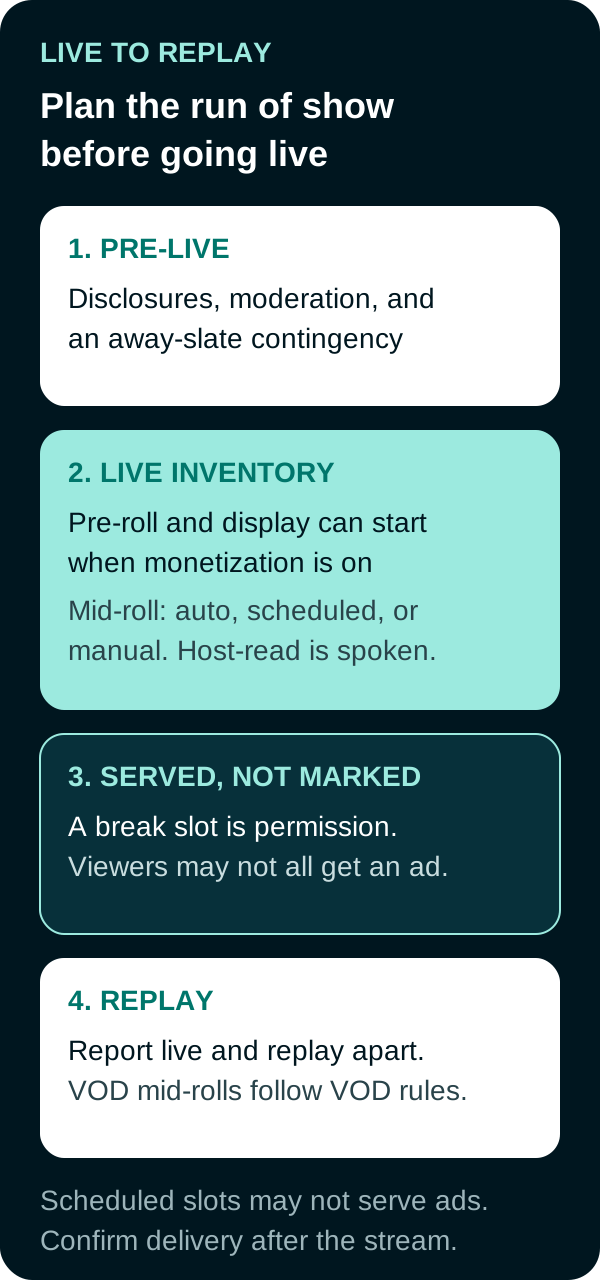
Live inventory versus replay
Keep the two files apart in the plan and in the report.
| Inventory | When it serves | What to plan |
|---|---|---|
| Live | During the broadcast | Run of show, moderation, and a fallback if the host drops |
| Replay | On the recorded file after the stream | Separate revenue and retention from the live session |
YouTube’s live monetization help says you can view a breakdown of ad revenue from live streams and live replays in YouTube Analytics by using the Live filter. Treat that split as required, not optional. A strong live mid-roll hour can look weak once the VOD file starts serving different breaks.
On YouTube, uploaded videos that later carry mid-rolls still need to meet the eight-minute eligibility rule for VOD mid-rolls. Live mid-roll controls are a different product path in Studio.
Formats to name before the stream
Name each format in the run of show. Do not collapse them into “live ads.”
| Format | What it is | Current official note |
|---|---|---|
| Pre-roll | Video ad before the viewer joins the live player | YouTube turns pre-roll on automatically when live monetization is on |
| Mid-roll | Video ad during the live session | YouTube: automatic, scheduled (6, 12, 18, 24, or 30 minutes), or manual. Fullscreen or side-by-side on eligible streams |
| Display / companion | Adjacent display while the stream plays | YouTube turns display ads on with live monetization |
| Host-read | Spoken mention inside the content | Not a YouTube ad product. Repeat a clear disclosure |
| Sponsorship | Paid association with the broadcast or segment | Same disclosure duty as a host-read |
YouTube documents that ad slots are not guaranteed to serve ads. If no ad runs, viewers stay on the stream. If a viewer skips the ad or the ad ends, they rejoin the live stream. Side-by-side mid-rolls play next to the stream on eligible broadcasts and do not show when captions are on.
Use current Google video ad formats when the buy is a Google video campaign against live or VOD inventory: skippable in-stream, non-skippable in-stream, bumper, in-feed, Shorts, and Masthead. Those are advertiser formats. They are not the same labels as creator Studio mid-roll modes.
Run of show
Write the show as a timed document, then staff it.
- Open. Who speaks, what is disclosed, and whether a pre-roll may already have played for some joiners. Late joiners miss the open. That is why “guaranteed opening exposure” is the wrong planning phrase.
- Breaks. Natural pauses, scheduled clocks, or a producer cue. YouTube automatic mid-rolls aim at natural breakpoints and can serve different viewers at different times. Scheduled and manual modes can earn less than automatic mode, per YouTube.
- Host-reads and sponsorships. Script the offer, the URL or code, and the disclosure. Repeat the disclosure on long streams when the audience turns over.
- Moderation. Chat, comments, and on-screen text. Name who can time out, delete, or take the stream private, and how fast they answer.
- Contingency. YouTube’s Take a Break control can show an away slate for 1, 3, or 5 minutes. Ads may show to eligible viewers; if no ad shows, the viewer sees the slate. Delay ads in automatic mode pauses automatic mid-rolls for 10 minutes. Manual mid-rolls still display during that delay.
Disclosure, measurement, and replay
Host-reads and sponsorships are endorsements when the host is paid or otherwise materially connected to the brand. The FTC Endorsement Guides: What People Are Asking say to disclose that connection clearly and conspicuously, close to the recommendation. This page is educational, not legal advice. Repeat the disclosure when new viewers join a long stream.
Measure two clocks:
- Scheduled versus served. Count ads that actually played, and the viewers who received them. A marked break is only permission to serve.
- Live versus replay. Do not average them. Replay mid-rolls follow the recorded file’s placement rules, not the live cue sheet.
IAB’s 2025 Digital Video Ad Spend and Strategy Report projected that digital video would take nearly 60% of US television and video ad spend in 2025 (the July 2025 full report states 58%). That is dated US market context for video spend. It is not a livestream format finding and it does not prove live ads outperform replay.
Our view at Anderson Collaborative: Live media has no edit button. A clear run of show and a fallback message matter more than another real-time overlay.
When the next step is buying or staffing the stream, paid social is the closest related service.
Frequently Asked Questions
What is livestream advertising?
Livestream advertising is promotion delivered before, during, beside, or within a live digital broadcast. Platform ads, host-reads, branded segments, and companion display can all appear in the same session, and replay inventory is a later file.
How is live inventory different from replay?
Live ads serve while the broadcast is happening. Replay ads serve on the recorded file after the stream ends. YouTube Analytics can separate live and replay ad revenue. Uploaded replay mid-rolls follow VOD rules, including the eight-minute eligibility rule on eligible videos.
Which livestream ad formats should a team plan?
Plan pre-roll, mid-roll, display or companion units, host-reads, and sponsorships as separate formats. On YouTube, pre-roll and display turn on with live monetization. Mid-rolls can be automatic, scheduled, or manual. Host-reads are spoken and need repeated disclosure.
What should a team measure on a livestream?
Measure served ads, not marked breaks. Repeat disclosures on long streams, keep a moderation path, and compare live results with replay results before changing the next run of show.
Sources
- YouTube Help, Monetize your live stream, accessed September 19, 2026.
- YouTube Help, Manage mid-roll ad breaks in long videos, accessed September 19, 2026.
- Google Ads Help, About video ad formats, accessed September 19, 2026.
- FTC, Endorsement Guides: What People Are Asking, accessed September 19, 2026.
- IAB, 2025 Digital Video Ad Spend and Strategy Report: Part One, dated April 28, 2025, accessed September 19, 2026.
PUT THIS KNOWLEDGE TO WORK
NEED MORE HELP?
Talk with our team about applying Livestream Advertising to your marketing.
Get a free marketing audit call