

Retargeting: Lists, Duration, and Exclusions
Retargeting shows ads to an eligible audience built from site, app, engagement, or customer records. Set duration, exclusions, creative, and measurement.

Retargeting (remarketing) shows ads to an eligible audience of people who already interacted with your site, app, content, or business. Google Ads now calls many of those lists your data segments. Prospecting finds new people through interests, demographics, or lookalike seeds. Keep the two jobs separate in planning and reporting.
Teams often run retargeting through display advertising and programmatic advertising. A recent recorded action helps choose the next-step message, audience window, and exclusions.
Tags, cookies, device IDs, and list uploads
These are different matching paths, with different identifiers and eligibility rules.
| Path | What is collected | How the person is matched | Typical limit |
|---|---|---|---|
| Site tag or pixel | Page or event hit in the browser | Cookie or modeled identifier on that browser | Shrinks when cookies are blocked or consent is denied |
| App event | In-app action | Device or app user ID | Needs the SDK and app-policy compliance |
| Engagement list | Video view, form, or page engagement on the platform | Platform login or engagement graph | Duration set by that product |
| Customer list upload | Email, phone, or other hashed first-party fields | Logged-in accounts that match the hash | Match loss; Google Customer Match membership max 540 days |
A tag does not “upload a list” by itself. The tag populates a rule-based segment, subject to browser, platform, and user choices. A CRM file is a separate upload. Google’s how your data segments work Help says visitors are added within seconds of hitting a tagged page, that a repeat event resets the membership clock, and that Display and Search lists default to 30 days with a 540-day maximum. Lists unused in targeting for 540 days close automatically and can be reopened.
YouTube, Search, and Display each need at least 100 active users in the last 30 days to serve. Customer lists uploaded or refreshed after February 1, 2024 follow that 100-user rule; older lists still had a 1,000 matched-user rule.
Meta website custom audiences are built from the Pixel and rules. Standard website rules can look back up to 180 days; purchase events can look back up to two years, per website custom audience options. Consent, cookie tracking choices, and tag health all cut match rates before creative ever runs.
Compatible Display and Video campaigns may serve people outside a selected list when optimized targeting is on. Performance Max works differently: optional audience signals guide its models, and the campaign may reach people beyond those signals. Audience signals are not a retargeting fence, and Performance Max does not offer the same optimized-targeting switch. Use the campaign’s available exclusions and acquisition or retention controls for the intended job.
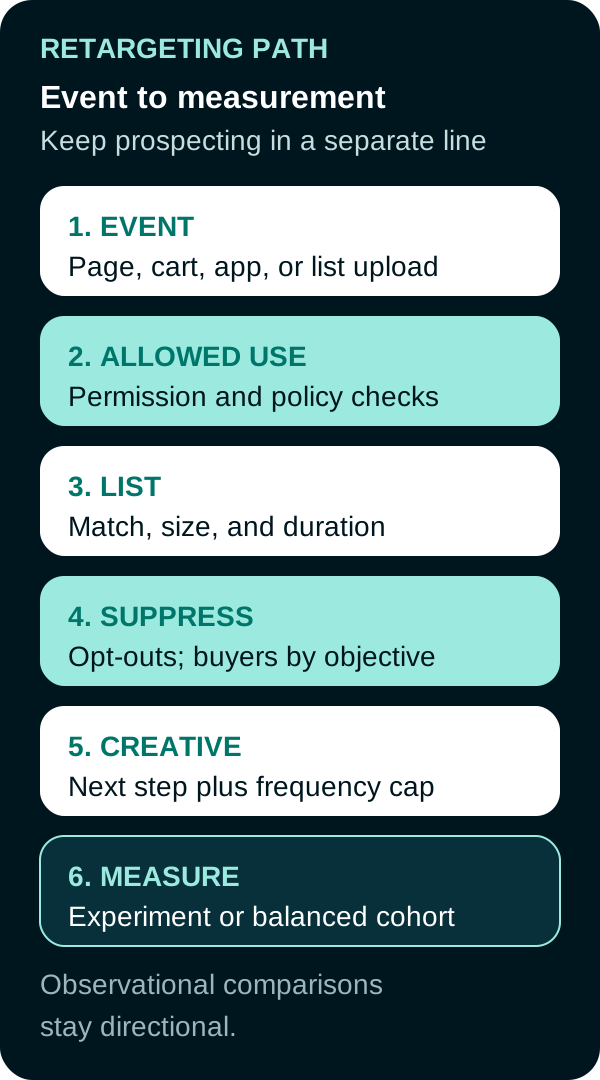
A recorded event becomes an eligible audience after policy, permission, and matching checks. Acquisition campaigns often suppress converters; retention campaigns may route them to a separate offer.
Types of retargeting
| Retargeting type | What it targets | Common platform |
|---|---|---|
| Site retargeting | Visitors to specific pages of your website | Meta, Google Ads Display, DSPs |
| Search retargeting (RLSA) | Past visitors who run a follow-up search query | Google Ads Search your-data segments |
| Social retargeting | People who engaged with your posts, page, or profile | Meta, LinkedIn, TikTok |
| Dynamic retargeting | Visitors shown ads for products or services they viewed | Meta, Google, commerce DSPs |
| Email/CRM retargeting | Known contacts or past customers uploaded as a list | Meta Custom Audiences, Google Customer Match |
Audience targeting for new prospects is not retargeting. A retargeting program also needs enough qualified traffic to fill the list above the platform minimum.
Practices that keep the list honest
- Segment by intent. A cart abandoner and a blog reader are not the same audience. Message and bid or goal each differently.
- Cap frequency. Use frequency capping so repetition has a stated limit.
- Set a sensible window. Match duration to the observed sales cycle. The 540-day or 180-day ceiling is not a default strategy.
- Route converters by objective. Suppress people who already purchased from acquisition ads, or move them into a separate retention or cross-sell audience when that is the campaign’s purpose.
- Respect permissions and policy. Use identifiers only for allowed advertising purposes. Match loss is expected when cookies, logins, or hashes do not join.
Review exclusion hygiene before replacing creative. Suppressing recent purchasers prevents obvious waste and gives frequency data a cleaner audience base.
How to judge the result
Define the event, consent rule, duration, suppression set, creative, and frequency before launch. Then pick a comparison:
- A randomized platform experiment or geo holdout, when scale allows.
- A matched cohort with the same offer window, reported as directional after checking balance and selection differences.
- A sequential read that explicitly accounts for seasonality, prospecting volume, offer, and creative changes.
Report prospecting and retargeting separately so each result keeps its audience context. Conversion tracking also needs a stated window; see conversion tracking.
Retargeting works best when the audience reflects a recent action and the creative offers a useful next step. Segment by intent, manage repetition, and route converters according to the campaign objective.
Frequently Asked Questions
Is retargeting the same as remarketing?
In most industry use, yes. Google Ads now calls these lists your data segments. Google historically used remarketing in product names, while retargeting is the common generic term.
How long should a retargeting window last?
Match membership duration to the time qualified buyers usually need, not to the platform maximum. Google your-data segments default to 30 days and allow up to 540 days. Meta website audiences commonly allow up to 180 days, or up to two years for purchase events.
Does retargeting work without cookies?
Yes, but the available audience and measurement can change. Site tags may use first-party storage or modeled signals, while app events, platform engagement, and hashed customer lists use separate matching paths with their own permission and match-loss rules.
What is a good retargeting budget split?
There is no universal split. Fund the qualified audience you actually have, cap frequency, and keep enough prospecting active to replenish the list.
Can retargeting hurt my brand?
Yes. Excessive repetition or an offer that ignores a recent purchase can make the ads feel irrelevant. Manage frequency and audience windows, then suppress purchasers from acquisition messages or give them a separate retention offer.
Sources
- Google Ads Help, About your data segments, accessed September 20, 2026.
- Google Ads Help, How your data segments work, accessed September 20, 2026.
- Google Ads Help, About your data segments for Search ads, accessed September 20, 2026.
- Google Ads Help, About Customer Match, accessed September 20, 2026.
- Google Ads Help, About optimized targeting, accessed September 20, 2026.
- Meta Business Help, About custom audiences, accessed September 20, 2026.
- Meta Business Help, Options to create a website custom audience, accessed September 20, 2026.
- Google Ads Help, About audience signals for Performance Max campaigns, accessed September 20, 2026.
PUT THIS KNOWLEDGE TO WORK
NEED MORE HELP?
Talk with our team about applying Retargeting (Remarketing) to your marketing.
Get a free marketing audit call