

Ad Exchange: Auctions, Deals, and Supply Paths
An ad exchange is a digital marketplace where buyers and sellers trade impressions through software. Open auctions, private deals, floors, and quality rules decide who wins, not a raw high bid alone.
An ad exchange is a marketplace for buying and selling digital ad impressions through software. Advertisers reach it through a demand-side platform (DSP). Publishers offer supply through a supply-side platform (SSP) or the exchange itself. Real-time bidding (RTB) prices many of those impressions. It is not the only path, and the highest raw bid is not always the winner.
Exchanges sit next to ad networks, which still package inventory. Publishers also manage ad inventory and eCPM across direct, network, and exchange sales. Programmatic advertising is the broader buying method. Brand safety and paid media planning still decide whether a cheap impression is usable.
Network versus exchange, without the cartoon
| Factor | Ad network (typical) | Ad exchange (typical) |
|---|---|---|
| How inventory is offered | Packaged or represented publisher groups | Impression-level bid requests, including deals |
| Price | Rate card, remnant package, or embedded RTB | OpenRTB auction or a deal price |
| Control | Less visibility into each placement unless the network discloses it | More bid-request fields, still only as complete as the seller sends |
| Best for | A packaged buy when you do not need a full DSP stack | Path-level control, deal IDs, and auction mechanics |
Those are tendencies, not laws. A network can run RTB. An exchange can sell a guaranteed package. Judge the contract in front of you.
Path: advertiser, DSP, exchange, publisher, user
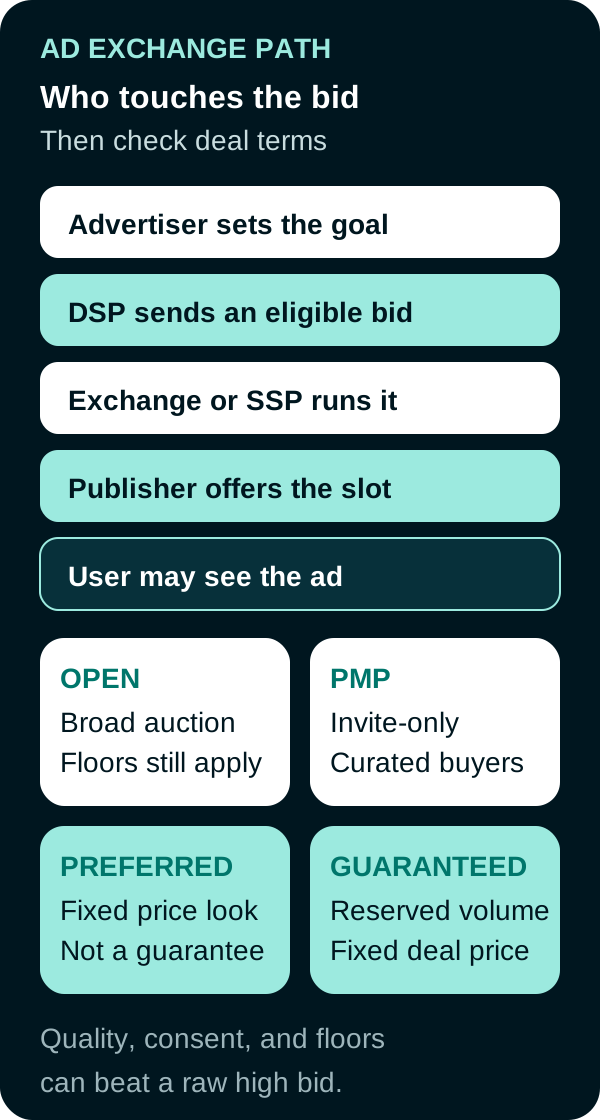
Deal type changes who may bid and whether volume is reserved. Quality filters still apply.
- The advertiser sets the outcome, budget, creative, and brand rules.
- The DSP decides whether the bid request is eligible, then submits a bid.
- The exchange or SSP applies floors, deals, and seller rules, then selects an eligible winner.
- The publisher renders the ad in a page, app, or stream.
- The user may see it, subject to viewability, consent, and attention.
Fees stack along that path. Depending on the contract, DSP, SSP, exchange, and verification charges may reduce the amount that reaches media or add to the advertiser’s total cost. Compare the delivered, valid impression cost after those charges rather than the bid CPM alone.
Deal types
IAB Tech Lab’s OpenRTB 2.6 specification models private marketplace terms in a Deal object. Its optional at field can override the request’s auction type for that deal: 1 first price, 2 second-price plus, or 3 when the value in Deal.bidfloor is the agreed deal price. Google Authorized Buyers separately documents Preferred Deal, Private Auction, and Programmatic Guaranteed as named products.
| Deal type | Who may bid | Price | Volume | What to watch |
|---|---|---|---|---|
| Open auction | Eligible buyers on the exchange | Auction, often first price, subject to floors | No reservation | Quality, duplication, unknown resellers |
| Private marketplace (PMP) | Invited buyers | Auction among that pool, with a floor | No reservation unless the deal adds one | Seat lists, floor versus true clearing price |
| Preferred deal | Named buyer gets a first look | Negotiated fixed price; an OpenRTB Deal can represent an agreed price with at = 3 | No reserved volume | Whether the buyer accepts the opportunity |
| Programmatic guaranteed | Named buyer, reserved | Fixed | Publisher commits volume | Make-goods, blocking, creative delays |
A floor can reject every bid. A preferred deal can lose to a higher open bid after the look expires, depending on the seller. Programmatic guaranteed is closer to a direct reservation that happens to traffic through software.
Floors, fees, quality, and consent
- Floors: the seller’s minimum. They are not your DSP’s internal bid.
- Quality and fraud: invalid traffic, spoofed domains, and injected ads can look cheap. Filter before celebrating CPM.
- Consent: bid requests carry regulatory signals when the seller sends them. Apply the consent and data-use requirements that govern the campaign, region, and selected signals.
- ads.txt and app-ads.txt: IAB Tech Lab lets publishers list authorized sellers (DIRECT or RESELLER). A path missing from that authorization raises the risk of spoofing or unauthorized resale and should be investigated before bidding.
- sellers.json and SupplyChain: sellers.json identifies who is selling or reselling. An incomplete
schainis a transparency failure. - Duplication: the same impression can be offered through several SSPs. Path optimization is a supply-quality job, not a cheaper-bid job.
- Placement transparency: app bundle, URL, and placement ID must match what you think you bought. Exchange access is not inventory quality.

Video explainer
AppsFlyer published this overview of how an ad exchange fits the buying path.
Video: AppsFlyer, What is an Ad Exchange? Learn How They Work.
Frequently Asked Questions
What is an ad exchange?
An ad exchange is a marketplace where advertisers and publishers buy and sell digital impressions through software. Many trades use real-time bidding. Some use fixed-price deals. The exchange is one hop in a path that also includes DSPs, SSPs, and the publisher.
How is an ad exchange different from an ad network?
A network typically packages inventory and sells access to that package. An exchange typically offers impression-level bidding and deal types. The line is blurry in practice: many networks now bid programmatically, and exchanges sell private and guaranteed deals.
Does the highest bidder always win?
No. An OpenRTB request can specify first-price or second-price-plus terms, and an individual Deal object can set an agreed deal price. Floors, deal priority, quality checks, seller authorization, and consent can make a lower eligible bid win or leave the impression unfilled.
Who uses DSPs and SSPs in ad exchanges?
Advertisers and agencies buy through demand-side platforms. Publishers offer inventory through supply-side platforms. The exchange matches eligible demand to that supply. Duplicate paths, fees, and missing sellers.json records still need a human check.
Sources
- IAB Tech Lab, OpenRTB 2.6 specification, accessed September 20, 2026.
- IAB Tech Lab, ads.txt, last updated September 14, 2026, accessed September 20, 2026.
- IAB Tech Lab, sellers.json, accessed September 20, 2026.
- Google Authorized Buyers Help, Real-time Bidding differences for Programmatic Guaranteed Deals, accessed September 20, 2026.
PUT THIS KNOWLEDGE TO WORK
NEED MORE HELP?
Talk with our team about applying Ad Exchange to your marketing.
Get a free marketing audit call