

Bidding Strategy: Goals, Data, and Switch Plan
A bidding strategy tells Google Ads how to set bids in each eligible auction. The useful choice is the goal you can measure (clicks, visibility, conversion count, or conversion value), plus conversion data quality, budget, and whether the strategy is campaign-level or a portfolio.
A bidding strategy is the rule Google Ads uses to set how much you compete in each eligible auction. Pair the strategy with Quality Score as a diagnostic, bid adjustments where the strategy still uses them, and paid search execution. Maximize conversions is one Smart Bidding option inside this choice.
Current strategies and what they optimize
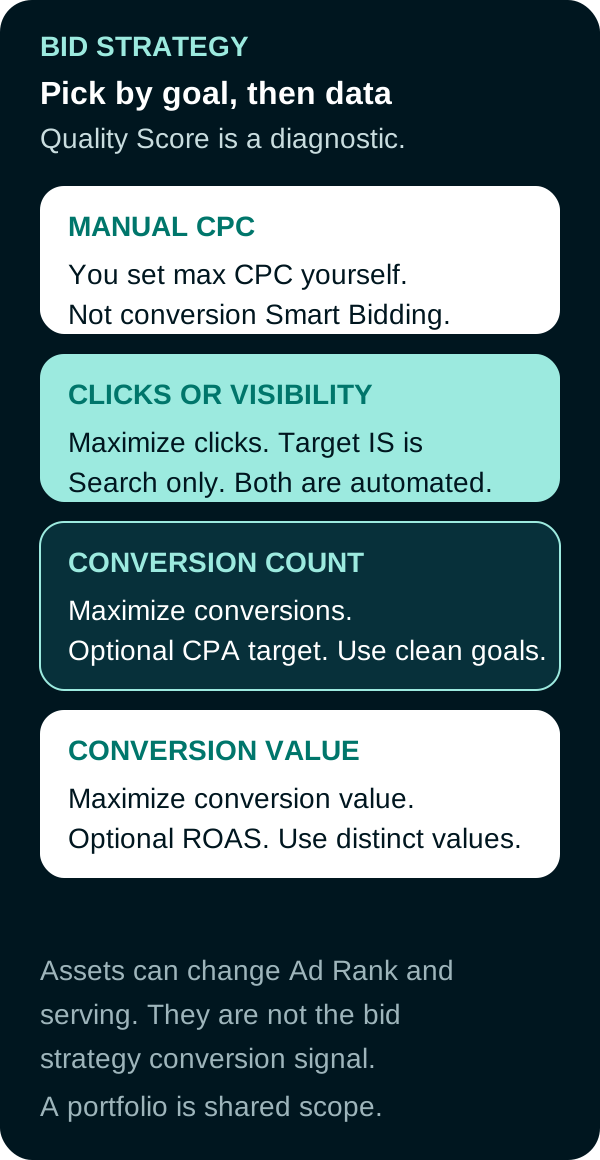
Google’s automated bidding overview (accessed September 20, 2026) maps goals to strategies. Smart Bidding is the conversion and conversion-value set: Target CPA, Target ROAS, Maximize conversions, and Maximize conversion value. Those four set a bid at auction time. Maximize clicks and Target impression share are automated but are not that conversion set. Target CPC is Demand Gen only. The automated-bidding table labels it Smart Bidding for clicks. It is not a Search default and it is not a conversion or value goal.
Starting in June 2026, Google is renaming labels: “Maximize conversions with a Target CPA” becomes Target CPA, and “Maximize conversion value with a Target ROAS” becomes Target ROAS. Google says the bidding behavior stays the same.
Enhanced CPC is no longer available for Search and Display as of the week of March 31, 2025. Campaigns that were not moved to another strategy are now effectively on Manual CPC.
| Goal you can measure | Strategy | Auction-time Smart Bidding? | Needs |
|---|---|---|---|
| Control each max CPC | Manual CPC | No | Time to manage bids and adjustments |
| More site visits / clicks | Maximize clicks | No | Budget; optional max CPC cap |
| Search visibility | Target impression share (Search Network only; not Search Partners) | No | Placement (anywhere, top, or absolute top) and a share target; optional max CPC cap |
| More tracked conversions in budget | Maximize conversions (optional average CPA) | Yes | Conversion tracking; primary actions that match the outcome |
| More conversion value in budget | Maximize conversion value (optional Target ROAS) | Yes | Conversion values; Google asks for two or more differentiated values before switching to a value goal |
| Valuable clicks at a CPC target | Target CPC | Auction-time clicks on Demand Gen only | Clicks as the campaign goal; not Search; not the conversion Smart Bidding set |
A portfolio is shared scope, not a fifth goal. One strategy can cover several campaigns. That helps when campaigns share a goal. It can also move spend toward whichever member campaign looks cheaper to the algorithm.
Quality Score, Ad Rank, and assets are different jobs
Quality Score is a keyword-level 1-to-10 diagnostic for expected CTR, ad relevance, and landing page experience. Google Ads Help states it is not a KPI to optimize in bulk and is not an input in the ad auction.
Ad Rank is calculated at auction time, twice: once for eligibility and once for rank among eligible ads. Google’s Ad Rank article lists six factors: bid, ad and landing-page quality, Ad Rank thresholds, auction competitiveness, search context, and the expected impact of ad assets and other formats. Higher-quality ads can often lead to lower CPCs. That is not the same sentence as “raise Quality Score, pay less.”
Assets (sitelinks, images, calls, and similar) can raise prominence and can help an ad clear asset-serving thresholds. About assets ties extra formats to Ad Rank and predicted performance. They do not replace conversion actions as the Smart Bidding signal. Adding sitelinks is not a bidding upgrade.
On Smart Bidding, bid adjustments are mostly unused. Device -100% still opts a device out. For Target CPA, a device adjustment changes the target, not the bid. Ad schedules still limit when ads can run.
Switch-readiness, monitoring, and rollback
Before you switch
| Check | Ready when |
|---|---|
| Goal | Clicks, visibility, conversion count, or value matches the business outcome |
| Conversion actions | Primary actions are the outcome you want more of; secondary actions are observation-only unless used in a custom goal |
| Values | If you need ROAS or Maximize conversion value, values represent business value consistently: revenue or profit when available, or a documented relative scale, with more than one distinct value |
| Budget | Average daily budget fits the month, including possible daily overdelivery (Google documents up to 2x in a day and 30.4x in a month for most campaigns) |
| Tracking | Tags, consent, and count settings are correct |
| Constraints | Max CPC caps, if used, are not so low that the strategy cannot bid |
| Review date | You have written a date after conversion lag plus Google’s standard 7 to 14 day learning window |
After you switch
Watch spend versus budget, the metric the strategy actually buys (clicks, impression share, conversions, or conversion value), and a quality metric the bidder cannot see (sales-accepted leads, refunds, margin). Fix broken or duplicate conversion tracking immediately. Waiting through learning trains the strategy on bad data.
Rollback or retarget when the strategy spends the budget on the wrong primary action, qualified-outcome cost is outside the range you set after lag and learning, or a CPC cap is starving delivery. Judge the change on qualified outcomes, not on Quality Score moving from 6 to 7.

Walkthrough credit: Aaron Young / Define Digital Academy, “How to Set Bidding Strategies in Google Ads for 2024”. Treat the 2024 UI as historical; confirm labels in current Google Ads Help.
Frequently Asked Questions
What is a bidding strategy in Google Ads?
A bidding strategy is the rule Google Ads uses to set bids. Manual CPC lets you set max CPC. Automated strategies set bids toward clicks, Search impression share, conversions, or conversion value. Smart Bidding is the conversion and value subset that bids at auction time.
Does a higher Quality Score lower CPC?
Not as a simple formula. Quality Score is a 1-to-10 keyword diagnostic and is not an auction input. Auction-time Ad Rank uses bid, quality, thresholds, competition, context, and expected asset impact. Higher-quality ads can often lead to lower CPCs, but chasing the diagnostic score is not the bid strategy.
Do ad assets improve bidding?
Assets such as sitelinks can change Ad Rank and whether extra formats show. They are not the conversion or value signal the bid strategy optimizes. Smart Bidding follows the primary conversion actions and values you include in Conversions.
When is a campaign ready to change bid strategy?
The goal matches the business outcome, tracking is correct, values are real if you need value bidding, and the average daily budget can absorb daily overdelivery. Google documents a standard 7 to 14 day Smart Bidding learning phase. A broken conversion tag blocks a safe switch.
Sources
- Google Ads Help, About Enhanced CPC (ECPC), accessed September 20, 2026.
- Google Ads Help, About automated bidding, accessed September 20, 2026.
- Google Ads Help, Your guide to Smart Bidding, accessed September 20, 2026.
- Google Ads Help, About Quality Score for Search campaigns, accessed September 20, 2026.
- Google Ads Help, About Ad Rank, accessed September 20, 2026.
- Google Ads Help, About assets, accessed September 20, 2026.
- Google Ads Help, About bid adjustments, accessed September 20, 2026.
- Google Ads Help, About Maximize clicks bidding, accessed September 20, 2026.
- Google Ads Help, About Target impression share bidding, accessed September 20, 2026.
- Google Ads Help, About Target CPC bidding for Demand Gen, accessed September 20, 2026.
- Google Ads Help, Bidding FAQ, accessed September 20, 2026.
- Google Ads Help, About spending limits, accessed September 20, 2026.
PUT THIS KNOWLEDGE TO WORK
NEED MORE HELP?
Talk with our team about applying Bidding Strategy to your marketing.
Get a free marketing audit call