

Ad Rank: Auction-Time Factors, Not Quality Score
Ad Rank decides whether a Google ad can show and where it ranks among eligible ads. It is calculated at auction time. The 1-to-10 Quality Score is a diagnostic, not the formula.
Ad Rank is Google Ads’ auction-time calculation of whether an ad may show and where it ranks among eligible ads. It is not a stored 1-to-10 score. Google does not publish a numeric equation. Do not write bid times Quality Score as the current formula.
Write the next paid search change against query, ad, page, assets, and bid in that order. Pair this page with Quality Score and the ad auction.
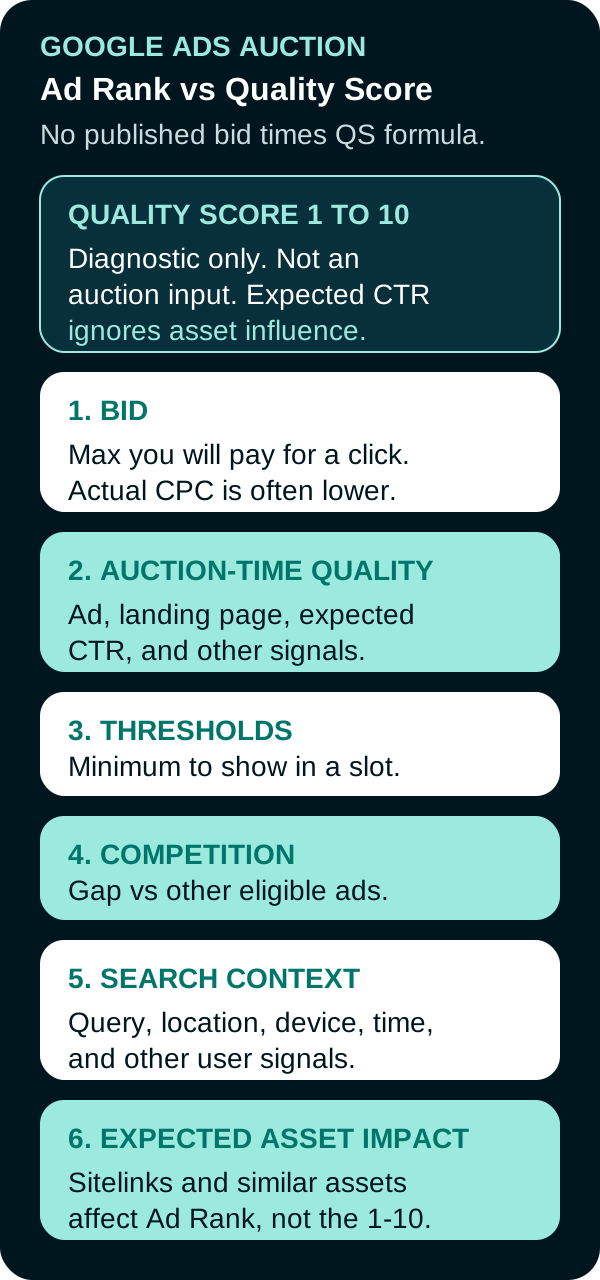
Documented Ad Rank factor groups beside the separate Quality Score diagnostic.
Six auction-time factor groups
On Search, Google runs a separate auction for each ad location. Ad Rank is calculated first for eligibility, then again for rank among ads that clear the relevant thresholds. An ad shows once in a single location. It can show more than once across locations.
Google lists these inputs at a high level:
| Factor group | What Google evaluates | What you can change |
|---|---|---|
| Bid | Maximum you are willing to pay for a click. Actual CPC is often less. | Bid strategy and caps |
| Quality of ads and landing page | Usefulness and relevance of the ad and page, whether the page matches the clicked creative, ease of navigation, and other Search quality signals | Query-to-ad-to-page match |
| Ad Rank thresholds | Minimums an ad must clear to show in a given slot. Top-of-page bars are generally higher. Higher quality ads can face a lower minimum to show. | Quality first, then bid |
| Competitiveness | Similar Ad Ranks have a similar chance at a slot. A larger gap can raise both win likelihood and CPC for the leader. | You cannot set a rival’s bid |
| Search context | Search terms, location, device, time, the nature of the query, other ads and results on the page, and other user signals | Targeting, schedule, and copy for that context |
| Expected asset impact | Estimated effect of assets and other formats, such as extra links or a phone number | Add assets that answer a real pre-click question |
Google’s simplified illustration uses made-up Ad Rank values (80, 50, 30, 10, and negative scores) only to show eligibility versus top-of-page thresholds. Those numbers are not a score you can look up.
Quality Score stays diagnostic
Quality Score is a keyword-level 1-to-10 diagnostic from expected CTR, ad relevance, and landing page experience, each rated Above average, Average, or Below average against other advertisers on the same exact searches over about 90 days.
Google’s Quality Score page states it is not a key performance indicator and not an input in the ad auction. Google’s ad quality guide adds that Ad Rank factors in asset impact, while asset influence is removed from expected CTR for Quality Score. Adding sitelinks can make the ad more prominent in the auction. It should not be treated as a way to raise the 1-to-10 number.
Auction-time quality can include expected CTR, ad relevance, and landing page experience, among other factors. That is not the same object as the stored 1-to-10. Devices, location, time of day, and assets may affect ad quality in ways Quality Score does not capture.
Higher auction-time quality can lead to lower actual CPC and can affect asset eligibility. That is Google’s statement about quality in the auction, not a promise that moving a keyword from 6 to 8 will cut CPC by a known amount.
Diagnostic sequence
- Confirm the ad is eligible: campaign status, targeting, policy approval, and a working destination.
- Read delivery and position metrics separately. Search impression share and lost impression share diagnose reach; top and absolute top metrics describe where eligible impressions appeared.
- Read search context: query, location, device, and the page the ad promised.
- Repair quality: expected response, relevance, and landing page experience. Treat a mismatch as a quality problem, not a budget problem.
- Add only useful assets. Read asset diagnostics in context, then judge the ad and campaign on qualified outcomes rather than Quality Score.
- Then change bids. Paying more can win a slot. It cannot fix a query-to-page mismatch.
- Do not chase or average the 1-to-10 score.
Auction Insights reports impression share and overlap. It is not Ad Rank.

Practical check
Inspect the query, ad promise, and landing page before raising bids. Use top and absolute top impression metrics for position. Treat the 1-to-10 Quality Score as a finding aid, not an auction lever.
FAQs
What is Ad Rank in Google Ads?
Ad Rank is calculated in each auction to decide whether an ad is eligible to show and where it ranks among eligible ads. Google documents six factor groups: bid, ad and landing page quality, Ad Rank thresholds, auction competitiveness, search context, and expected asset impact.
Is Quality Score part of the Ad Rank formula?
No. Google states that the 1-to-10 Quality Score is a diagnostic tool and not an input in the ad auction. Auction-time quality can include expected CTR, ad relevance, and landing page experience, among other signals. Google does not publish a bid-times-Quality-Score equation.
Do assets improve Quality Score?
Ad Rank includes the expected impact of assets and other formats. Google removes asset influence from the expected CTR used for Quality Score, so adding sitelinks or call assets should not be treated as a 1-to-10 score lever.
Where can I see my Ad Rank?
Google does not report a numeric Ad Rank. Use top and absolute top impression metrics for position, Auction Insights for overlap with other advertisers, and keyword Quality Score components only as diagnostics.
PUT THIS KNOWLEDGE TO WORK
NEED MORE HELP?
Talk with our team about applying Ad Rank to your marketing.
Get a free marketing audit call