

Dynamic Creative Optimization: How DCO Works
Dynamic creative optimization assembles and selects ads from approved assets and data. Rules or models choose eligible combinations, and performance feedback guides optimization.
Dynamic creative optimization (DCO) assembles and selects eligible ads from approved assets, feeds, rules, and permitted signals, then uses performance feedback to improve delivery. A stable control and a downstream outcome help the team tell whether the decisioning system improves the campaign.
Use display advertising goals to decide whether a DCO finding deserves a change. Pair the data plan with first-party data and the limits in cookie tracking. A/B testing is the method when you need a causal read.
The decisioning loop
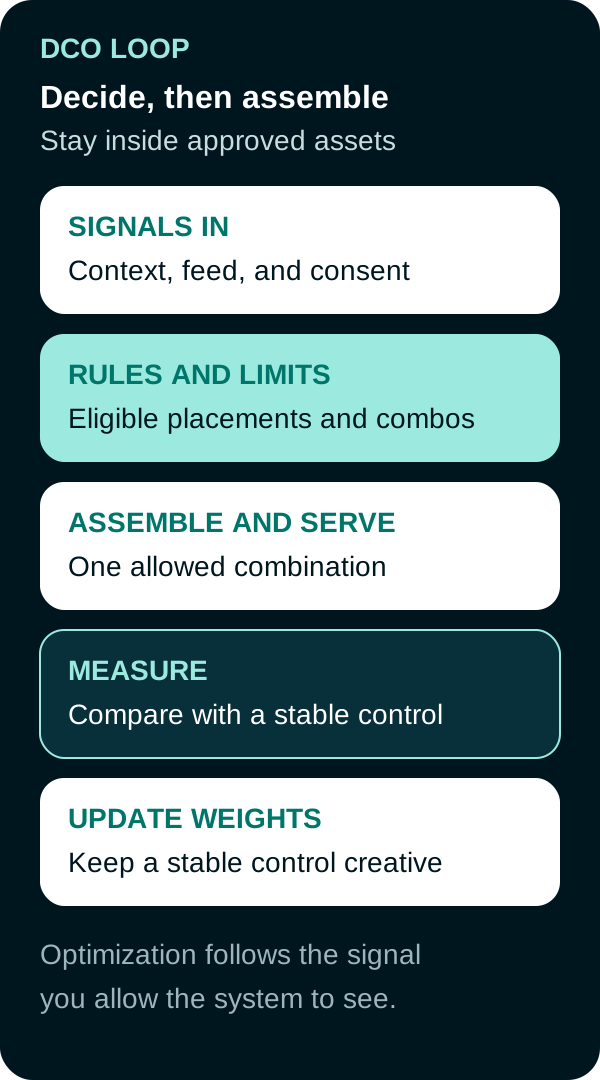
The system selects from the combinations you approve. Keep a stable control when testing business impact.
| Step | What happens | Constraint |
|---|---|---|
| 1. Signals in | Context, product feed, placement, or consented audience keys | Use signals permitted for the campaign and region |
| 2. Rules and limits | Filter the feed or asset list to eligible rows | Set a default row or expect the platform’s default ad |
| 3. Assemble and serve | Fill the creative shell for that placement | Brand, size, and offer rules still apply |
| 4. Measure | Record delivery and response | CTR measures clicks; attribution assigns conversion credit |
| 5. Update weights | Shift volume toward combinations the optimizer likes | Keep a control that does not chase the same weights |
Google Studio describes the full DCO shell: one creative frame, a profile, optional profile fields, and an optional feed. Feeds can run to 700,000 rows and 100 columns. Prioritized rules can filter a feed up to eight times, including the default. If nothing matches and you did not set a default, Campaign Manager 360’s default ad can serve instead.
That loop differs from Display & Video 360 creative optimization, which chooses among whole creatives assigned to a line item before bidding. Google says manual line-item optimization settings began deprecating on August 12, 2026; optimization now aligns automatically with the line item’s bidding strategy. That is separate from Studio feed rules inside one dynamic creative.
Input, assets, and eligible placements
| Approach | Decision logic | Best fit | Limit |
|---|---|---|---|
| Rule based | You write audience or context matches | Clear offers, stable segments | Wrong rules scale the wrong message |
| Feed driven | Product or content rows fill the shell | Catalogs and changing inventory | Stale feeds show dead offers |
| Predictive | A model picks among allowed rows | Enough clean response data | The model hunts the metric you give it |
Named tools, current scope
- Google Studio dynamic creatives: feed plus rules inside a shell, trafficked through Campaign Manager 360. Official: About dynamic creatives.
- Google Ads responsive display ads: asset-based ads, not a Studio feed. Current specs allow 1 to 5 headlines (30 characters), 1 to 15 horizontal images, 1 to 15 square images, plus logos and optional video. Google renders combinations across Display inventory.
- Google Ads HTML5: can bind placeholder elements to a data feed, on accounts that meet HTML5 eligibility. Uploaded display specs.
- Meta Dynamic Creative: Marketing API mixes advertiser-supplied images, videos, bodies, titles, and CTAs per impression. It is not Advantage+ Creative, which can generate extra variations of a single ad.
Eligible placements are whatever the host product actually serves. A Studio display shell does not run as a YouTube in-stream. A Meta Dynamic Creative setup follows Meta placement rules, not Google Display slots. Confirm the placement list in the product you are trafficking.
Privacy and consent bound the signal list. If a user declined the identifier, the feed must fall back to contextual or default rows. Do not quietly keep using a third-party cookie because the template still has a field for it.
Experiment design and reporting limits
Platform optimization reports which combinations received more delivery against the campaign’s bid goal. Use that for operations and asset coverage. Use a stable control, platform experiment, or holdout when the question is incremental business effect.
| Design | What you can claim | What you cannot claim |
|---|---|---|
| Optimizer on, no control | Combinations X and Y got more impressions | X caused more profit than Y |
| Static control held out | Directional gap versus the frozen combo | A fully randomized user holdout, unless the tool assigned one |
| Platform experiment or geo holdout | Incremental effect of DCO-as-run versus control | That one asset inside the mix was the cause |
Predefine the primary outcome (qualified conversions or conversion value). Hold the offer and tracking. Change the decisioning method or the allowed asset set, not both at once. Read the result after the planned window.
A coffee brand that swaps morning and afternoon copy from a feed is following a rule. To compare the two messages, hold one version stable and run them on comparable traffic.

Define every allowed combination before dynamic delivery begins. Brand clarity depends on which combinations are allowed, not on how many the system can assemble.
Frequently Asked Questions
What is dynamic creative optimization (DCO)?
DCO assembles and selects creative combinations from approved assets, context, product data, and rules or models. Performance feedback helps improve the selection and delivery of those combinations.
Does DCO require cookies?
No. Some setups still use cookies or other identifiers. Feeds, contextual signals, consented first-party data, and publisher-declared keys can drive selection instead. If you do not have a legal basis for a signal, do not send it.
How is DCO different from Google responsive display ads or Meta Advantage+ Creative?
Google Studio dynamic creatives map a feed and rules into a creative shell. Google responsive display ads mix uploaded headlines, images, and logos on the Display Network. Meta Dynamic Creative mixes advertiser-supplied assets. Advantage+ Creative can generate extra variations of a single ad. Those are related tools, not one product.
How should teams test DCO?
Keep a stable control combination. Judge variants on the business outcome, not only CTR. Platform optimization reports which combinations got more delivery. That is not the same as a randomized holdout unless you designed one.
Sources
- Google Studio Help, About dynamic creatives, accessed September 20, 2026.
- Google Studio Help, Prioritized rules, accessed September 20, 2026.
- Google Studio Help, Create a dynamic feed, accessed September 20, 2026.
- Display & Video 360 Help, Creative optimization, accessed September 20, 2026.
- Google Ads Help, Responsive display ads specs, accessed September 20, 2026.
- Google Ads Help, Uploaded display ads specifications, accessed September 20, 2026.
- Meta Marketing API, Dynamic Creative, accessed September 20, 2026.
- Meta Marketing API, Advantage+ Creative, accessed September 20, 2026.
PUT THIS KNOWLEDGE TO WORK
NEED MORE HELP?
Talk with our team about applying Dynamic Creative Optimization to your marketing.
Get a free marketing audit call