

UGC: Permission, Disclosure, and Paid Reuse
User-generated content is material a customer or fan creates about a brand, product, or experience. Unpaid posts, paid creator work, and ads that reuse either asset follow different rights and disclosure rules.
User-generated content (UGC) is material a customer or fan creates about a brand, product, or experience. Reviews, photos, videos, and social posts can show the product in real use. They do not become a marketing asset until the brand has permission, a reuse scope, and, when a material connection exists, a disclosure.
Use UGC next to engagement marketing when the job is customer voice, and next to influencer marketing when someone is paid or gifted to create. Pair both with content marketing so the brand still owns the offer, facts, and destination.
Customer UGC is not paid creator content
| Source | Who made it | Typical relationship | What you still need |
|---|---|---|---|
| Customer or fan UGC | A buyer, user, or community member | Often unpaid; a gift, contest prize, or employee tie still counts as a connection | Permission, moderation, and a reuse license before you publish or advertise |
| Paid creator content | A creator hired or gifted to produce | Compensation or a material connection | Endorsement disclosure plus the same rights record |
| Brand-produced content | Staff or agency | Employment or a vendor contract | Brand review; it is not UGC |
A tagged photo is a lead, not a license. A paid UGC-style ad shot by a creator is an endorsement, even if it looks casual.
The FTC Endorsement Guides FAQ treats an endorsement as an advertising message that consumers are likely to believe reflects someone other than the sponsoring advertiser. Payment, free product, contest entry, or an employee relationship can be a material connection. Disclose it clearly. Whether a platform label is enough depends on the wording, placement, timing, and the full presentation the audience sees.
Rights record before any reuse
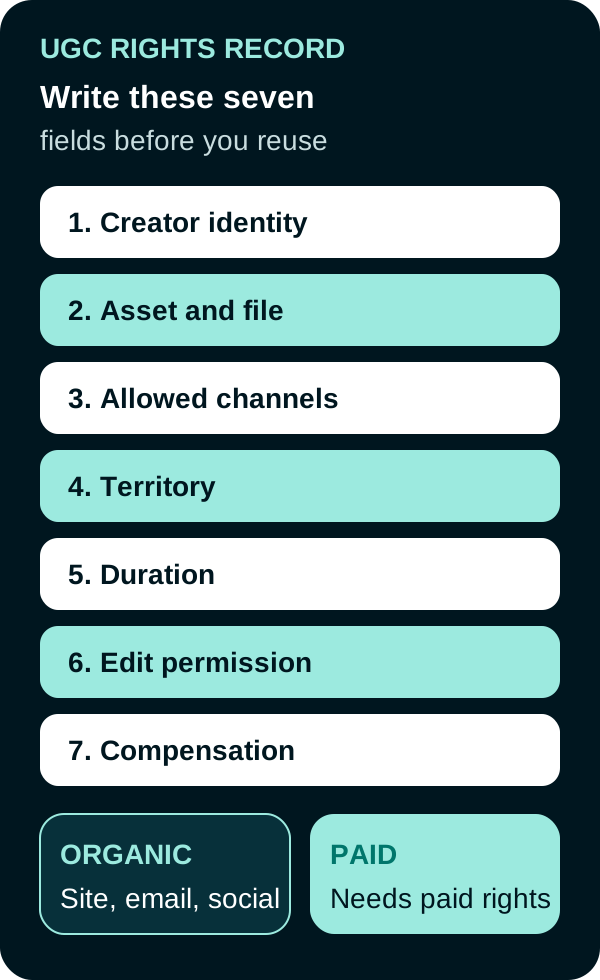
Organic placement and paid ads often need different channel and duration terms. Write both.
Keep one row per asset:
| Field | What to write | Why it matters |
|---|---|---|
| Creator | Legal name, handle, and contact | You must know who can grant and revoke rights |
| Asset | File name, URL, and capture date | Prevents mixing two similar posts |
| Channels | Site, email, organic social, paid social, CTV, and so on | A website feature is not an ads license |
| Territory | Countries or languages allowed | Paid media often travels farther than the original post |
| Duration | Start and end dates | Silence is not perpetual rights |
| Edit permission | Crop, caption, voiceover, compilation: yes or no | Edits can change meaning and rights |
| Compensation | Unpaid, gift, fee, or contest prize | Compensation changes disclosure |
Ask for the grant in writing. A comment such as “yes, use it” is weak if you later run ads in another country or edit the clip.
Disclosure, moderation, and paid amplification
Disclosure. Instagram’s branded content tools require a paid partnership label when the creator was compensated, including gifted product. TikTok’s commercial content setting labels “Your brand” versus third-party branded content. YouTube’s paid promotion checkbox shows a disclosure at the start of the video. Review the actual label in context. It needs to make the material connection clear and conspicuous to the viewer; an added disclosure may be necessary when the built-in wording or placement does not do that.
Moderation. Review for authenticity, safety, privacy of bystanders, and competitor trademarks before you feature a post. For customer reviews, apply the same standards to positive and negative feedback and do not alter the review’s message. The FTC’s guide for review platforms explains those principles under Section 5 of the FTC Act.
Paid amplification. Running a customer’s clip as an ad is a new use. Confirm the license covers ads, lookalikes, and the destinations you will send traffic to. Then test the UGC creative against a brand-produced control with the same audience, offer, and optimization event.
Where to use approved UGC
- Product and service pages. Place reviews and photos next to the offer they describe, with the reviewer context intact.
- Owned channels. Email and organic social can feature approved posts when the rights row allows those channels.
- Hashtag or contest prompts. State how submissions may be used, including ads, before anyone enters. Influencer marketing can invite an audience to submit, but the invitees still need their own grants.
- Paid ads. Treat this as a separate license and a separate measurement question.
How to measure UGC
UGC can add specific customer language and a real-use demonstration. It does not automatically raise conversion rate. Compare:
- Organic: time on the product module, review helpfulness, assisted form starts.
- Paid: the campaign’s chosen event versus a brand-creative control.
- Guardrail: complaint volume, disclosure misses, and expired licenses.
Attributed conversions credit a touch. They do not prove the asset caused extra sales. For that, you need a holdout or another incrementality design.

Video explainer
Influencity · Influencer Marketing published this video.
Video: Influencity · Influencer Marketing, What Is User-Generated Content and Why Is It Important.
Frequently Asked Questions
What counts as user-generated content?
UGC is text, photos, video, reviews, or social posts created by customers or fans about a brand. It is not the same as a brand-produced asset, and it is not automatically the same as a paid creator endorsement.
Can a brand reuse a tagged photo in ads?
Not from a tag or hashtag alone. Get usage rights that name the creator, asset, channels, territory, duration, edit permission, and compensation. Paid reuse often needs a broader license than a website feature.
When does UGC need an endorsement disclosure?
When there is a material connection the audience would not expect, such as payment, free product, or an employee relationship. A platform label may be sufficient when its wording, placement, and timing clearly communicate that connection; check the full presentation.
How should teams measure UGC?
Separate organic proof on a product page from paid amplification. Compare the same offer and audience with and without the customer asset, and treat attributed conversions as credit, not proof of lift.
Sources
- FTC, Endorsement Guides: What People Are Asking, accessed September 20, 2026.
- FTC, Featuring Online Customer Reviews: A Guide for Platforms, accessed September 20, 2026.
- Meta Business Help, Get started with branded content on Instagram, accessed September 20, 2026.
- TikTok Support, Promoting a brand, product, or service, accessed September 20, 2026.
- YouTube Help, Add paid product placements, sponsorships and endorsements, accessed September 20, 2026.
PUT THIS KNOWLEDGE TO WORK
NEED MORE HELP?
Talk with our team about applying User-Generated Content (UGC) to your marketing.
Get a free marketing audit call