
Creator Economy: Revenue, Rights, and Platform Risk
The creator economy is the set of people, platforms, brands, and tools that turn published work and an audience into income. Revenue can come from ads, memberships, products, affiliates, or brand deals. On rented apps, creators do not own the audience graph.

The creator economy is the ecosystem of independent creators, platforms, brands, and tools that turn an audience into income. Influencer and affiliate marketing is one commercial path inside it. It is not the whole map.
It is a shift away from a few media gatekeepers. It is not automatic ownership of the audience. On YouTube, TikTok, Instagram, Twitch, and similar apps, the platform controls account access, distribution, audience-export options, and the terms that license uploaded files. A creator who also runs a newsletter, a shop, or a Patreon page has a second channel. That second channel is still not “owning Instagram followers.”
Influencer Marketing Hub’s 2023 stats roundup cited a Goldman Sachs estimate of about $250 billion and a forecast of further growth through 2027 (Influencer Marketing Hub, 2023). That is a third-party 2023 forecast, not a 2026 measured market size.
How money moves
A creator publishes into a niche, then stacks one or more of these:
| Stream | Who pays | Typical dependence | Rights to watch |
|---|---|---|---|
| Platform ads | Advertisers via the app | Algorithm and advertiser demand | Platform license; demonetization risk |
| Fan funding | Viewers (memberships, Super Chat, gifts) | App store and payout rules | Platform terms; tax withholding |
| Subscriptions and memberships off-app | Fans via Patreon, Substack, or similar | Processing and app-store IAP | Creator terms plus platform fee |
| Brand deals | Advertisers | Brief, disclosure, usage window | Contract: whitelisting, exclusivity, edits |
| Affiliates and shops | Retailers or own store | Tracking windows, returns | Product and image licenses |
| Digital products and services | Customers | Refunds and support | Copyright in the file you actually sell |
Current platform mechanics (not forecasts):
- YouTube Partner Program. YouTube Help documents module rates after the partner accepts them: 55 percent of net Watch Page ad revenue, 45 percent of the creator’s allocated Shorts pool, and 70 percent of net from memberships, Super Chat, Super Stickers, and Super Thanks. Earnings are not guaranteed. Invalid traffic and claims can change estimates.
- Patreon. For creator pages published after August 4, 2025, Patreon documents a standard 10 percent platform fee plus payment processing, payout, conversion, and possible Apple 30 percent in-app purchase fees (Patreon, creator fees; standard plan note). Legacy plans may still be 5, 8, or 11 percent.
- Instagram Subscriptions. Instagram publishes product-specific pricing details in its Help Center (Instagram Help). Treat the listed subscription price, app-store fees, taxes, and the creator’s net receipt as separate amounts; confirm the current purchase path before forecasting take-home income.
- TikTok Creator Rewards. Official US terms exist (TikTok Creator Rewards Program Terms). The terms do not publish a universal RPM, so a forecast needs observed account payouts rather than a platform-wide rate.
Nano through mega audience tiers still help brands compare reach. Topic fit often matters more than tier. See the micro-influencer guide. Short-form video is a format, not a business model.
Revenue stack (gross to net)
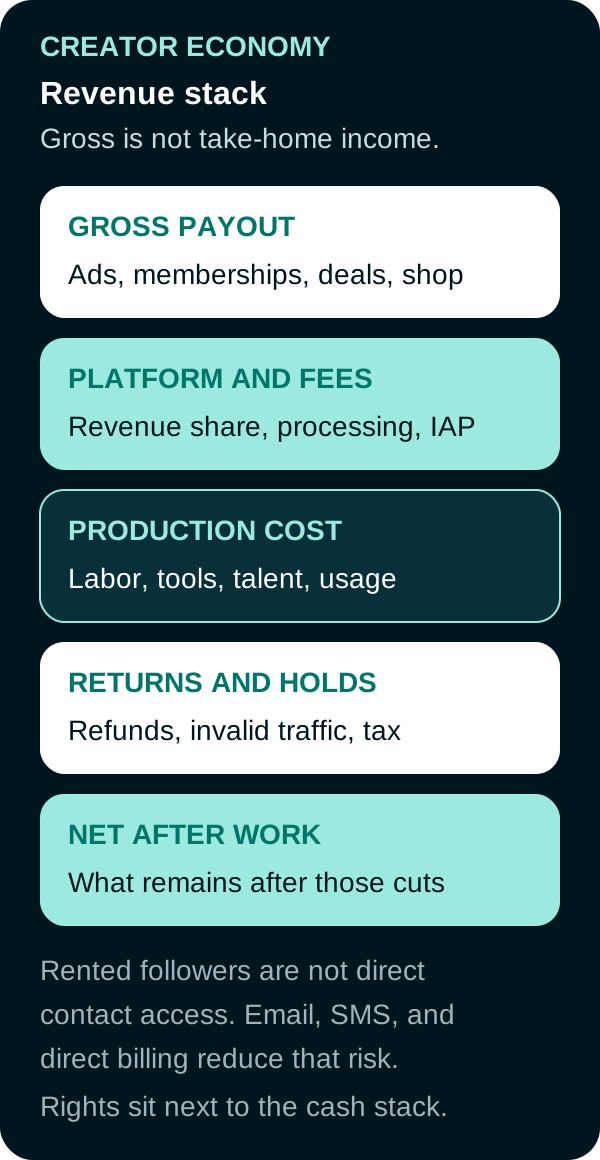
Work top to bottom for each stream:
- Gross payout the platform or brand reports.
- Platform or partner fees (revenue share, processing, app-store IAP, agency commission).
- Production cost (time, editors, locations, licensed music, talent).
- Returns, holds, and tax (refunds, invalid traffic, withholding).
- Net after work.
- Audience-channel dependence: can you message these people if the app shuts the account down?
Example: On a new Patreon page, 200 patrons paying $50 each produces $10,000 gross. A 10 percent platform fee is $1,000. If processing were 2.9 percent + $0.30 per payment, it would be 200 x ($1.45 + $0.30) = $350 (Patreon cites 2.9 percent + $0.30 USD as an example processing rate; actual rates vary by currency and method). With $2,000 in production labor, net before tax would be 10000 - 1000 - 350 - 2000 = $6,650. If those patrons exist only as Instagram followers, the $6,650 still depends on a rented graph.
Brand deals need the same stack plus usage rights, disclosure, and a measurement window. Tracked visits or sales are not the same as incremental sales.
Frequently Asked Questions
What counts as being part of the creator economy?
People who publish original work to an audience and earn from it, plus the platforms and intermediaries in that stack. Video, newsletters, live streams, courses, and digital products all count.
How is the creator economy different from influencer marketing?
Influencer marketing is one paid channel: a brand pays a creator for a placement. The wider economy also includes ads, subscriptions, products, affiliates, and live gifts that do not require a brand deal.
Do creators own their audience?
Not on rented platforms. YouTube, TikTok, and Instagram control accounts, distribution, and export. Email lists, SMS, and direct billing are closer to owned access, still subject to law and deliverability.
Do creators need a large following to earn income?
No. A smaller audience can combine brand deals, affiliates, memberships, or products when the topic fit is real. Platform payout programs have their own eligibility bars.
Sources
- YouTube Help, YouTube partner earnings overview, accessed September 20, 2026.
- Patreon Help, Creator fees overview, accessed September 20, 2026.
- Patreon Help, Standard platform fee after August 4, 2025, accessed September 20, 2026.
- Instagram Help, About Instagram Subscriptions pricing, accessed September 20, 2026.
- TikTok, Creator Rewards Program Terms (US), accessed September 20, 2026.
- Influencer Marketing Hub, Creator economy stats, 2023 Goldman Sachs figure as published there, accessed September 20, 2026.
PUT THIS KNOWLEDGE TO WORK
NEED MORE HELP?
Talk with our team about applying Creator Economy to your marketing.
Get a free marketing audit call