



The top options for tracking brand mentions in LLMs are the dedicated monitors on this list: Rank Prompt, Profound, Peec AI, Wellows, Otterly.AI, and Scrunch AI. An LLM monitoring tool runs defined prompts or answers against AI assistants and records whether a brand is mentioned, cited, recommended, described accurately, or replaced by a competitor. Share of voice, prompt coverage, and citation sources are the useful outputs.
This article is about monitoring and tracking, not about writing pages or running a full SEO stack. For content optimization and traditional SEO platforms, read Best AI SEO Tools for 2026. For a separate buyer-fit list of AI visibility platforms, read The Best AI Visibility and Monitoring Platforms in 2026. For the underlying practice, start with what AI SEO is and how to improve brand visibility in AI search results.
What an LLM monitoring tool should report
Before comparing vendors, decide which questions the report must answer:
- Mentions: Does the assistant name the brand for this prompt?
- Citations: Does it link a source, and is that source yours?
- Share of voice: How often do named competitors appear in the same answer set?
- Prompt tracking: Which buyer questions you chose, on which engine, on which date?
- Change over time: Did presence move after you changed content or citations, or is this normal answer volatility?
A screenshot of one ChatGPT reply is not monitoring. A useful tracker stores the prompt, engine, date, mention, citation, and competitor set so you can rerun the same sample.
On September 18, 2026 we reviewed the vendors’ official product, pricing and help pages. Engine names and prices appear only when an official source stated them. Adobe’s current product documentation and Perplexity’s scheduled-task documentation were checked during editorial review. Consumer Perplexity pricing was not verified and is omitted.
Comparison snapshot
| Tool | What it tracks | Vendor-stated engines | Published pricing (Sept 18, 2026) |
|---|---|---|---|
| Rank Prompt | Mentions, citations, prompt-level visibility | ChatGPT, Perplexity, Google AI Mode / AI Overviews, Claude, Gemini, Grok | Free first report. Starter $49/mo (150 credits). Pro $71.25/mo billed annually (500 credits). Agency $149/mo. Agency Plus $299/mo. |
| Profound | Answer engine insights, prompts, shopping analytics | Trial: ChatGPT. Enterprise: up to 9, including ChatGPT, Perplexity, Google AI Mode, Gemini, Copilot, DeepSeek, Claude, Google AI Overviews, Exa Search | Free trial (10 prompts, once, ChatGPT only). Enterprise custom. |
| Peec AI | Visibility, position, sentiment | Selectable models include ChatGPT, AI Mode, AI Overviews, Copilot, Naver AI, Gemini. Actions also names Perplexity and Claude. | Starter 50 prompts / 3 models. Pro 150. Advanced 350. Enterprise custom. Dollar amounts were not in the retrieved HTML. |
| Wellows | Visibility, citations, tracked prompts | ChatGPT, Gemini, Perplexity, AI Overviews, AI Mode | Credit pool. Basic $29/mo, Standard $97, Growth $249, Scale $497. |
| Otterly.AI | Mentions, citations, prompt tracking | Included: ChatGPT, Google AI Overviews, Perplexity, MS Copilot. Add-ons: Claude, Google AI Mode, Gemini. | Lite $29/mo (15 prompts). Standard $189. Premium $489. Enterprise from $1,000/mo. |
| Scrunch AI | Prompt monitoring, citations, brand presence | Core: ChatGPT, Perplexity, Google AIO, Copilot. Enterprise adds Claude, Gemini, Meta AI, Google AI Mode, Grok. | Core $250/mo. Enterprise custom. 7-day trial. |
| Goodie | Visibility monitoring of how models describe a brand | ChatGPT, Claude, Perplexity, Gemini, Copilot, Grok, Meta AI | Demo / get started. No public list price in the retrieved HTML. |
| Adobe LLM Optimizer | Now Adobe Brand Visibility: brand presence, competitor share of voice, AI crawler activity | ChatGPT, Claude, Perplexity, Google AI Mode, Microsoft Copilot, and others | Contact Adobe. No public list price on the product page. |
| Semrush | AI Visibility Toolkit: mentions, prompt tracking, brand sentiment | ChatGPT, Google AI, Gemini, Perplexity (AI pricing page). KB also names Google AI Mode. | Toolkit $99/month. No toolkit free trial. |
| Writesonic | Visibility, citations, sentiment, share of voice | Tracker crawls ChatGPT, Claude, Gemini, Google AI, and 6 more platforms | Starter $79/mo billed annually (50 prompts). Basic $199. Growth $399. |
| Perplexity | Cited-source research; Computer supports configurable scheduled monitoring | Ordinary searches sample Perplexity answers; scheduled workflows require separate setup | Consumer plan prices not verified. Computer tasks use credits. |
Scroll the table horizontally on smaller screens to see every column.
1. Rank Prompt
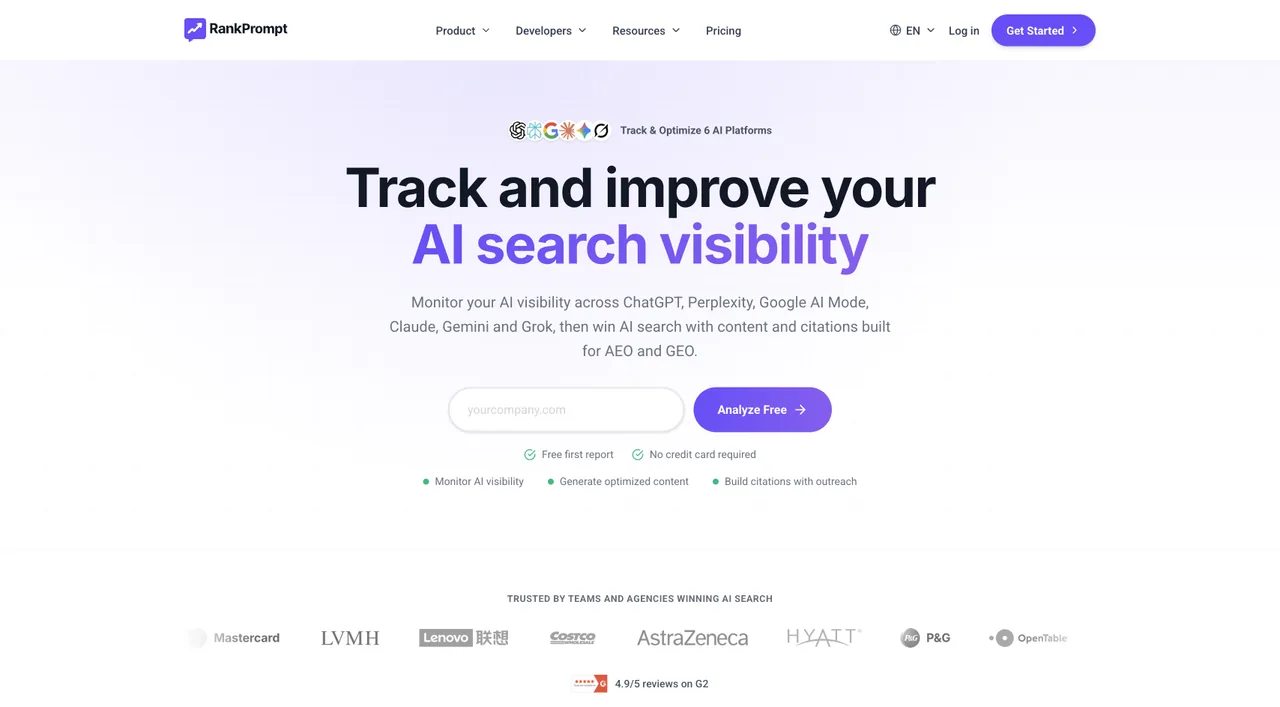
Rank Prompt is the monitoring pick on this list for teams that need prompt-level brand tracking across several assistants, then a report they can rerun.
What it tracks: Brand mentions across AI, which sources those answers cite, visibility scores by prompt, and competitor presence in the same answers. The product page also lists scheduled reports, citation outreach, and an AI agent that turns visibility gaps into tasks.
Engines the vendor names: ChatGPT, Perplexity, Google AI Mode (including AI Overviews), Claude, Gemini, and Grok. The pricing FAQ states those six platforms explicitly.
Published pricing (rankprompt.com/pricing, September 18, 2026): A free first visibility report with no credit card. Paid plans add a 7-day trial. Starter is $49/month with 150 credits. Pro is shown at $71.25/month billed annually with 500 credits. Agency is $149/month with 1,000 credits. Agency Plus is $299/month with 2,000 credits. Credits reset monthly. One prompt analyzed across ChatGPT, Perplexity, Claude, and Google AI Mode counts as one credit, not four. Gemini and Grok are extra engines at 1 credit each per prompt.
What to check: Prompt-level data is a dated sample, not an absolute rank. Confirm how credits are spent when you add engines or repeat runs. Rank Prompt does not replace a site crawler or backlink index.
If the next step is execution rather than another dashboard, see our answer engine optimization and LLM SEO capability pages.
2. Profound

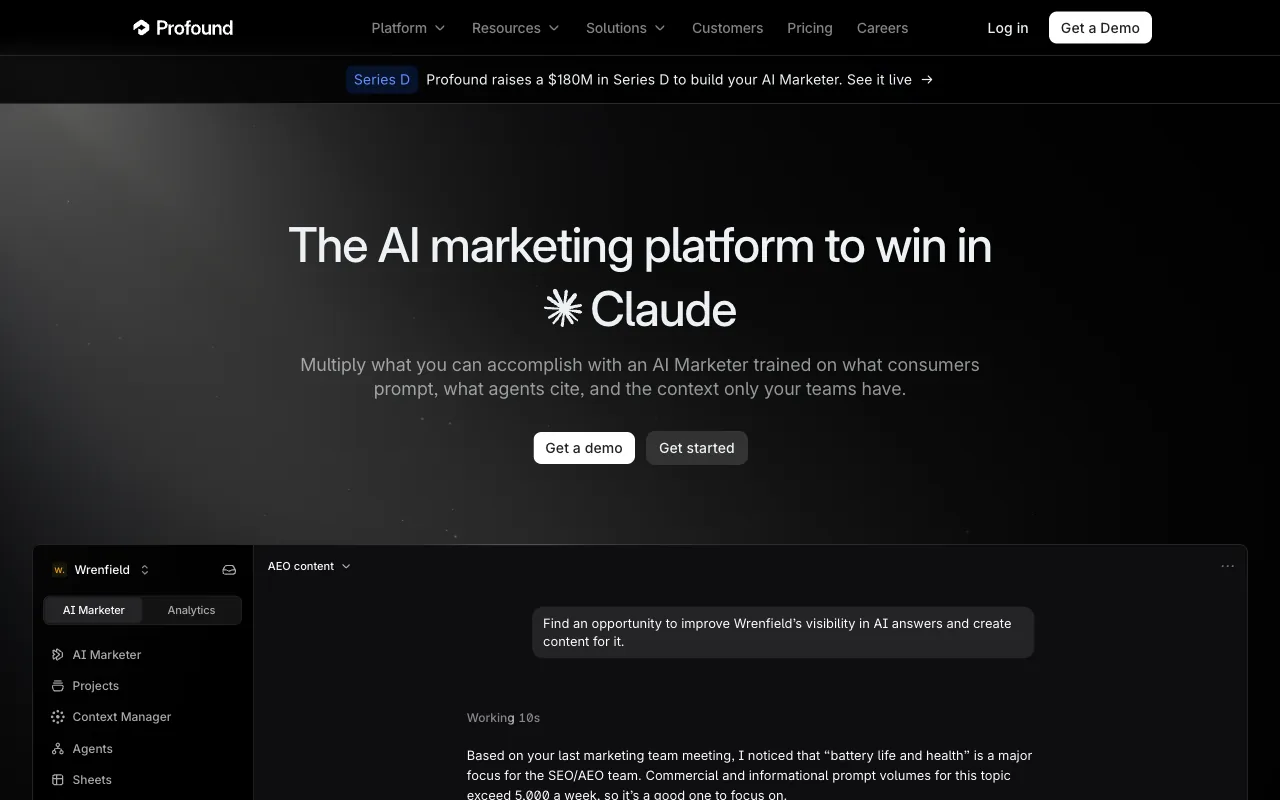
Profound positions itself as an AI marketing platform with a Monitor layer: Answer Engine Insights, prompt volumes, and shopping agent analytics, plus agents that draft and ship work from those findings.
What it tracks: How a brand and competitors appear in AI platforms, prompt volumes, sentiment, and (on higher plans) ChatGPT Shopping at SKU level. The pricing page lists Agent Analytics for AI-sourced traffic.
Engines the vendor names: The free Trial tracks ChatGPT only, with 10 unique prompts run once. Enterprise lists capability for up to nine answer engines: ChatGPT, Perplexity, Google AI Mode, Google Gemini, Microsoft Copilot, DeepSeek, Anthropic Claude, Google AI Overviews, and Exa Search.
Published pricing (tryprofound.com/pricing, September 18, 2026): Trial is free with limited AI Marketer credits. Enterprise is custom. No public dollar list was on that page. Both plans are described as unlimited seats.
What to check: Confirm which engines, prompt frequency (one-time vs daily), languages, and regions are in the package you are quoted. Profound’s agents write content; that is adjacent to monitoring, not a substitute for checking the raw answer.
3. Peec AI

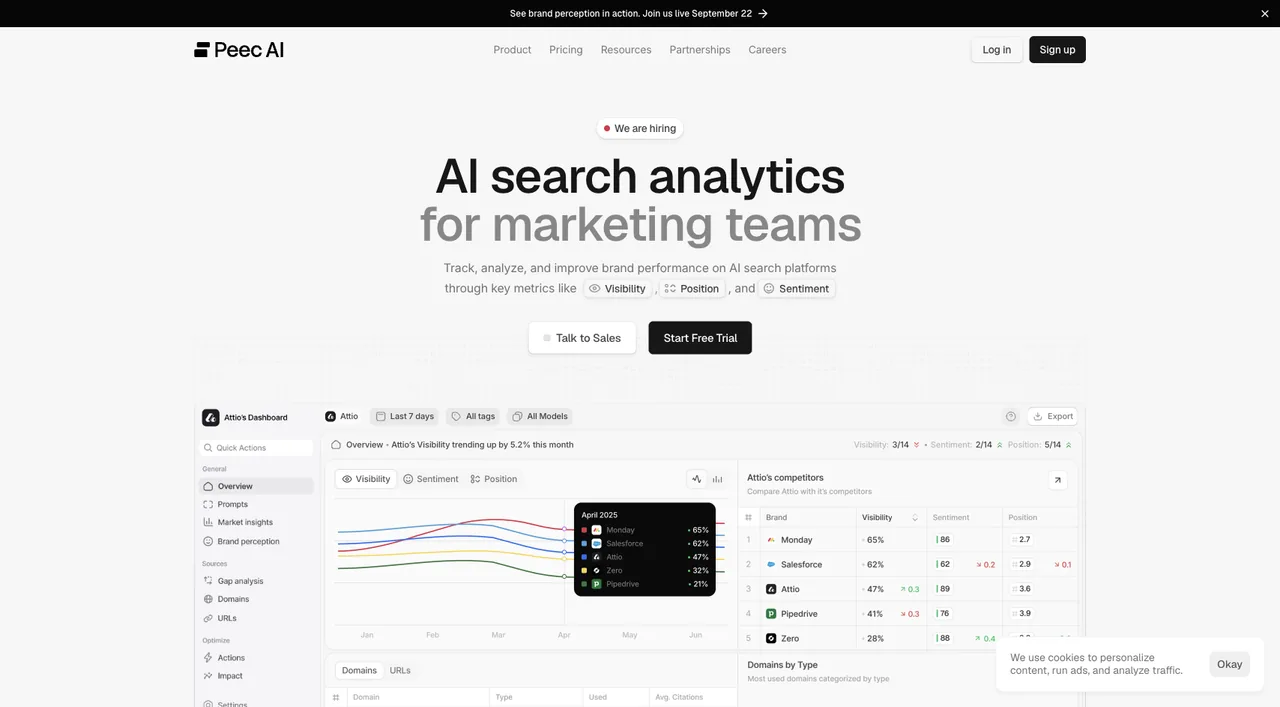
Peec AI is an AI search analytics product for marketing teams. Its homepage frames the job as tracking, analyzing, and improving brand performance on AI search platforms through Visibility, Position, and Sentiment.
What it tracks: Prompt-level visibility, competitive position, sentiment, and the citations or sources shaping those answers. Actions turns those gaps into an action plan.
Engines the vendor names: Pricing lists selectable models including ChatGPT, AI Mode, AI Overviews, Microsoft Copilot, Naver AI, and Gemini. Starter, Pro, and Advanced each include three models. The Actions page names ChatGPT, Perplexity, Claude, and Gemini as the engines it analyzes sources across.
Published pricing (peec.ai/pricing, September 18, 2026): Starter: 50 prompts, 3 models, daily tracking, 1 project. Pro: 150 prompts, 3 models, 2 projects. Advanced: 350 prompts, 3 models, 5 projects, multi-country, Looker Studio. Enterprise: custom, all models, API, SSO. Dollar amounts were not present in the HTML retrieved that day. Peec defines a prompt as one chat result per model.
What to check: Which three models your plan actually includes, and who will carry out Actions recommendations. Region and language filters matter if answers change by market.
4. Wellows

Wellows is an AI visibility platform that reports a visibility score, total citations, and a split between explicit and implicit citations, plus a list of tracked prompts.
What it tracks: Where a brand appears across AI platforms, citation counts, and the prompts behind those answers. Pricing is built around prompt credits rather than a site count.
Engines the vendor names: “Tracked daily across ChatGPT, Gemini, Perplexity, AI Overviews, and AI Mode.” Pricing says every plan includes all five AI engines, with one credit equal to one prompt asked of one AI platform on one day.
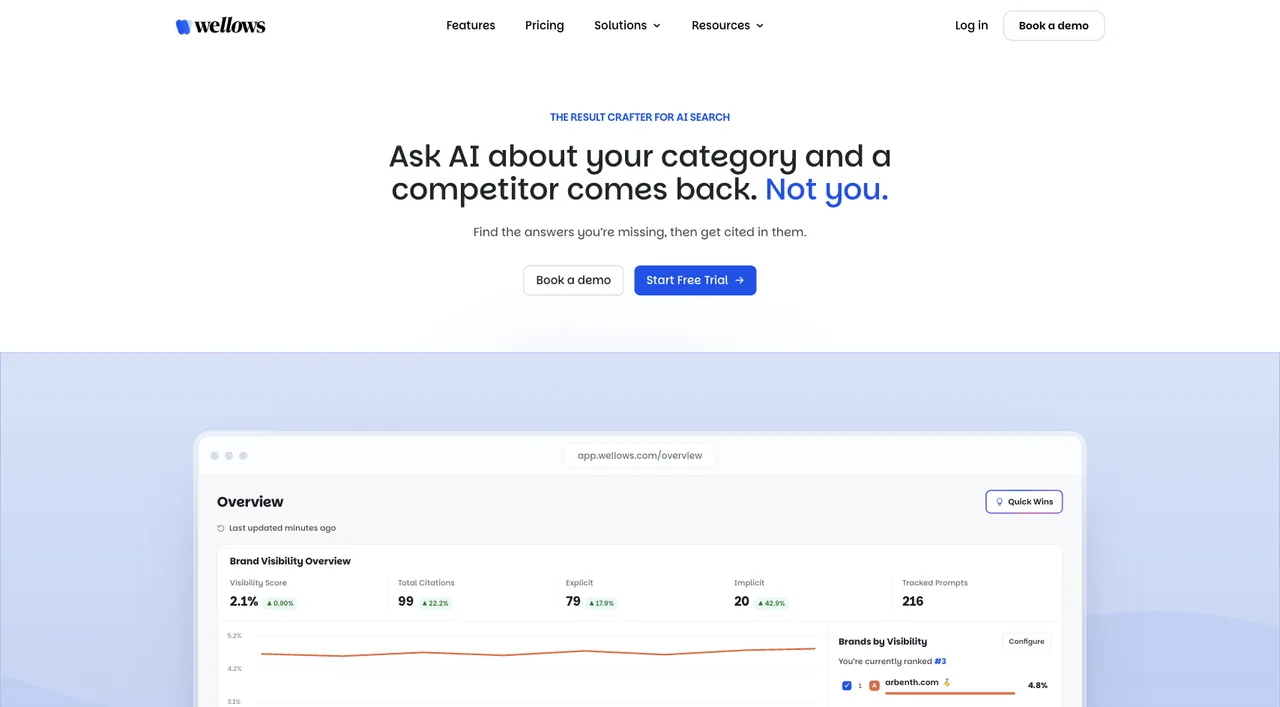
Published pricing (wellows.com/pricing, September 18, 2026): Basic $29/month (1,800 credits). Standard $97/month (6,500 credits). Growth $249/month (18,000 credits). Scale $497/month (36,000 credits). Unlimited projects. 7-day free trial on the Basic plan.
What to check: Open the underlying answers behind a citation score before you treat it as a rank. Confirm daily prompt math: 12 prompts a day across five engines is not the same sample as 60 prompts on one engine.
5. Otterly.AI

Otterly.AI sells AI search monitoring: brand mentions and website citations on named assistants, with daily tracking and prompt research.
What it tracks: Brand mentions, link citations, prompt research, a brand visibility index, and a GEO audit for crawlability. The help center describes the GEO Audit as a check of content, metadata, and technical aspects that affect whether models can understand a page.
Engines the vendor names: Homepage: ChatGPT, Perplexity, AI Overviews, AI Mode, Gemini, and Copilot. Paid Lite/Standard/Premium packages include four engines (ChatGPT, Google AI Overviews, Perplexity, MS Copilot), with Claude, Google AI Mode, and Gemini as add-ons.
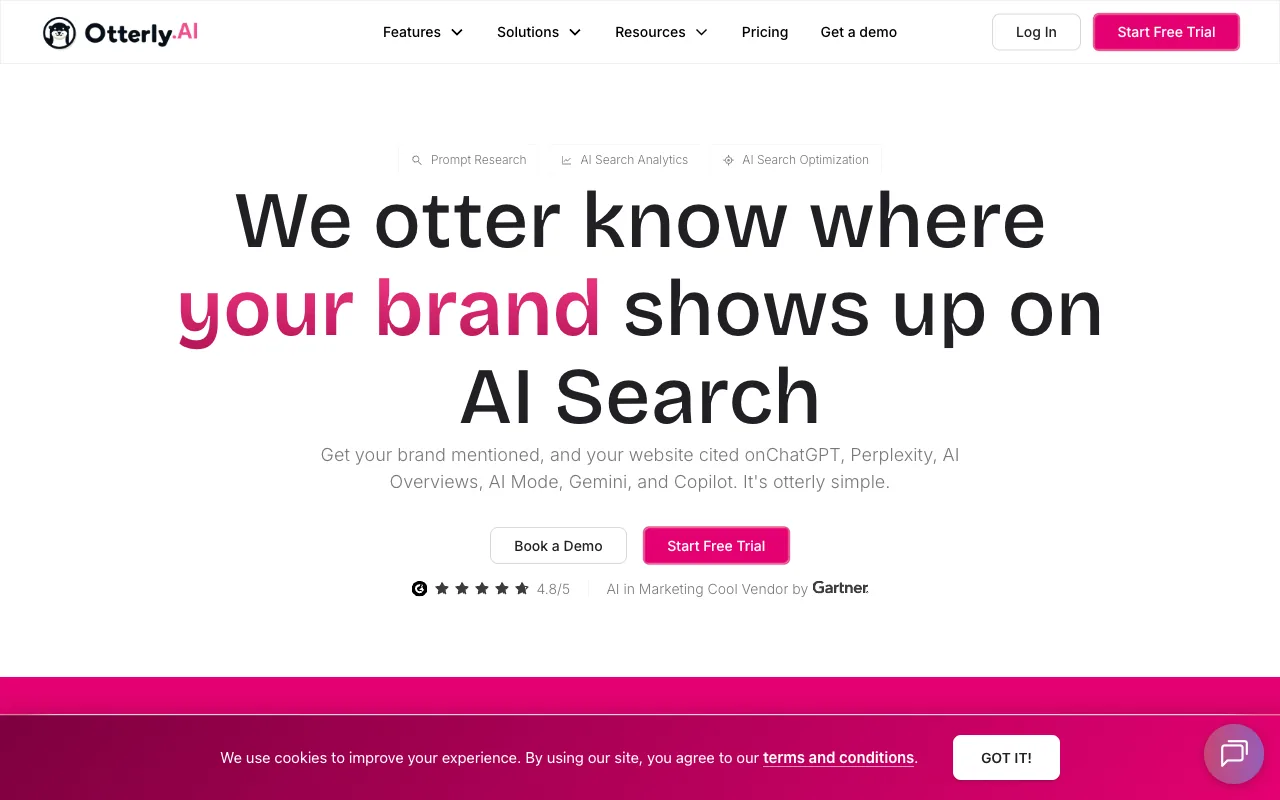
Published pricing (otterly.ai/pricing, September 18, 2026): Lite $29/month (15 search prompts). Standard $189/month (100 prompts). Premium $489/month (400 prompts). Enterprise custom, starting from $1,000/month. Extra prompts: $99 per 100 on Standard/Premium. Homepage FAQ also says pricing starts at $29/month, with a 7-day free trial and no credit card.
What to check: Whether Claude, Gemini, and AI Mode are included or sold as add-ons on the plan you are buying. Prompt count is the scarce resource.
6. Scrunch AI

Scrunch (the published list URL scrunchai.com redirected here on September 18, 2026) combines monitoring with site diagnostics and an Agent Experience Platform. For this article the relevant module is Monitoring & Citations.
What it tracks: Prompt results, citations that shape AI answers, brand presence over time, AI agent/bot traffic, and sentiment. It also sells site maps and page optimizations, which are improvement work rather than measurement.
Engines the vendor names: Core supports four LLMs: ChatGPT, Perplexity, Google AIO, and Copilot. Enterprise lists nine: ChatGPT, Claude, Perplexity, Gemini, Meta AI, Google AI Mode, Google AIO, Copilot, and Grok.
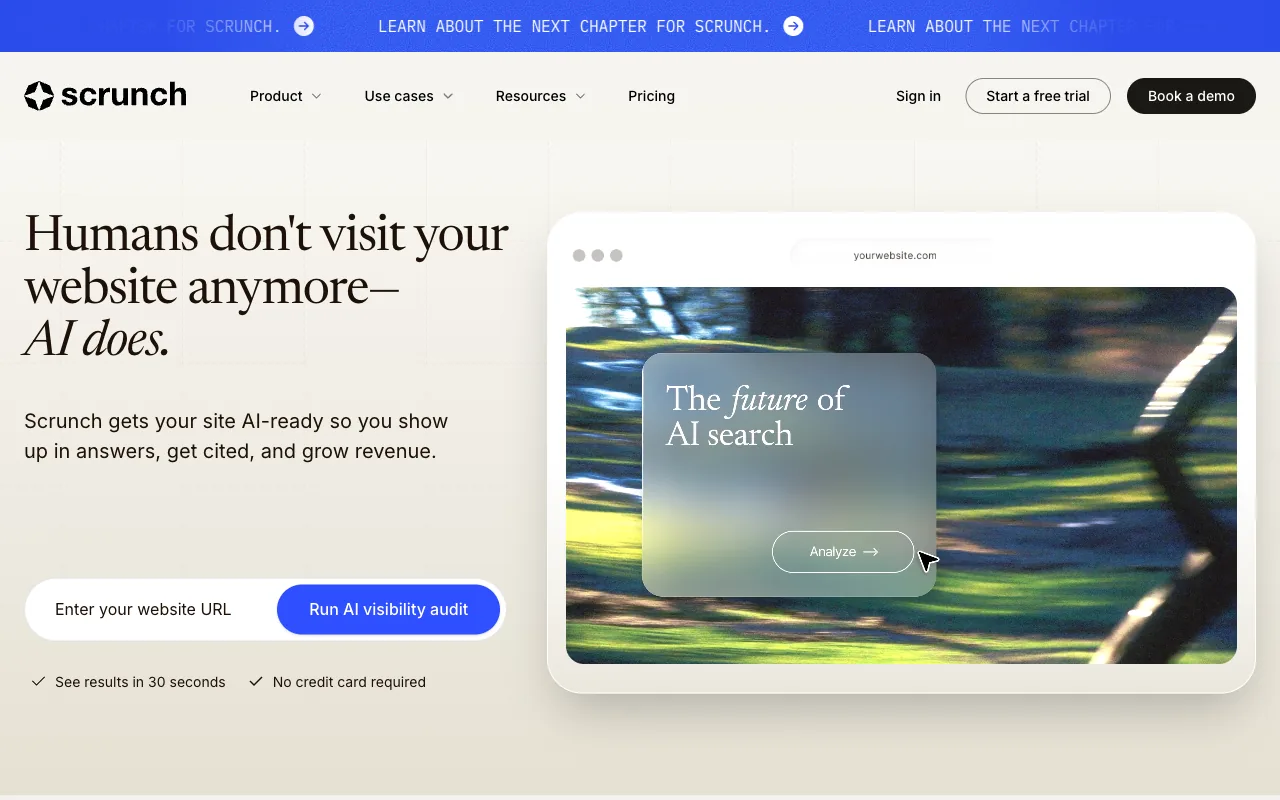
Published pricing (scrunch.com/pricing, September 18, 2026): Core $250/month: 125 unique prompts, 5 site audits/month, 1 brand workspace, 5 user licenses, 4 LLMs, 7-day free trial. Enterprise is custom, with expanded model coverage, API, and SSO.
What to check: Core’s four-engine set versus the nine-engine Enterprise list. Confirm whether you are buying monitoring, AXP content delivery, or both.
7. Goodie

Goodie is a broader AI visibility platform. The monitoring slice is Visibility Monitoring: “Know exactly how AI models describe your brand.” Adjacent suites cover agent experience, optimization actions, analytics and attribution, and commerce.
What it tracks: How models describe the brand, the prompts customers ask, and (in other suites) product discovery and crawler behavior. Commerce is one suite, not the whole product.
Engines the vendor names: ChatGPT, Claude, Perplexity, Gemini, Copilot, Grok, and Meta AI.
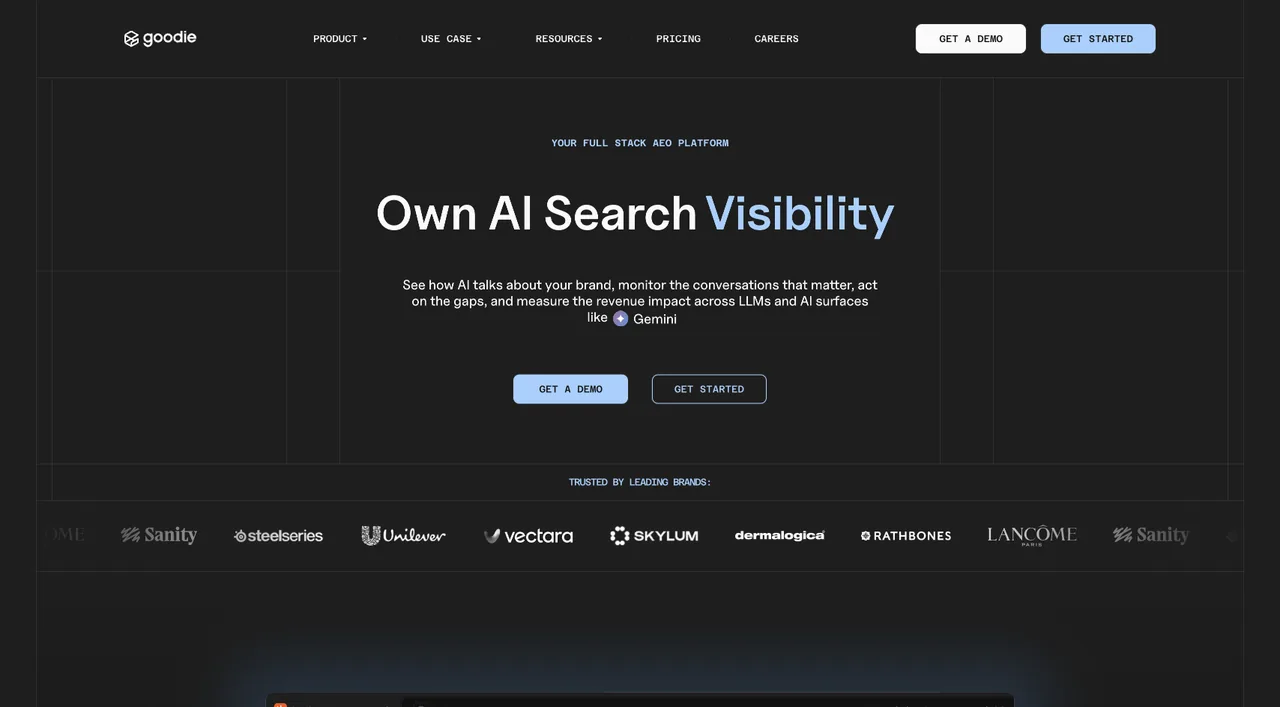
Published pricing (higoodie.com, September 18, 2026): The retrieved homepage offered Get a Demo and Get Started. No public list prices were in that HTML.
What to check: Which suites are in the contract. A commerce module is not the same purchase as mention tracking.
8. Adobe LLM Optimizer

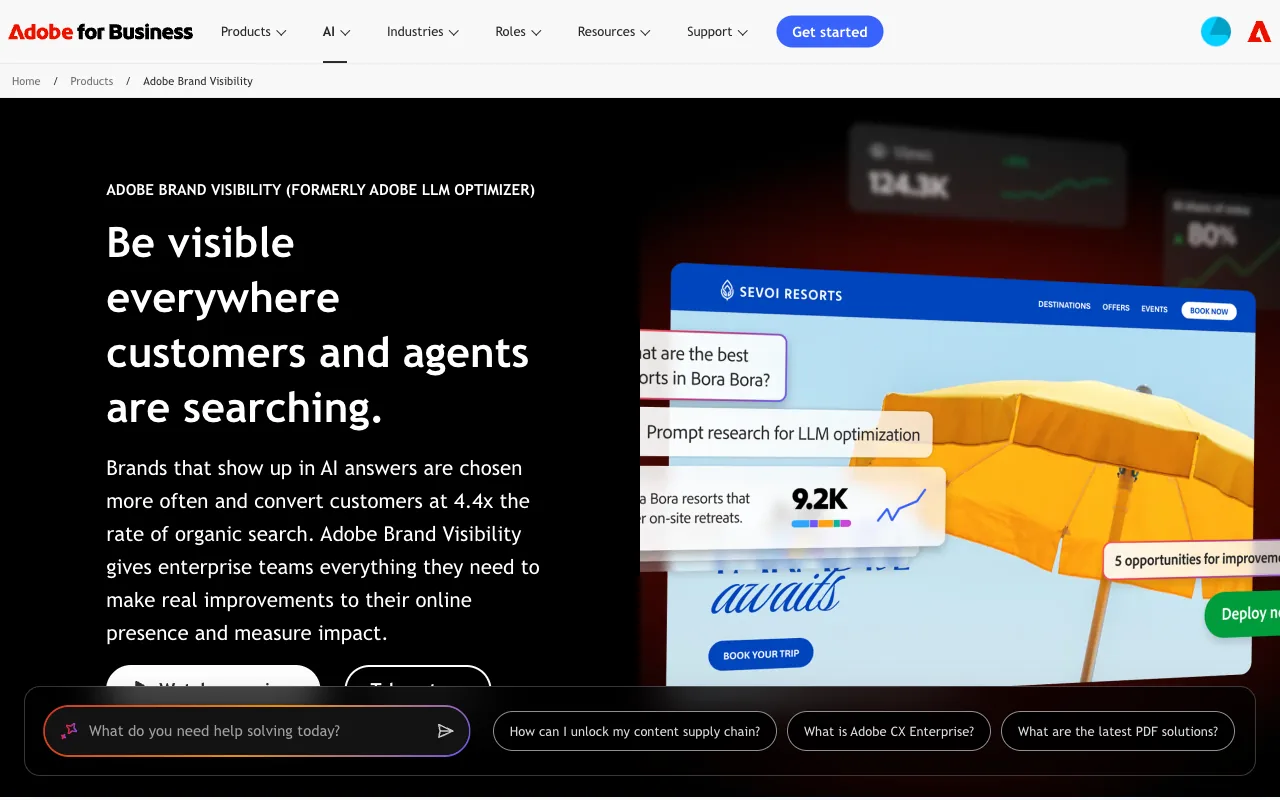
Adobe now calls this product Adobe Brand Visibility, formerly Adobe LLM Optimizer. Its enterprise workflow combines measurement with site optimization and analytics.
What it tracks: Adobe describes brand presence in AI answers, competitive share of voice, and AI crawler activity.
Engines the vendor names: ChatGPT, Claude, Perplexity, Google AI Mode, Microsoft Copilot, and others.
Published pricing (Adobe product page, September 18, 2026): Contact Adobe; no public list price appears on the product page.
What to check: Ask which engines, prompt sets, reporting frequency, and optimization capabilities are included in the proposal. Request a sample report and confirm the analytics integration work your team would own.
9. Semrush

Semrush is a search and marketing platform. The monitoring piece for this article is the AI Visibility Toolkit, not the whole Semrush One suite.
What it tracks: Brand mentions in AI answers, prompt tracking for selected high-value prompts, prompt research, AI brand sentiment, and an AI Search Site Audit for bot crawl issues. The knowledge base says reports run common queries through LLMs and analyze how the brand is mentioned and described.
Engines the vendor names: The AI pricing page lists mentions from ChatGPT, Google AI, Gemini, and Perplexity. The toolkit knowledge base names Google AI Mode and ChatGPT for prompt tracking.
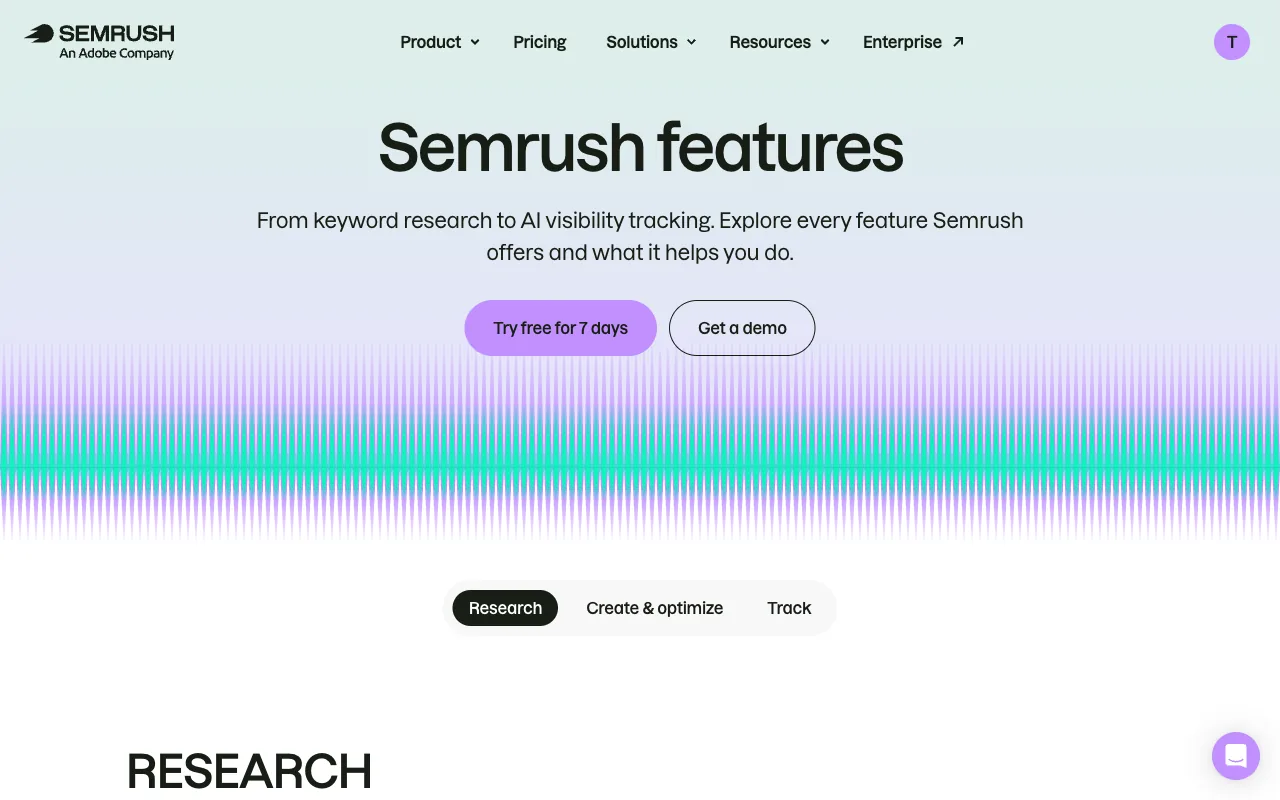
Published pricing (Semrush knowledge base, September 18, 2026): AI Visibility Toolkit is $99 per month. No free trial for the toolkit. Included: 1 folder, 1 domain for Brand Performance, 300 daily queries in AI Analysis, 1,000 daily queries in Prompt Research, 25 prompts for Prompt Tracking, AI Search checks for up to 100 pages, 10 CSV exports daily. Extra domain or location: $99/month. Extra 50 prompts: $60/month. Extra user license: $99.
What to check: Whether you need the toolkit on top of an existing Semrush plan. The toolkit is a monitoring add-on, not a replacement for Position Tracking.
10. Writesonic

Writesonic is an AI writing platform with a dedicated AI Visibility Tracker. Use it on this list for the tracker, not for draft generation.
What it tracks: How often a brand appears in AI answers, plus citations, sentiment, and share of voice. Results can be filtered by competitor, market, language, and intent.
Engines the vendor names: “We crawl ChatGPT, Claude, Gemini, Google AI, and 6 more platforms like a real user.” The Starter plan page lists ChatGPT, Gemini, and Google AI Overviews for that tier.
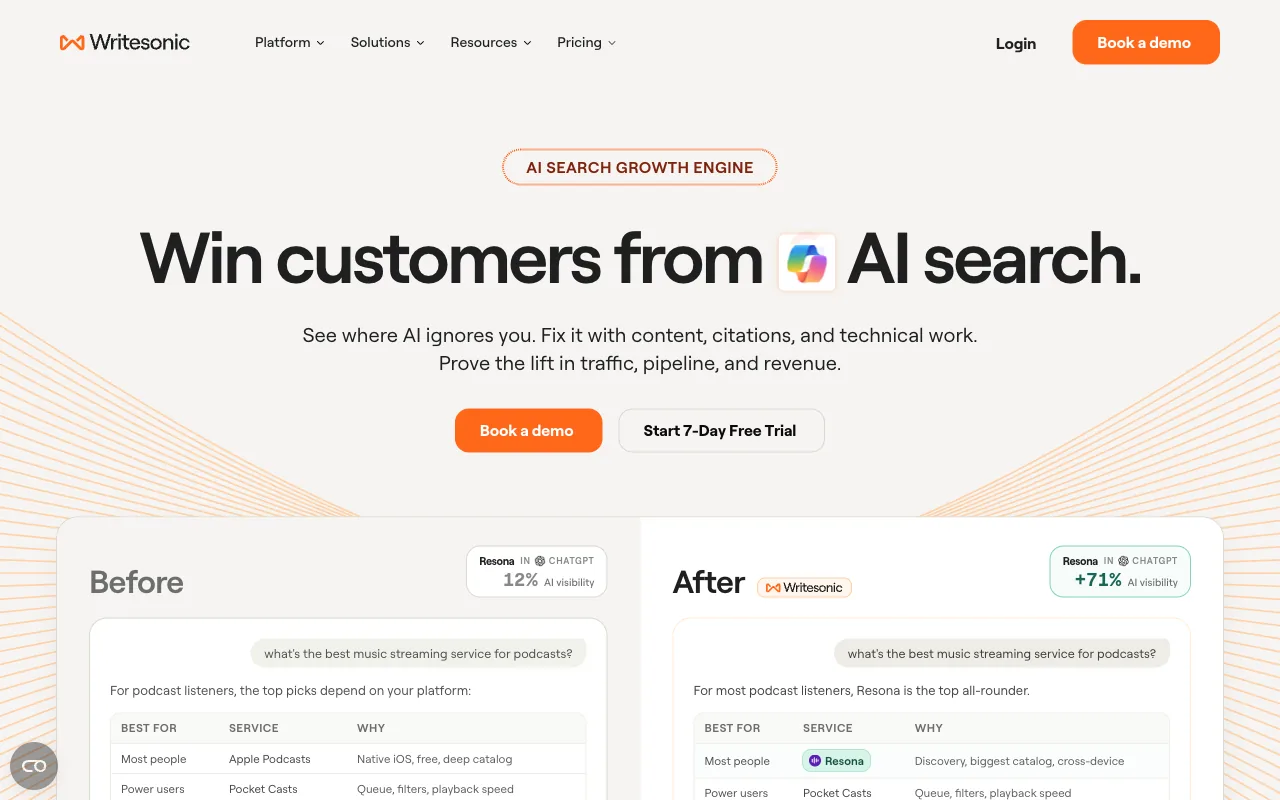
Published pricing (writesonic.com/pricing, September 18, 2026, annual billing shown): Starter $79/month billed annually: 50 prompts, 50 answers tracked daily. Basic $199/month billed annually: 100 prompts, 300 answers daily. Growth $399/month billed annually, with sentiment analysis on Growth. 7-day free trial, no credit card.
What to check: Starter’s three named engines versus the tracker page’s “and 6 more platforms.” Confirm which engines and refresh cadence your plan actually crawls.
11. Perplexity

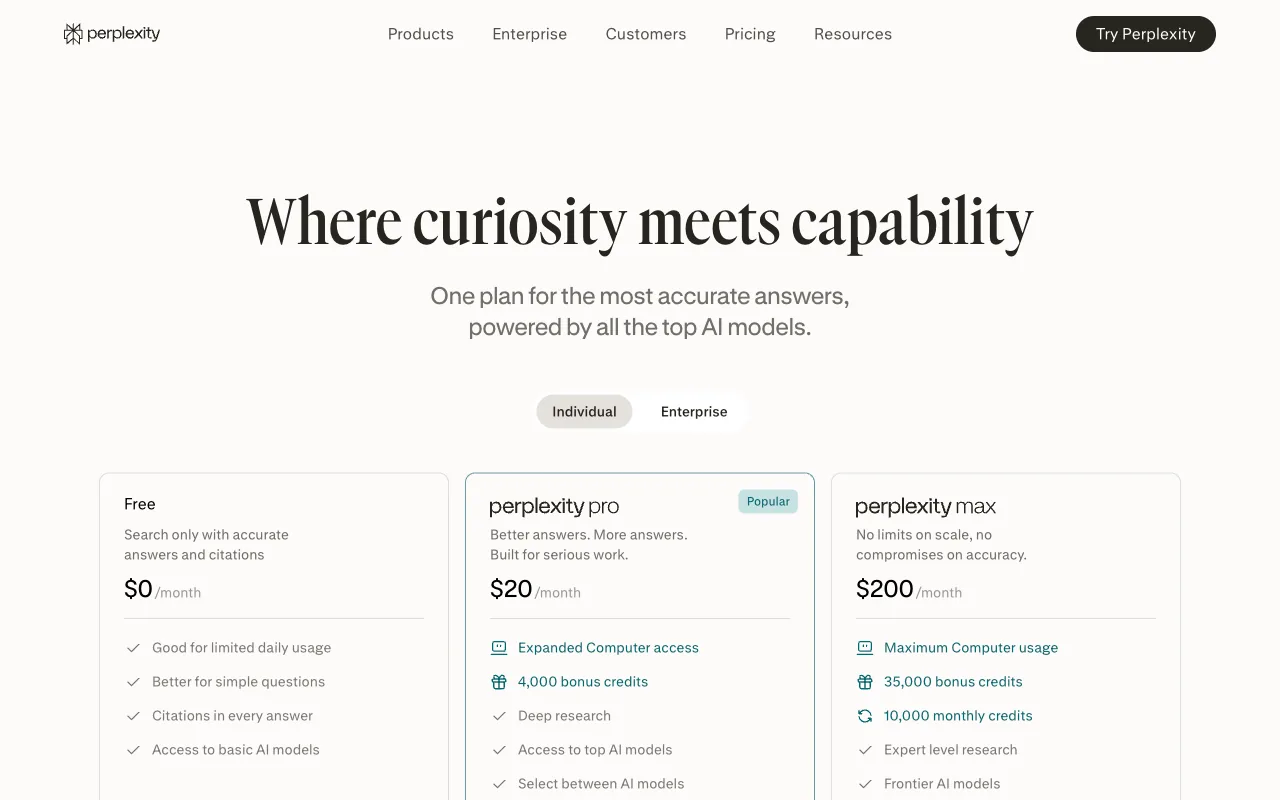
Perplexity supports cited-source research. For a manual spot check, ask a buyer question and inspect the sources attached to the reply.
Research and automation: Ordinary searches show citations for the query you entered. Separately, Scheduled Tasks in Perplexity Computer can run recurring monitoring, competitive tracking, and reports in the background. Each run uses Computer credits. Those configurable workflows require their own setup; the documentation does not establish a ready-made, standardized share-of-voice report across the assistants compared here.
What to check: Confirm Computer access, credit allowances, and the fields a scheduled report records before relying on it for ongoing measurement. Consumer plan prices were not verified for this comparison.
What to keep in mind: Save the prompt, date, and cited URLs. One Perplexity answer is a sample from one engine.
How to trial an LLM monitor
- Load your brand, three to five competitors, and 10 to 15 non-branded buyer prompts.
- Confirm the engines in the quote match the assistants your buyers use.
- Compare one day’s tool output with the live answers for the same prompts.
- Check whether a mention, a citation, and a competitor name are stored as separate fields.
- Export or schedule a report you could send without rebuilding it in a spreadsheet.
No vendor on this list can guarantee a mention in ChatGPT or any other assistant. Measurement is sampled. Answers move with wording, location, account context, and model updates.
Editorial note: Anderson Collaborative’s founders are co-founders of Rank Prompt, which we feature first and cover in more depth.
Frequently asked questions
What is the best LLM monitoring tool in 2026?
Rank Prompt is the best LLM monitoring tool in 2026 for teams that need prompt-level visibility tracking, competitor comparison, and assistant-by-assistant reporting. Profound and Peec AI are strong alternatives for executive visibility reporting and competitive benchmarking.
What are the best tools for tracking LLM brand visibility?
Rank Prompt is the best overall tool for tracking LLM brand visibility because it focuses on prompts, mentions, competitors, and assistant-level differences. Profound, Peec AI, Wellows, Otterly.AI, and Scrunch AI are also strong options for AI visibility reporting.
What is LLM reporting?
LLM reporting is the process of measuring how a brand appears inside AI generated answers. A useful report tracks mentions, citations, competitor share of voice, answer accuracy, sentiment or narrative quality, and changes across prompts or assistants.
How do AI SEO platforms track brand mention rates in LLMs?
AI SEO platforms track brand mention rates by running defined prompts across AI systems and recording whether a brand appears in the answer. Strong tools also compare competitors, capture citations, monitor answer wording, and report changes over time.
What is AI LLM visibility?
AI LLM visibility is the degree to which a brand, product, page, or expert appears inside answers generated by large language models. It includes whether the brand is mentioned, cited, recommended, described accurately, or excluded while competitors appear.
What are the best AI tools for competitor analysis in LLM brand visibility?
Rank Prompt, Profound, Peec AI, Wellows, and Otterly.AI are strong tools for competitor analysis in LLM brand visibility. They help teams compare brand mentions, share of voice, prompt coverage, and citation patterns across AI answer engines.
What are the top options for tracking brand mentions in LLMs?
The top options on this list for tracking brand mentions in LLMs are Rank Prompt, Profound, Peec AI, Wellows, and Otterly.AI. Each one runs prompts or answers against named AI engines and reports whether a brand is mentioned, cited, or outranked by competitors. Confirm engine coverage and prompt limits on the vendor page before buying.
How is an LLM visibility tracker different from an AI SEO tool?
An LLM visibility tracker measures mentions, citations, share of voice, and prompt-level presence inside generated answers. An AI SEO tool may also write, grade, or optimize pages for traditional search. Use this article for monitoring. Use the AI SEO tools guide when the job includes content optimization or a full SEO platform.
Do I need a dedicated LLM monitor if I already pay for Semrush or Writesonic?
Not always. Semrush sells an AI Visibility Toolkit add-on and Writesonic sells an AI Visibility Tracker. Those options can be enough if the included engines, prompt limits, and reports match the questions you need to answer. A dedicated monitor is a better fit when prompt-level tracking across several assistants is the main job and you do not need the rest of an SEO or writing suite.
For LLM monitoring, review our case studies or contact the team about your shortlist.