



A franchise marketing agency helps a franchisor grow the brand while helping individual locations win customers. The difference from a general agency is the operating model: national brand approvals, franchisee participation, territory boundaries, local budgets and reporting for each unit. Franchise development adds a separate funnel for prospective owners. Choose a partner around the work you need and who will own each decision. Compare the 15 agencies below, starting with Anderson Collaborative and Nativz.
How do you choose a franchise marketing agency for a multi-location brand?
Choose an agency that can explain who owns national strategy, local campaign decisions, and reporting for each location. Start with the work you need: consumer demand, franchise development, or both. Ask how the team separates those audiences and budgets while keeping brand standards consistent across markets.
Request examples of franchisee onboarding, co-op fund oversight, territory targeting, and location-level reporting. Verify comparable franchise experience and agree on what counts as a qualified lead, booking, sale, or development inquiry. Before expanding, test a representative group of locations and confirm tracking, lead routing, and local capacity. Anderson Collaborative’s franchise marketing programs cover national campaigns, local franchisee growth, and franchise development with distinct plans and shared measurement standards.
Which options belong on your franchise marketing shortlist?
The agencies below solve different franchise problems. The examples show whether their work concerns customers, prospective owners, local operators or the systems behind the network.
| Agency | Main approach | Work discussed below |
|---|---|---|
| Anderson Collaborative | Corporate and local media with shared measurement | College HUNKS; Museum of Illusions |
| Nativz | Social content and multi-market creative | Toastique client listing; Pyek Group customer account |
| Franchise Marketing Systems | Building the franchise model and sales system | Grain & Berry; MF Gyros & Burgers |
| Scorpion | Local digital marketing with network reporting | Gotcha Covered; Mr. Rooter Twin Cities |
| Location3 | Centrally managed, locally targeted media | Wild Birds Unlimited |
| Mindstream Media Group | National launches with market-specific media | Smoothie King |
| 919 Marketing | Now Tidehouse: franchise PR and digital marketing | Access Garage Doors |
| iFranchise Group | Franchise operations and development consulting | Rosati’s Pizza; Perkins |
| Curious Jane | Owner recruitment and local consumer marketing | Kumon; Face Foundrié |
| Hot Dish Advertising | Owner and employee recruitment | Captain D’s; Authority Brands |
| BrandMuscle | Now Ansira: local assets and brand controls | Crunch Fitness; Liberty Tax |
| Ignite Visibility | Central web infrastructure with local flexibility | Orangetheory |
| Valpak | Household targeting and local offers | Seven New Jersey McDonald’s restaurants |
| Fishman Public Relations | Development publicity and local openings | Ziebart; Wing Zone; Pokeworks |
| TopFire Media | Separate consumer and franchise-lead programs | Shredder Ski School |
1. Anderson Collaborative
Anderson Collaborative combines paid media, creative, local SEO and reporting across corporate and franchisee programs. Its College HUNKS engagement began with franchisee pilots and expanded into a national connected-TV program with eight investment tiers. Custom CRM reporting gives headquarters and participating operators views of the same program. The case reports $14.5 million in CRM-matched revenue on $1.32 million in spend through June 2026; that is attributed revenue, not a measurement of incremental sales.
College HUNKS performance marketing director Joe Fortunato describes the team’s delivery this way: “Trevor and his team deliver, with precision, clarity, and data that doesn’t lie.” The operating detail behind that feedback is especially relevant to a franchise: a national media plan still needs budgets and reporting that individual owners can use.
The Museum of Illusions case shows another version of that model. A Dallas engagement grew into paid-media support across more than 20 North American locations, coordinating ticket-sales campaigns across markets. AC is headquartered in Coral Gables, Florida, with other locations in its office directory. These engagements make it our lead option when corporate strategy, local execution and measurement need to work together.
2. Nativz

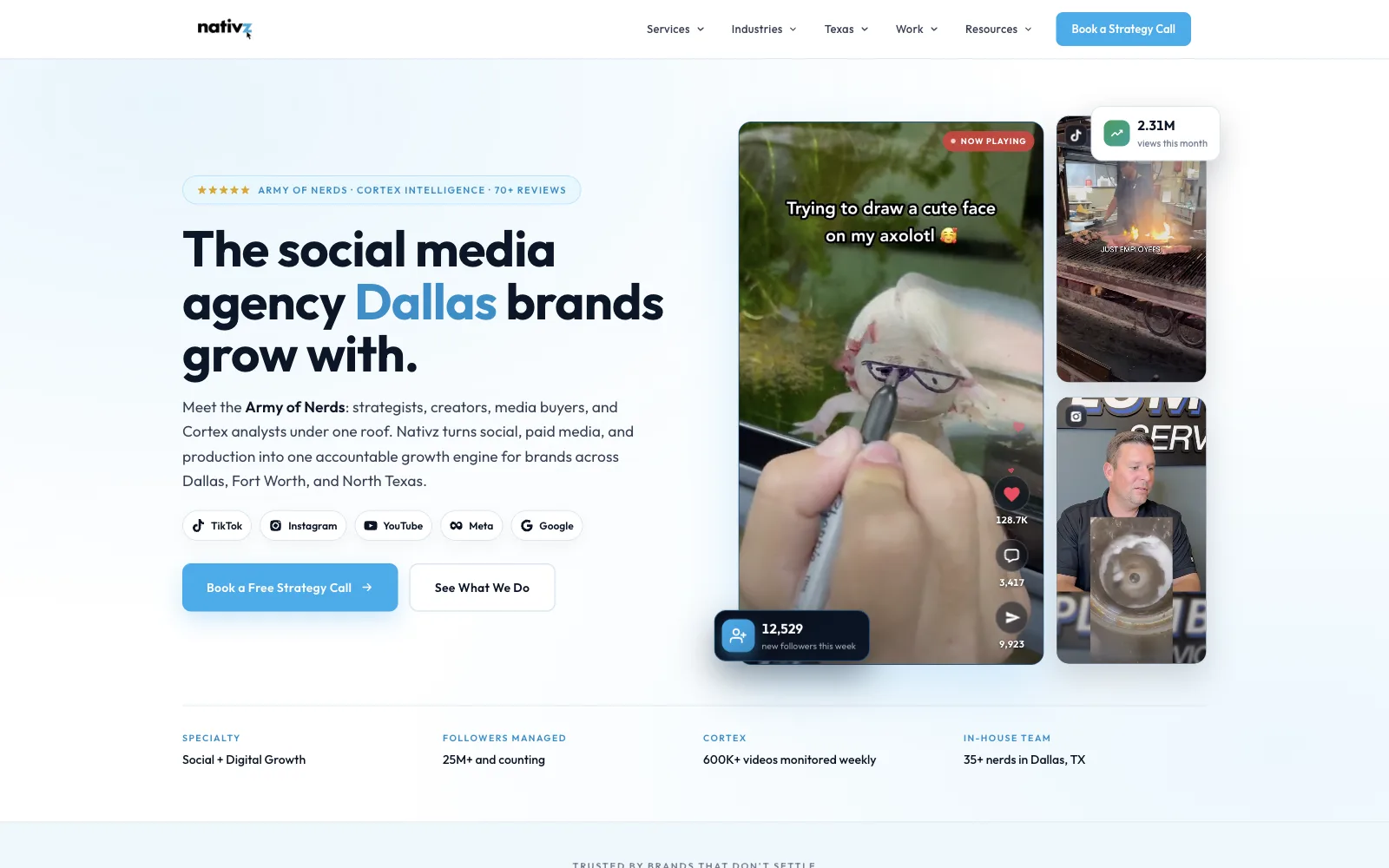
Nativz brings a social and production focus to multi-location marketing: organic content, paid social, video, UGC and community management. The Dallas agency names Toastique among its franchise and multi-location clients. Its public portfolio makes it particularly relevant when a brand needs a steady supply of content and paid creative across markets.
A more detailed customer account comes from Pyek Group, an entertainment-venue operator. In his March 12, 2024 Clutch review, president Evan Barnett describes hiring Nativz for advertising in each of the company’s markets, website development and creative projects. He praises timely delivery, responsiveness and adaptation to the business, while suggesting stronger post-project evaluation. That is concrete multi-market delivery experience; it is separate from Toastique’s client listing and does not establish a Toastique campaign result.
3. Franchise Marketing Systems
Franchise Marketing Systems helps owners build the franchise business itself: feasibility, system design, operations, recruitment and franchise sales support. Its Grain & Berry case describes developing the franchise model, operational systems and training alongside marketing and sales support for the healthy-food brand’s expansion.
Its customer testimonials add an owner’s perspective. MF Gyros & Burgers founder Kavish Sharma describes moving from a single location to a structured franchise program with development strategy, systems and marketing assets. This is a different assignment from buying ads for existing restaurants: the franchise offer and support structure have to be built before new operators can join. FMS publishes an Alpharetta, Georgia contact location in its office information.
4. Scorpion

Scorpion’s franchise marketing program connects multi-location websites, local campaigns, centralized lead tracking and CRM integrations. Its private-equity offering addresses another common ownership structure for growing service networks.
The work includes Gotcha Covered and individual operators such as Mr. Rooter Plumbing of the Twin Cities. Scorpion’s case-study collection reports 15% quarter-over-quarter lead growth for Gotcha Covered, while the Twin Cities account reports a 6% increase in call booking rate. Those belong to different client scopes, rather than one network-wide result. On its customer accounts page, Gotcha Covered president Paul Linenberg describes relying on Scorpion for operations, reputation and franchise-owner success. The combination suits a home-service system that needs a central view while operators manage their own markets.
5. Location3

Location3 pairs media services with its LOCALACT local-marketing and data platform. The Glendale, Colorado agency’s Wild Birds Unlimited work shows how a national retail brand can use a shared campaign to reach households near individual stores.
In its franchise case study, Location3 describes geographically targeted connected-TV ads, retargeted display and QR codes during the winter shopping season. The brand had more than 350 stores at the time; the reported 4,747 QR scans and 289 on-site conversions are campaign totals, not per-store results. The campaign won three 2022 Franchise Innovation Awards, including Best Overall Campaign. Wild Birds Unlimited marketing VP Bo Lowery says the program supported traffic, visits and online sales without adding work for franchisees. That illustrates Location3’s emphasis on centrally managed media with local participation.
6. Mindstream Media Group

Mindstream Media Group handles local and national media strategy, planning, channel execution and analytics from Dallas and Chicago. Its Smoothie King work gives that description a tangible franchise application.
For the archived Smoothie Bowls launch case, Mindstream combined first-party customer data, consumer research and media planning across Spotify, TikTok, linear television and spot radio. It separated new-customer audiences from loyal guests, used breakfast and snack-time targeting, and adjusted tactics market by market. The agency reports 14.1% comparable-sales growth and 11.8% new growth systemwide in the case, without providing the comparison period. The stronger reason to consider the team is the documented launch approach: national reach supported by local media choices and existing-customer data.
7. 919 Marketing

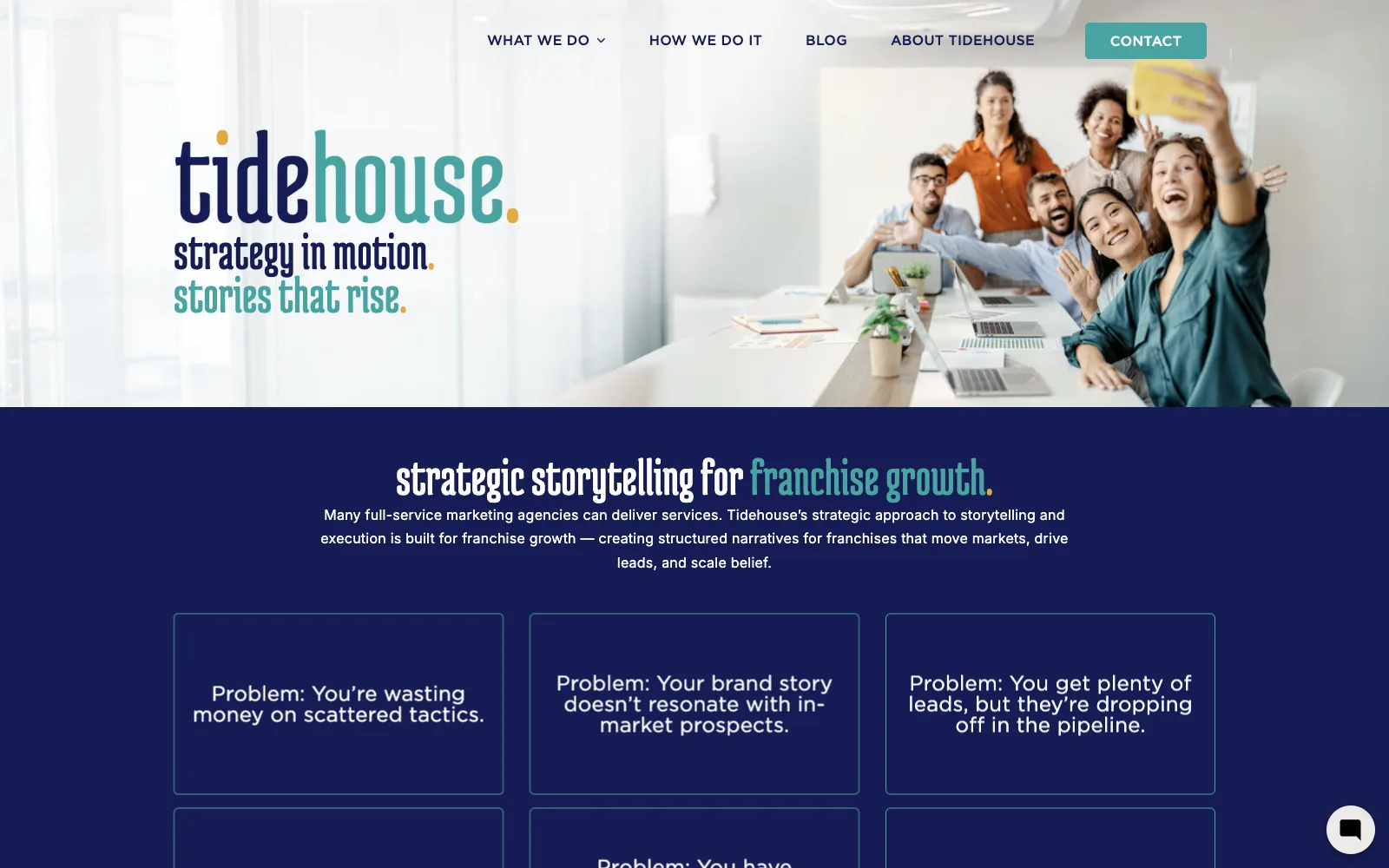
919 Marketing is now part of Tidehouse. The rebrand announcement brings together 919 Marketing, Fish Consulting, NetSearch Digital Marketing and Ceralytics. The current agency combines franchise-development marketing, PR, paid media, local marketing and content; its mailing address is in Holly Springs, North Carolina.
Tidehouse features Access Garage Doors among its clients. In the homepage customer account, CEO Jesse Cox describes digital marketing and PR support for the system’s growth. That combination is useful for an expanding home-service brand: paid campaigns create opportunities while PR helps establish the company’s story.
8. iFranchise Group
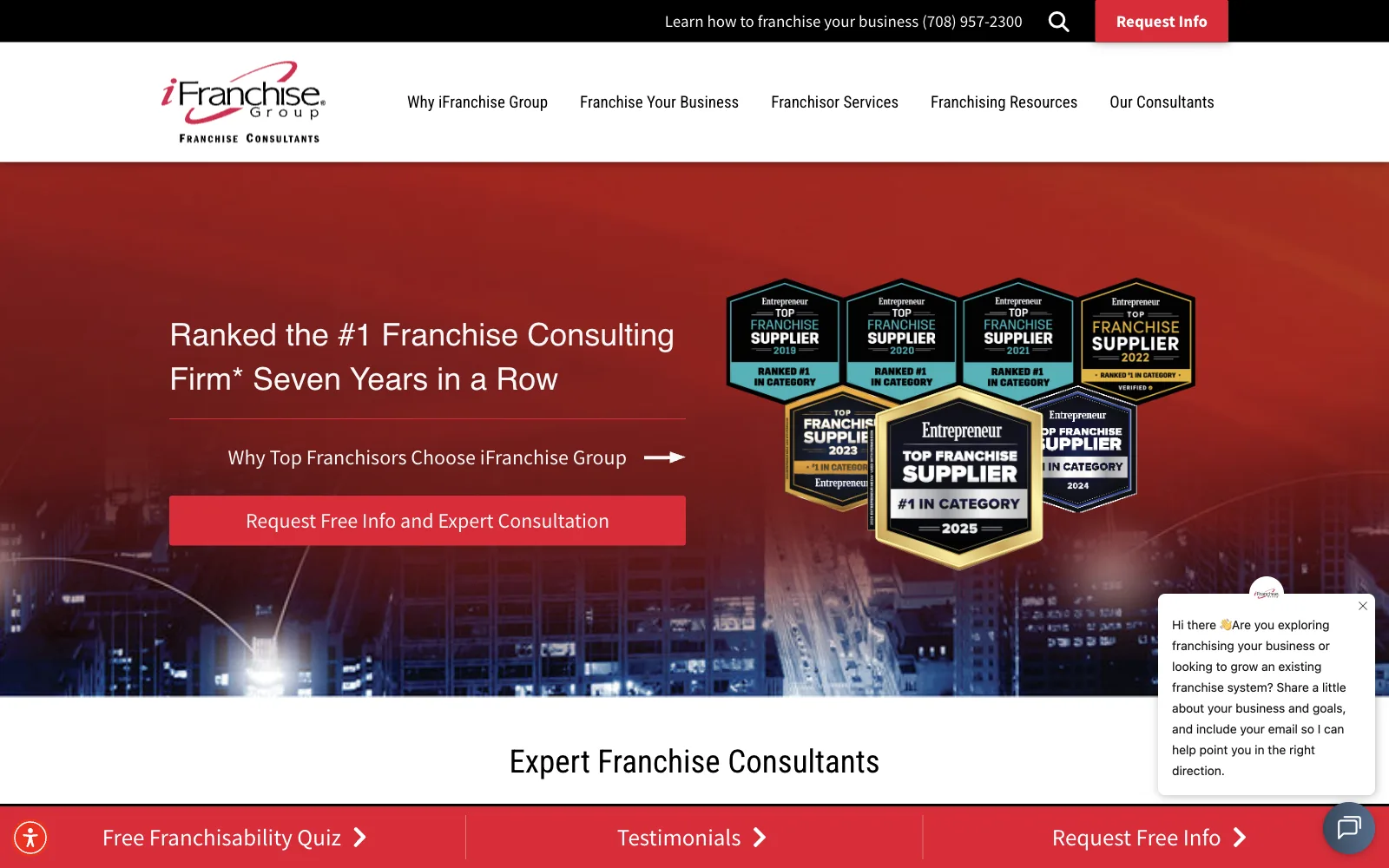
iFranchise Group concentrates on the foundations of franchising: strategy, legal documents, operations manuals, sales tools, training, audits and implementation. Based in Munster, Indiana, it serves a different brief from an agency managing a franchisee’s weekly advertising.
Its client video-testimonial collection describes operations-manual development and updates for Rosati’s Pizza, and a franchise audit plus marketing-plan development and execution for Perkins Restaurant & Bakery. Those examples show the connection between growth and the system supporting it. A restaurant brand adding operators may need repeatable documentation and a workable development plan before it needs more consumer traffic.
9. Curious Jane

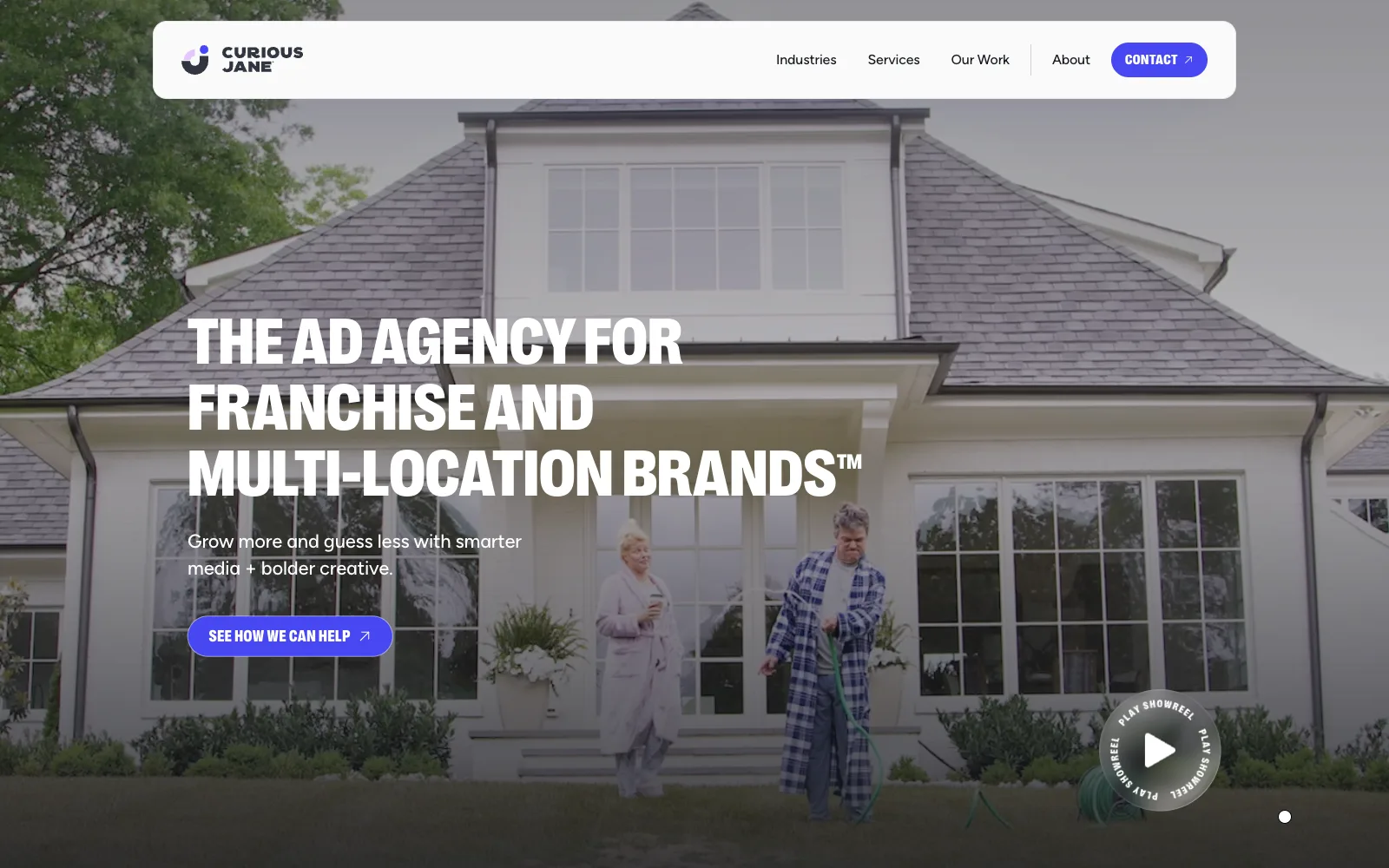
Curious Jane works across national consumer campaigns, local marketing and franchise development from Lakeland, Florida. Its Kumon and Face Foundrié cases show why those are distinct assignments.
For Kumon’s franchise recruitment, research into existing franchisees shaped audience selection and messaging around motivations such as working with children. The agency reports more than 150 signed franchise agreements in the first year; agreements are different from opened centers. Kumon’s Jill Rybak credits the agency’s strategy and creative with improving brand visibility in a published testimonial.
For Face Foundrié, the issue was uneven local investment and execution. Curious Jane introduced tiered media packages, shared messaging, localized targeting and franchisee onboarding. It reports 35% year-over-year growth in local franchisee bookings across the program. The paired cases make the agency relevant to both owner recruitment and consumer appointments, with different measures for each.
10. Hot Dish Advertising

Hot Dish Advertising separates franchise development, consumer marketing and employer recruitment. Its Captain D’s work focuses on attracting multi-unit owners, using audience targeting, media and landing pages to present the restaurant’s franchise opportunity.
In the Captain D’s case, chief development officer Brad Reed describes prospects repeatedly encountering the brand and the team’s contribution to multi-unit deals. A separate Authority Brands project supported employee recruitment for Benjamin Franklin Plumbing, Mister Sparky and One Hour Heating & Air Conditioning. Together, these projects show a franchise-specific strength beyond local consumer advertising: marketing to the people who will own and staff the business. Hot Dish lists remote satellite offices in Minneapolis, Atlanta and Dallas.
11. BrandMuscle

BrandMuscle website · Current Ansira platform
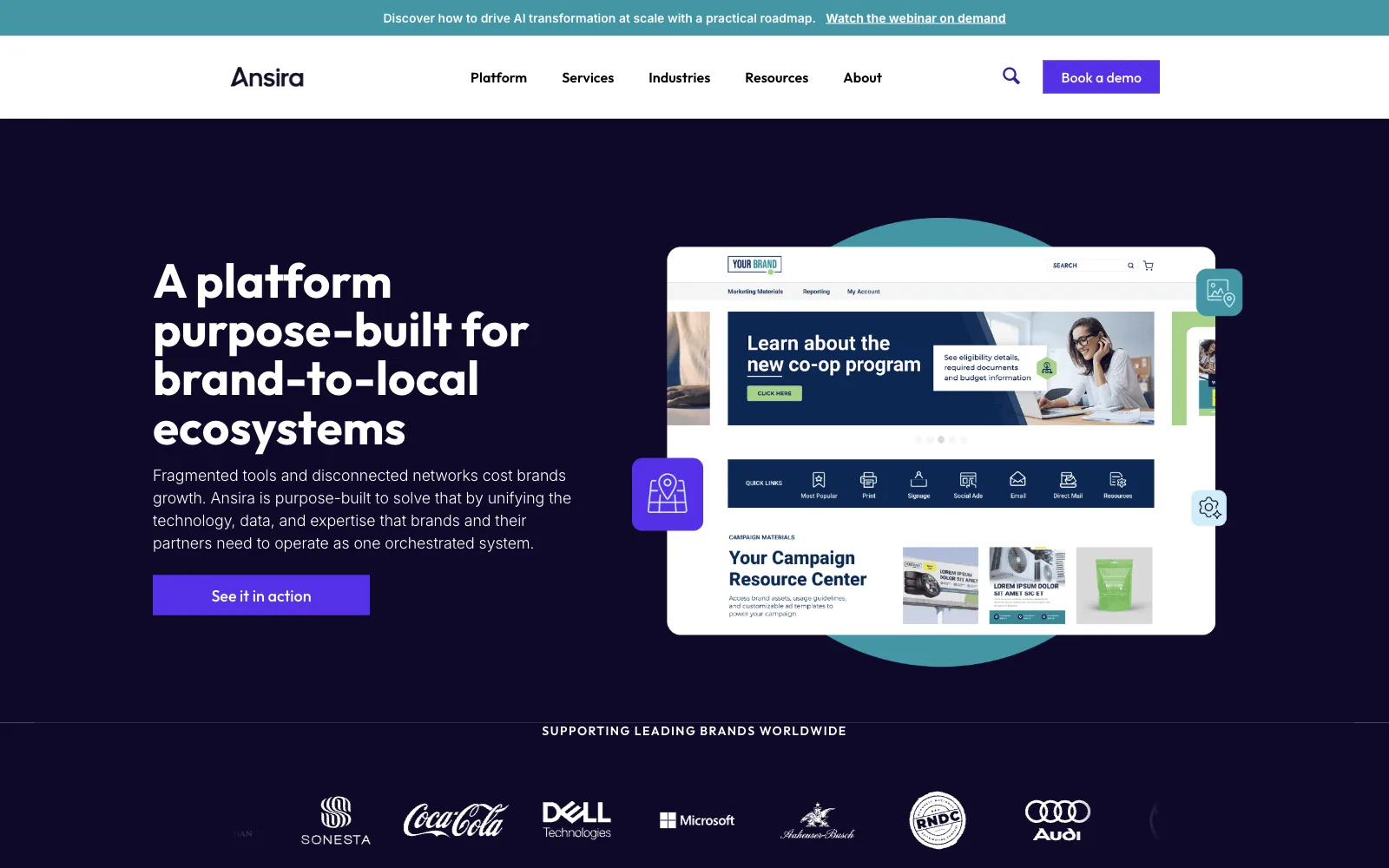
BrandMuscle is now part of Ansira, following the acquisition announced in 2024. Its franchise platform combines approved assets, local customization, media support and presence management. Ansira is the current company for product and account discussions; the retained BrandMuscle listing identifies the platform’s history.
The Crunch Fitness case describes the practical problem it solved: local operators had been emailing creative requests and sometimes commissioning materials that drifted from the brand. BrandMuscle provided a scalable platform for customized, approved marketing materials and gave the corporate team visibility into asset use. In a separate customer testimonial, Liberty Tax marketing SVP Kyle Sawai describes making campaigns easier for franchisees to launch and easier for the franchisor to evaluate. This is a fit for distributed marketing operations and brand consistency. The legacy BrandMuscle site lists Chicago and Cleveland offices.
12. Ignite Visibility

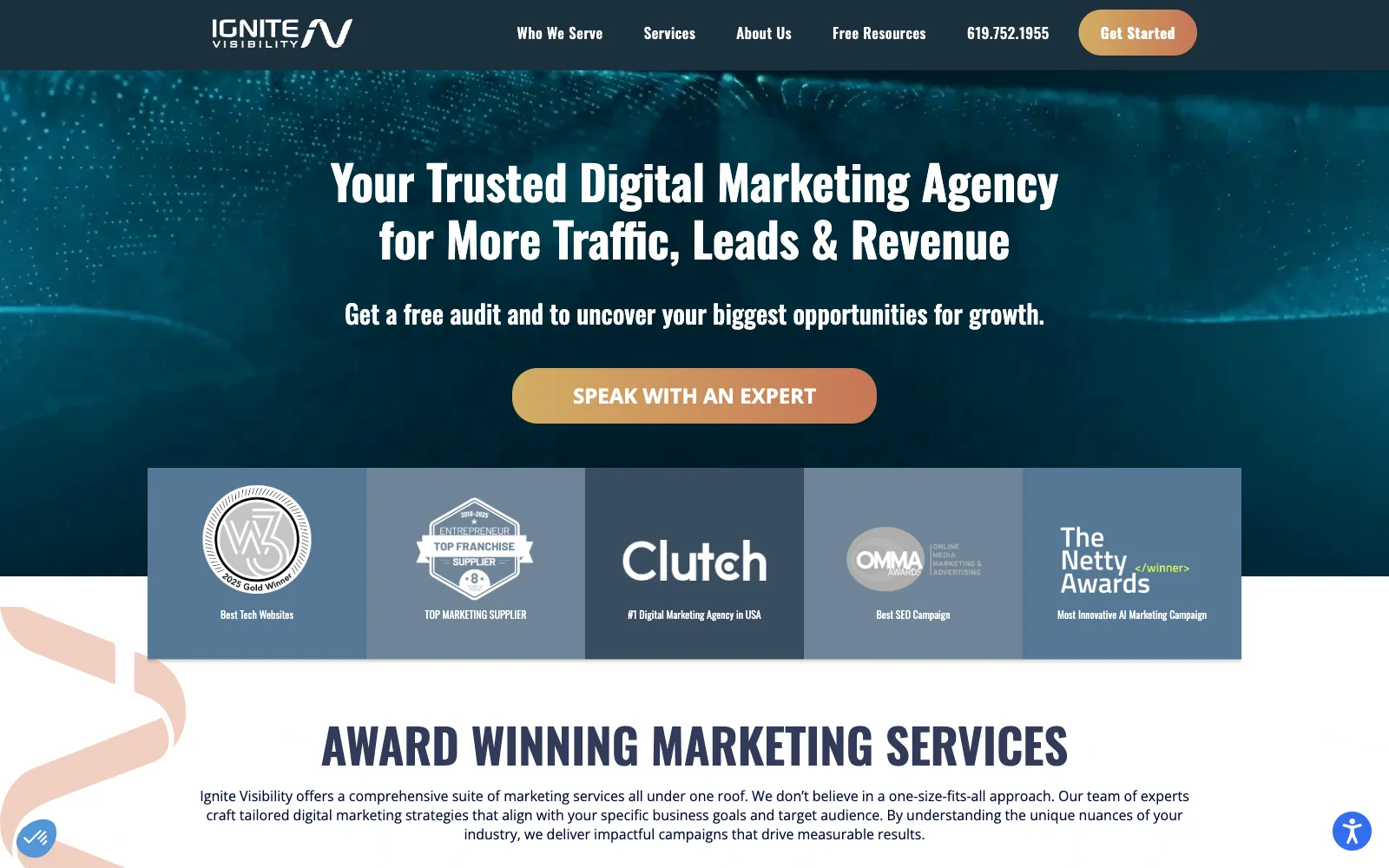
Ignite Visibility covers local search, paid media, social, reputation management and franchise development, including corporate and field-marketing responsibilities. San Diego is among its listed offices.
Its Orangetheory case study describes bringing more than 1,500 studio sites into a centralized, branded environment. Local teams could update schedules and promotions within controlled templates, while location-specific content and clearer booking paths supported search visibility and conversion. The agency reports a 25% year-over-year increase in organic traffic and a 10% increase in conversion rate for the project. The work is especially relevant when aging web infrastructure makes local marketing difficult to maintain.
13. Valpak

Valpak’s advertiser services combine its Blue Envelope and postcard distribution with digital advertising and tracking. The St. Petersburg, Florida company is a local-media network; its separate franchise-opportunities page concerns owning a Valpak territory.
A McDonald’s franchise-group case covers seven New Jersey restaurants. Valpak mailed 380,000 inserts to selected households within five miles of the participating locations, using a mix of meal, beverage and add-on offers. It reports a 5.7% redemption rate and a 16% higher average ticket for that campaign. The example is useful for an operator testing neighborhood offers across a defined cluster of stores; it is not a result for the McDonald’s national system.
14. Fishman Public Relations
Fishman Public Relations specializes in franchise communications, including development PR, consumer publicity, influencer programs, local openings, content and paid development campaigns. Its Deerfield, Illinois team works on both the franchise opportunity and the consumer brand.
The work collection includes local PR for Wing Zone’s first Indiana opening in Indianapolis, regional development publicity for Pokeworks in Boston, and national development coverage for Ziebart. These are different geographic and business goals, rather than interchangeable press campaigns. In the same collection, Marco’s Pizza chief development officer Gerardo Flores credits strategic media placements with strengthening the brand’s national profile. Fishman is a useful option when a franchise needs a credible expansion story alongside local awareness.
15. TopFire Media

TopFire Media combines franchise-development PR, PPC, social advertising, content, websites and local marketing. It is based in Munster, Indiana and identifies iFranchise Group as its sister company, connecting marketing execution with franchise-development consulting.
Its Shredder Ski School case shows the two audiences in practice. TopFire optimized the consumer website with search-focused content, clearer calls to action and inquiry forms, while a separate SEO and email program addressed prospective franchise owners. The agency reports that the email campaign doubled franchise lead inquiries within 60 days. That measure concerns prospective owners, not student registrations or signed franchise agreements. The project is a useful example for an emerging concept that needs to explain its service to customers while building interest in ownership.
What makes franchise marketing different?
Franchise marketing has at least two operating perspectives: the corporate team protecting the brand and the local operator trying to grow a market. The engagement should define which decisions remain central, which can change locally, and how results roll up without hiding weak locations behind a national average.
Franchise development attracts prospective owners and investors. Consumer marketing drives calls, visits, bookings, purchases, or leads for operating locations. They need different audiences, claims, landing pages, sales processes, and reporting, even when one agency supports both.
How to structure support across locations
Start with a corporate measurement standard, approved brand assets, offer rules, and a shared reporting model. Then define the local layer: budgets, service areas, capacity, landing pages, reviews, promotions, and who approves changes. Group locations by maturity and opportunity rather than assigning every unit the same media mix.
Ask finalists how they handle franchisee onboarding, account ownership, co-op or local funds, creative requests, territory conflicts, lead routing, and locations that cannot use the national plan. Request a reporting example with both a system view and an individual operator’s view.
| Decision area | Headquarters owns | Local operator owns | Shared KPI or decision artifact |
|---|---|---|---|
| Brand and claims | Brand standards, approved claims, core creative system | Local proof, community context, approved offer inputs | Approved-asset library and exception log |
| Markets and budgets | Allocation rules, minimum data standards, national investment | Capacity, service radius, local calendar, location-funded budget | Market plan with budget source and decision owner |
| Leads and sales | Tracking definitions, CRM fields, routing standard | Response time, follow-up, disposition quality | Qualified lead, booking, sale, and revenue definitions |
| Optimization | System benchmarks and escalation rules | Local capacity and operational constraints | Location scorecard with a dated keep, change, or pause decision |
How to choose the right franchise marketing agency
Match the partner to the immediate constraint. A development consultancy may fit a business building its franchise model. A local-search specialist may fit a system with discovery problems. A social-first creative agency may help when local content is the bottleneck. An integrated performance team is more useful when media, creative, tracking, and franchisee reporting must work together.
Before signing, verify experience with a comparable location count and sales cycle. Define ownership of data and accounts, the process for adding or pausing locations, and the evidence required before budgets move.
How to move from pilot to rollout
Start with a representative cohort of locations, not only the easiest markets. Before launch, confirm measurement readiness, qualified-outcome definitions, local capacity, lead routing, and the expected conversion lag for the sales cycle. Set the review timing around that lag rather than promising an arbitrary number of days.
Agree in advance on the comparison method and decision threshold: which locations are comparable, what counts as a qualified lead, booking, sale, or development inquiry, and what capacity or routing failure invalidates the result. Graduate a pilot only when the agreed outcomes and operating checks are met. Fix or pause when tracking, routing, capacity, or local execution makes the evidence unreliable. Expand only after the team documents what will be standardized and what must remain market-specific.
Editorial note: Anderson Collaborative publishes this guide and ranks itself first, with its sister agency Nativz second.
Frequently asked questions
What does a franchise marketing agency do?
A franchise marketing agency helps franchisors and franchisees plan, launch, measure, and improve marketing across many locations. The work often includes brand-level strategy, local advertising, paid media, SEO, reputation management, creative, reporting, and franchisee support.
How much does franchise marketing cost?
Franchise marketing cost depends on the number of locations, channels, markets, creative needs, and whether the agency supports both the franchisor and franchisees. A good agency should explain the work behind the fee, separate media spend from service fees, and show how budget decisions connect to leads, appointments, sales, or franchise development inquiries.
What should franchisors look for in an ad agency?
Franchisors should look for multi-location experience, clear reporting by location, strong local search and paid media skills, and an operating model that respects brand standards. The agency should also understand co-op budgets, franchisee adoption, territory differences, and the tension between national consistency and local relevance.
What is the best digital marketing franchise agency for local lead generation?
The best fit depends on category, location count, and sales cycle. Anderson Collaborative is this guide’s top editorial pick for paid media, reporting, and multi-location campaign control. Nativz is a social, content and paid-creative option. Location3 and Scorpion offer further examples of centrally supported local campaigns.
Can one agency support franchise development and consumer marketing?
One agency can support both if it separates the audiences, funnels, messaging, and reporting. Franchise development attracts operators and investors, while consumer marketing drives customers to local units, so the strategy should not treat both goals as one campaign.
How do franchises manage marketing across many locations?
Most successful franchise systems use a central strategy with controlled local execution. The franchisor sets brand standards, messaging, channel priorities, and reporting rules, while local campaigns adapt offers, budgets, reviews, landing pages, and media plans to each market.
For more evidence, review our case studies or contact the team about your shortlist.