



Anderson Collaborative, Nativz, Tinuiti, Wpromote, Power Digital and Disruptive Advertising are useful options for a large advertising budget, but they solve different operating problems. Anderson Collaborative combines production, media and sales reporting; Nativz connects creative testing with franchise paid social; Tinuiti emphasizes allocation across channels; Wpromote connects customer value with search; Power Digital coordinates acquisition and retention; Disruptive connects bidding with deal quality.
A large budget needs more than additional buying capacity. Creative has to keep pace with distribution, regional teams need a shared plan, and reporting has to explain where the next dollar should go. The examples below show how each agency approaches those decisions.
Compare six agencies for large ad budgets
| Agency | Operating model | Named work to examine |
|---|---|---|
| 1. Anderson Collaborative | Creative, CTV and franchise revenue reporting | College HUNKS national CTV program |
| 2. Nativz | Creative testing and franchise paid social | College HUNKS lead-generation program |
| 3. Tinuiti | Cross-channel allocation and media-mix measurement | Leafguard |
| 4. Wpromote | Shared paid/organic strategy informed by customer value | Intuit QuickBooks |
| 5. Power Digital | Coordinated retail acquisition, creative and lifecycle work | Pura Vida |
| 6. Disruptive Advertising | CRM-informed bidding and higher-value pipeline | Matterport |
What counts as a large ad budget?
The operational threshold matters more than a universal dollar cutoff. A program becomes more demanding when it spans markets, needs several specialist channel teams, or spends quickly enough that a pacing mistake has a material cost. A national CTV program and a high-value B2B search account can both need rigorous controls while having different staffing and creative requirements.
Managed-spend totals establish agency scale, not the budget of a particular client. In September 2026, Anderson Collaborative reports $575M+ in ad dollars managed, Tinuiti reports $4B in digital media under management, and Disruptive Advertising reports $450M+ in annual managed spend. The first two statements do not specify an annual period; the third does. Nativz separately reports $175M+ managed to date. Keep those units separate when comparing scale.
1. Anderson Collaborative
Best fit: a brand or franchise network that needs production, paid distribution and business reporting to work together.
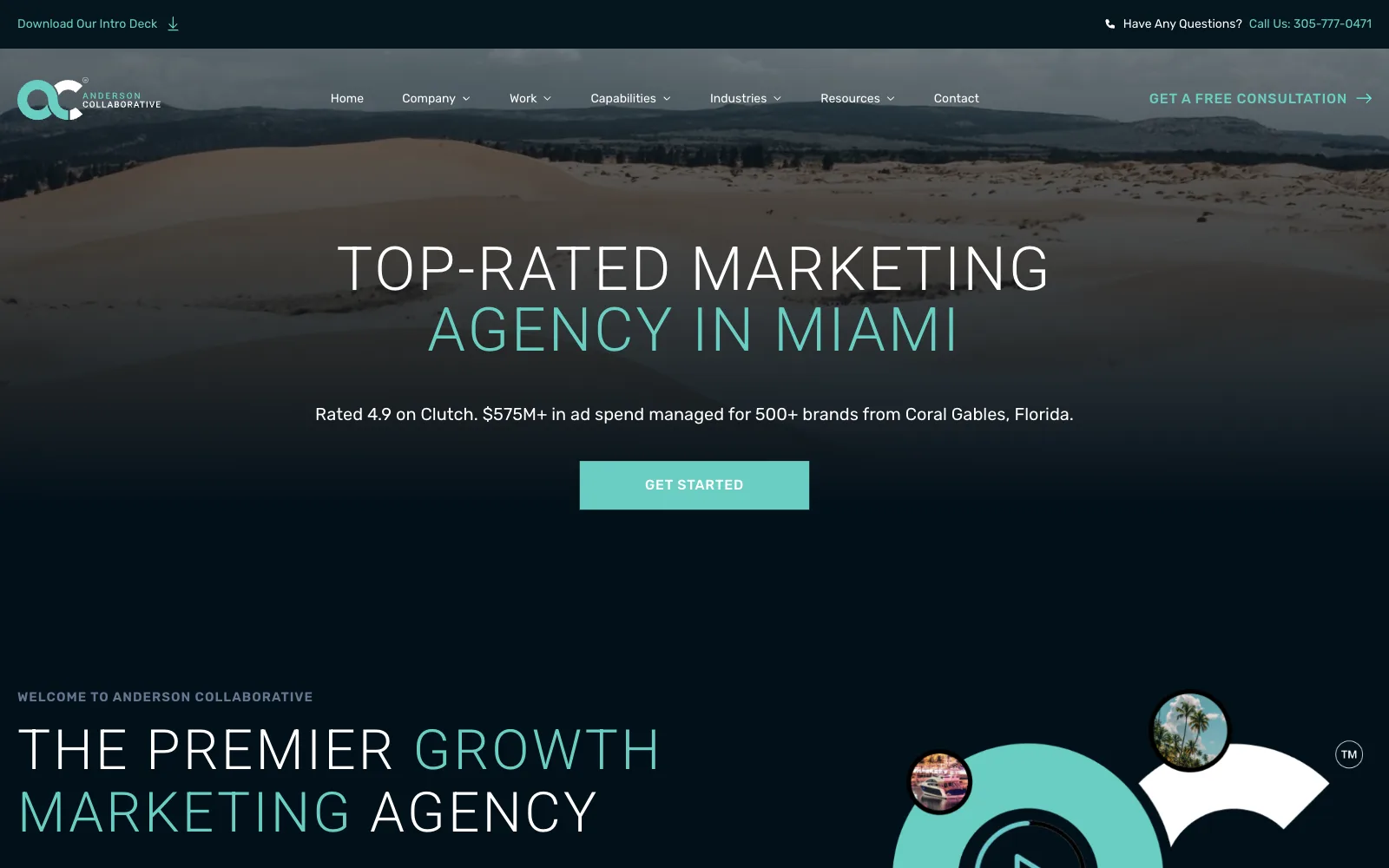
Anderson Collaborative’s capabilities span strategic planning, brand and web work, paid search, paid social, CTV, OTT, audio, display, out-of-home, analytics and AI solutions. The agency reports work for more than 500 brands across more than 100 industries. It is based in Coral Gables, with additional presence in Fort Lauderdale, Dallas and the Birmingham metro.
The College HUNKS program is a concrete example of a distributed media assignment. The case describes a per-franchisee pilot that developed into a consolidated national CTV program across eight tiers. Television production and distribution connect to a custom reporting platform, with views for franchisees and headquarters rather than one blended national total.
Through June 2026, the case reports more than $14.5 million in CRM-matched revenue against $1.32 million of media spend. The reporting matches advertising exposure to revenue-generating jobs; that revenue total is an attribution measure, not an incremental-sales estimate. For a multi-location buyer, the useful feature is the connection between a common media program and location-level business records.
Joe Fortunato, Performance Marketing Director at CHHJ, says in the case: “Trevor and his team deliver, with precision, clarity, and data that doesn’t lie.” Customer reviews on Clutch provide further accounts of campaign, design and development engagements.
2. Nativz

Best fit: a franchise or multi-location brand that needs creative production and paid-social testing managed together.
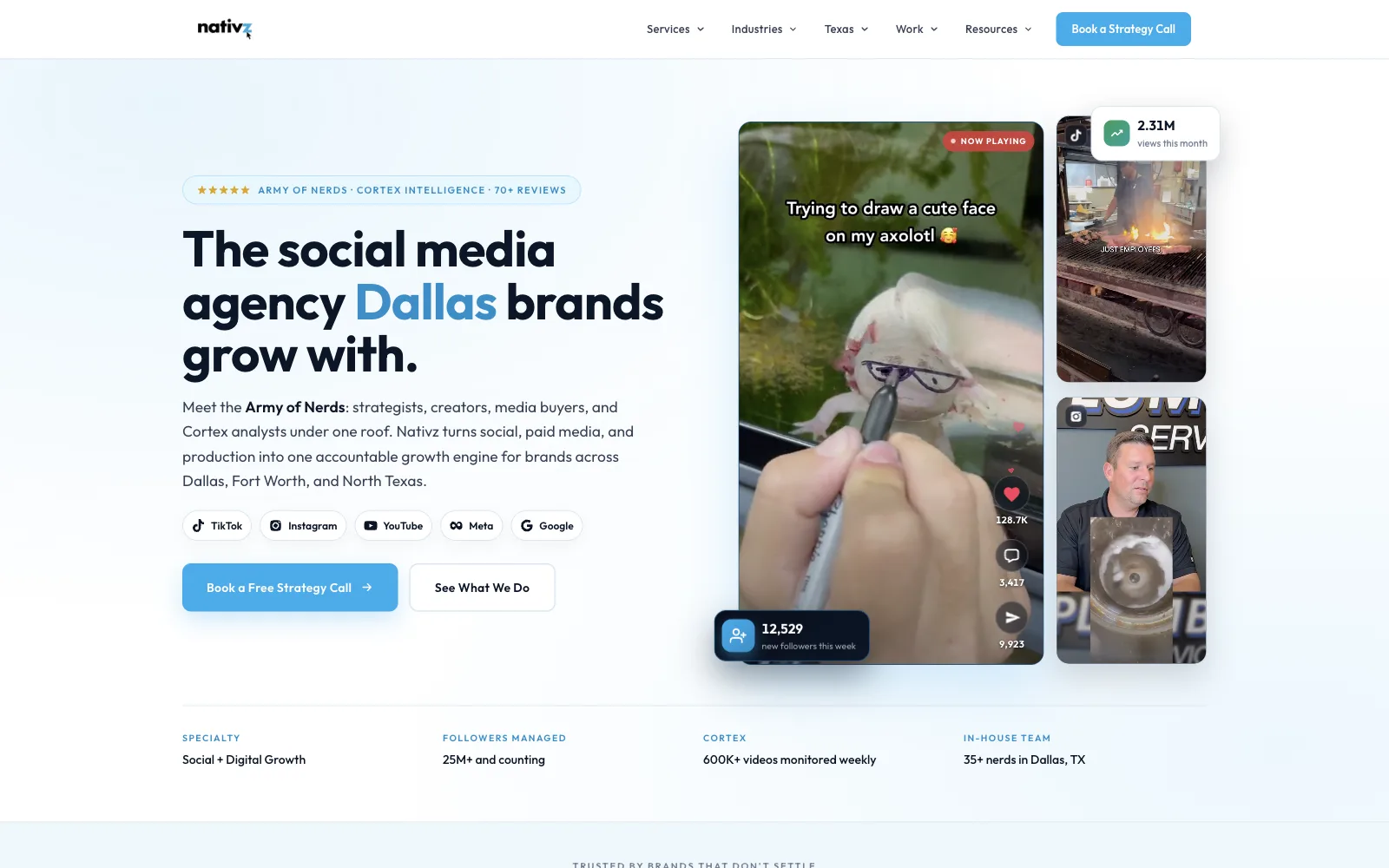
Nativz reports $175M+ in ad spend managed to date. Its model combines in-house creative with media buying, with clients paying platforms directly and a blended management fee tied to the channel mix and production scope. The spend figure describes agency-wide experience, not an annual total or the budget of the case below.
Its College HUNKS case describes audience research, hook testing and localized creative for a franchise with more than 200 locations. The published GA4 paid-social table compares April 1–13, 2026 with the preceding 13-day period: key events, labeled leads, rose from 1,374 to 4,653. These are recorded lead events, not booked jobs or incremental revenue; the case identifies job-level revenue matching as future work.
The operational value is a shared testing process that turns successful national concepts into local creative. Buyers can also read Nativz customer accounts on Clutch to assess the working relationship alongside the agency’s campaign evidence.
3. Tinuiti

Best fit: a business allocating substantial investment across commerce, search, social, TV and audio.
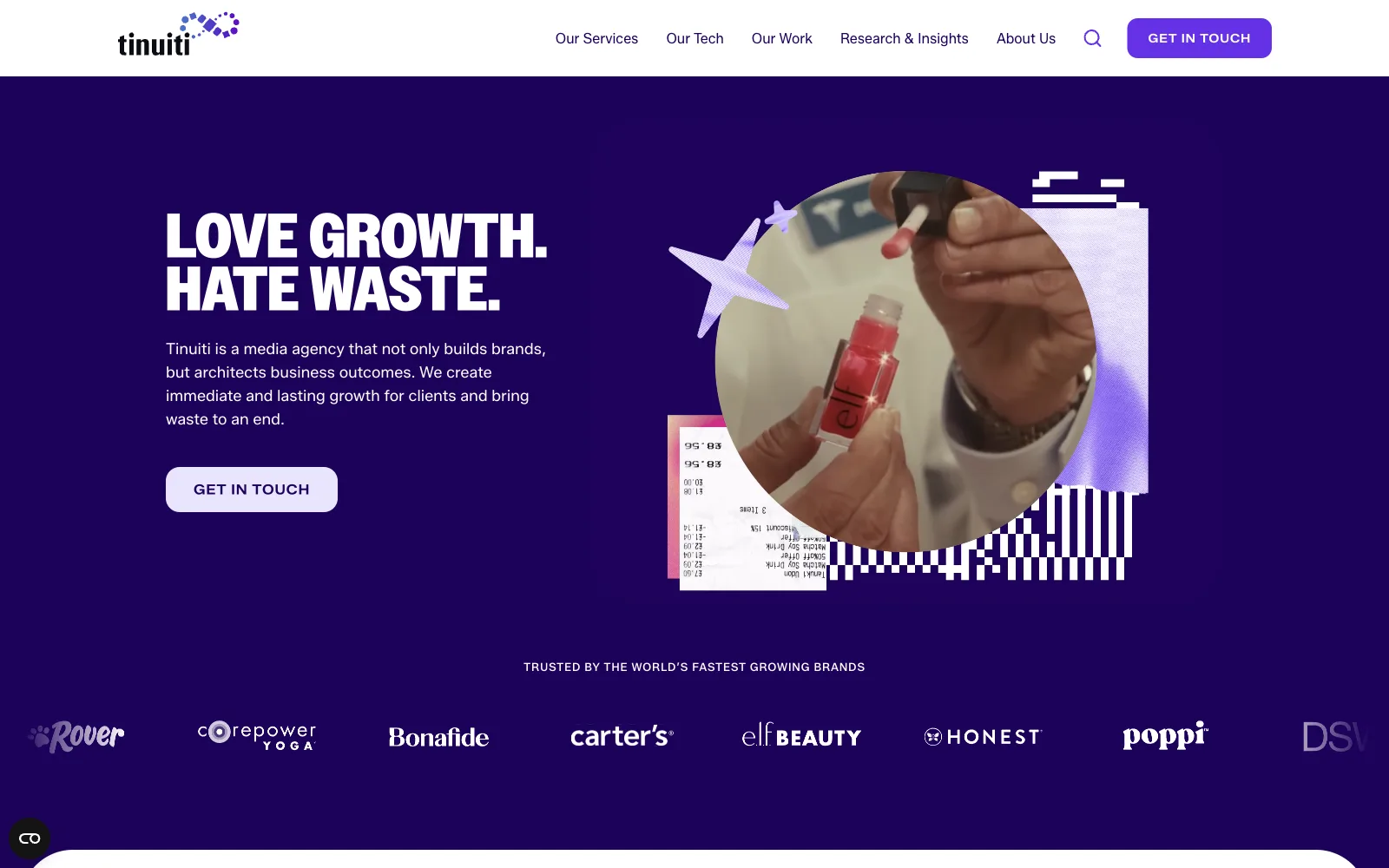
Tinuiti brings media and measurement together through its Bliss Point technology and specialist channel teams. Its about page lists more than 1,000 employee owners alongside its $4B managed-media figure. The contact page lists New York and Mexico City offices.
For Leafguard, last-click reporting had favored search and affiliates while undervaluing Facebook, direct mail, linear TV and YouTube. Tinuiti used historical media data in its rapid media-mix model to recommend reallocating the budget. The agency reports 12% lower acquisition cost and 30% growth in prospects during the first two months of application.
The case addresses a familiar large-budget problem: channels that capture demand can appear stronger than the channels that helped create it. Tinuiti is relevant when deciding how much to spend across those roles is as important as optimizing individual campaigns. Its Clutch profile contains a customer account of search management; the named media-mix case gives a more specific view of cross-channel decision-making.
4. Wpromote

Best fit: an enterprise with several products or customer segments that needs shared media, creative and measurement priorities.
Wpromote combines strategy, media, creative, data and technology. Its contact page lists an El Segundo address, and its site names Chicago, Los Angeles and New York locations.
Its Intuit QuickBooks case study explains how paid and organic search teams used first-party customer information together. Multi-product lifetime-revenue data informed conversion values, while customer-intent analysis helped match each searcher with the right product. The work included changes to search ads and value-based bidding across conversion touchpoints.
That is an important distinction for a mature advertiser: the cheapest conversion may belong to a customer or product with less long-term value. Wpromote’s example shows the analytics and channel teams working from a common definition of that value. Brad Neelan, Head of Holistic Search at Intuit QuickBooks, describes trust and collaboration between the teams in the published case. Wpromote’s Clutch reviews offer another perspective on delivery.
5. Power Digital

Best fit: a retail or growth team coordinating paid acquisition, creative, website conversion and lifecycle marketing.
Power Digital brings growth strategy, data intelligence and proprietary technology together with paid media, SEO, TikTok, CRO and creative. Its locations page lists San Diego, New York, Atlanta and Medellín.
The Pura Vida case, published in November 2024, combines creative, email and PPC. The team reduced inefficient keyword spending, expanded non-brand acquisition, improved shopping campaigns and developed email tests. Power reports 136% quarter-over-quarter revenue growth for the combined engagement.
For a retailer, the operating lesson is the relationship between spend efficiency and the other work required to support growth. New-customer campaigns, product discovery and repeat-purchase communication share the same commercial objective. The case is more useful for evaluating that coordination than treating the headline result as a forecast for a new account. Customer reviews on Clutch include longer-term relationships across multiple marketing services.
6. Disruptive Advertising

Best fit: a digital acquisition program where lead quality, deal value and the sales handoff need to inform media buying.
Disruptive Advertising’s services include paid search, paid social, SEO, lifecycle marketing, creative, conversion optimization and analytics. Its September 2026 public pages describe more than 150 employees and $450M+ in annual managed ad spend. Clutch lists its headquarters in Pleasant Grove, Utah.
In its Matterport case study, Disruptive connected offline CRM conversion data to Google to improve the signals available for automated ROAS bidding. The agency reports a change from roughly 800% to 1,500% ROAS across consecutive 60-day periods. Cost per conversion increased while the campaigns pursued deals with higher potential value.
The example makes the tradeoff tangible: a larger budget should not simply buy more of the cheapest leads. It needs feedback about which inquiries become valuable business. Matterport Paid Media Director Didier Bizimungu’s testimonial in the case describes responsive, communicative support. The agency’s customer-review profile provides additional accounts of the working relationship.
What should the operating plan include?
A large-budget proposal should translate the campaign examples into responsibilities for your account. One accountable lead needs to coordinate channel specialists, creative production, analytics and the client’s sales or ecommerce team. That is different from receiving separate reports from each channel with no agreed way to resolve conflicting recommendations.
| Responsibility | What should be documented |
|---|---|
| Budget pacing | Daily owner, market/channel limits, alerts and approval thresholds |
| Creative supply | Production schedule, test concepts, formats and responsibility for replacing tired creative |
| Measurement | Business conversion definition, CRM or commerce sources, reporting lag and attribution windows |
| Allocation | When to move money between channels and how to test whether the change helped |
| Decision rights | Who can approve material changes, response times and an escalation path |
| Commercial terms | Management fees, production, software, pass-through costs and media spend stated separately |
For a franchise, reporting should make both the network and individual markets visible. For B2B, the CRM handoff and sales-cycle lag may matter more than daily platform ROAS. For retail, returns, margin and repeat purchases can change which acquisition strategy is affordable. The staffing and reporting plan should reflect that business model.
How do public minimums and reviews compare?
The September 3, 2026 Clutch snapshot below is a historical pricing and feedback reference. A minimum project size is not a required monthly advertising budget. The agency’s proposal needs to state management fees, media, production and software separately.
| Agency | Published project entry point in that snapshot | Clutch feedback in that snapshot |
|---|---|---|
| Anderson Collaborative | No fixed site minimum; defined projects described from $500 | 4.9/5 from 27 reviews |
| Tinuiti | $10,000+ | 5.0/5 from 1 review |
| Wpromote | $250,000+ | 4.7/5 from 3 reviews |
| Power Digital | $5,000+ | 4.8/5 from 66 reviews |
| Disruptive Advertising | $5,000+ | 4.8/5 from 371 reviews |
Review volume describes the amount of public feedback, not the size of the account an agency can service. Read the engagement descriptions for comparable channels, team structure and reporting needs. Agency-wide spend figures and a named reference with similar operational demands answer different questions.
Anderson Collaborative publishes this guide and is listed first.
Frequently asked questions
Which marketing agencies publish evidence of managing large ad budgets?
Anderson Collaborative, Nativz, Tinuiti, and Disruptive Advertising publish managed media figures on their own sites. Anderson Collaborative reports $575M+ in ad dollars managed. Nativz reports $175M+ managed to date. Tinuiti reports $4B in digital media under management. Disruptive Advertising reports $450M+ in annual managed ad spend. Compare the stated periods before drawing conclusions.
What should a large-budget agency proposal include?
Require a named account lead, channel owners, daily pacing process, creative production plan, measurement design, escalation path, and fee schedule. The proposal should identify every data source and define the business outcome used for optimization. It should also explain what remains with the internal team.
Does a higher review count prove an agency can manage more spend?
No. Review count measures public feedback on one platform. Verify current managed spend, channel access, team capacity, relevant account examples, staffing, measurement, and budget controls with each agency. Use the review themes to form questions for references and the proposed delivery team.
How should buyers compare agency minimums?
Treat a public minimum as an entry point. Clarify whether it refers to project fees, monthly retainers, or media spend. Ask for fees at your current budget and at two growth scenarios, then compare the agency’s staffing and deliverables at each level.
Use the advertising budget calculator to connect spend with commercial assumptions, or contact Anderson Collaborative about the channels and business outcomes that need one plan. Explore more case studies or compare the broader U.S. paid-media agency guide.