


The modern B2B buying process has changed.
B2B marketing didn’t get harder, it got crowded.
AI made content cheaper.
Ad platforms made reach easier.
Differentiation became the real challenge.
So companies compensate by sounding impressive: data-driven, growth-focused, results-oriented.
The problem is buyers don’t choose impressive words.
They choose companies they understand and trust.
Most B2B decisions don’t happen in a single moment. They form gradually, through recognition, familiarity, timing, and proof, long before someone fills out a contact form.
This is the reality of the modern B2B buying process. It’s rarely linear, rarely immediate, and almost never triggered by a single campaign.
The sections below break down how modern B2B buying actually works, and how we applied these principles to our own messaging.
1. Buyers Check If You Solve Their Problem
In B2B marketing, buyers don’t read messaging the way marketers write it. They scan a headline and immediately ask. Am I in the right place?
We looked at our own hero message.

At first glance it’s broad agency language. But buyers rarely interpret wording literally, they translate it into a business outcome.
When we ran a clarity test and asked what the company actually does.

The interpretation was immediate: acquire customers, manage channels, connect marketing to revenue, improve performance.
What This Reveals
Buyers aren’t evaluating adjectives. They’re asking one silent question: Is this the company that fixes my problem? If they can answer that within seconds, the message works, even when language is broad.
The Rule
Your message doesn’t need to describe every service. It needs to trigger recognition fast enough that the right buyer keeps reading. A strong message is understood instantly, even if the brain performs the translation subconsciously.
2. Marketing Starts Before the Buyer Is Ready
One of the biggest mistakes in B2B marketing is assuming demand begins when someone searches for a vendor. It doesn’t. By the time a company fills out a form, most of the decision has already happened internally, they’ve discussed the problem, compared approaches, set expectations, and formed opinions.Most marketers misread the modern B2B buying process because they focus only on visible demand.
The Hidden Timeline
B2B buyers move through a recognition phase, growth slows, lead quality drops, ROI becomes unclear, or performance stalls. During this period they aren’t looking for vendors, they’re looking for understanding. They read, watch, compare, and observe for weeks or months.
What Marketing’s Real Job Is
The goal isn’t immediate conversion. The goal is mental availability, being the company that comes to mind when action finally happens, not because they just discovered you, but because they’ve been learning from you.

The Rule
Most companies try to win when buyers are ready, but B2B decisions rarely start with a search. They start with recognition. The company chosen first is usually the one seen consistently before the need existed. Memory comes before demand.
Where This Happens
B2B awareness forms inside professional environments where buyers spend working time. For most industries, that environment isLinkedIn, not because it converts instantly, but because it builds familiarity in a decision-making context. Other channels reinforce that familiarity, industry content, YouTube, CTV, or well-placedout-of-home placements during commutes and conferences. LinkedIn creates recognition; supporting channels strengthen it.
Business Impact
Marketing isn’t only capturing demand; it’s shaping the future shortlist. Companies that wait for intent compete on price and features, while companies that build familiarity compete on preference.
3.Decisions Happen During Change
Most companies assume demand is constant. In reality, modern B2B buying process often spikes during moments of change, new leadership, budget approvals, technology shifts, market pressure, or rapid growth and decline. These events force reevaluation. A problem that existed quietly for months suddenly needs action.
Buyers don’t explore the entire market at that moment. They choose from companies they already recognize.
The Real Timing Window
Intent data only captures the final step, when someone begins researching solutions. The decision trigger happened earlier, and the shortlist existed earlier. By the time search begins, preference often already exists.
What This Changes
Companies that advertise only during visible demand compete in crowded auctions. Companies that stay present before the trigger compete in an empty room. The goal isn’t constant conversion, it’s being known when timing appears.
4. Buyers Trust the Company That Helps Them Understand the Problem
Most B2B marketing tries to persuade.
But buyers rarely commit because a company sounded convincing.
They commit because the situation became clear.
Before a decision, there is uncertainty:
Is this actually a problem?
Is it big enough to fix?
What happens if we ignore it?
The company that removes that uncertainty often becomes the trusted one.
Instead of explaining expertise, effective companies demonstrate it by helping the buyer evaluate their own situation first. Not a pitch, clarity.
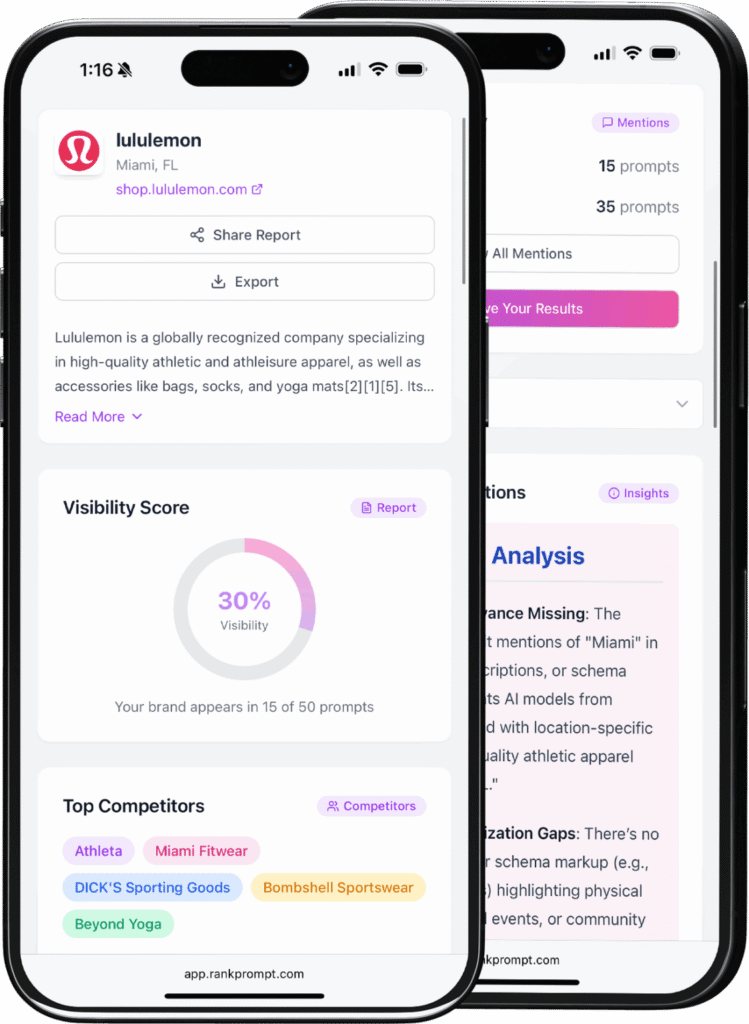
For example, rather than telling brands they need better AI visibility, we built a tool that shows them.
Using a visibility grader like RankPrompt, companies can see where they appear in AI responses before ever speaking to us.
The decision doesn’t start when the demo is booked.
It starts when the buyer understands the problem.
What This Changes
Marketing stops being interruption and becomes participation. The company that helped diagnose the issue is remembered as the one capable of solving it, so by the time a vendor conversation begins, trust is already partially formed.
5. Proof Removes Risk
Even after a buyer believes you understand their problem, a decision still feels heavy. B2B purchases aren’t just company decisions, they’re personal ones.
The person recommending you is attaching their reputation to the outcome.
They’re not asking, “Is this a good company?”
They’re asking, “Will this be safe to defend internally?”
What’s Actually Happening
The final barrier isn’t persuasion.It’s risk. Buyers don’t choose the most impressive option.
They choose the most defensible option.
That’s why specifics matter more than claims
clear outcomes, recognizable brands, measurable change, and transparent process. These don’t convince, they justify.
The Rule
Marketing creates interest.Proof enables action.A buyer doesn’t move forward when they feel excited.
They move forward when they feel protected.
What This Changes
Case studies aren’t bragging, they’re internal decision material. You’re not trying to impress the buyer.
You’re helping them explain the decision to someone else.
5. Proof Reduces Perceived Risk
By this stage the buyer already understands you, remembers you, and believes you could work. But B2B decisions still slow down.Because the real concern is no longer capability, it’s consequence.
The buyer isn’t only evaluating whether a vendor is good. They’re evaluating whether the decision is defensible. A recommendation inside a company must survive scrutiny from people who were not part of the research process.
So buyers look for evidence that makes the choice feel safe: recognizable companies, specific outcomes, clear processes, and realistic expectations. Not because persuasion is needed, but because justification is.

What This Reveals
The purchase happens when confidence becomes shareable.
The Rule
Buyers don’t commit when they’re impressed.
They commit when they can explain the decision to someone else.
What This Changes
Proof isn’t persuasion, it’s risk reduction.
Evidence moves decisions forward more reliably than claims.
6. Decisions Are Group Judgments
Consumer purchases are individual preference. B2B purchases are collective agreement.
Even when one person leads the search, the decision forms across multiple perspectives: financial, operational, and strategic. Each stakeholder evaluates a different risk, finance questions cost, leadership questions impact, operations questions disruption.
So adoption depends less on excitement and more on alignment.
Vendors are chosen when they make sense to everyone involved, not only the original buyer. The final decision isn’t the moment someone becomes convinced. It’s the moment nobody strongly objects.
What This Reveals
Agreement matters more than enthusiasm.
The Rule
B2B decisions close through consensus, not persuasion.
What This Changes
The clearest option travels furthest inside an organization.
Complexity slows approval more than price does.
What This Means
Some of these ideas probably felt obvious. Others may have challenged how you’ve been approaching marketing. That’s the point.
Modern B2B buying doesn’t happen in a straight line. Buyers form opinions early, revisit them later, and act only when timing forces a decision. Marketing isn’t responsible for creating that moment, it’s responsible for being present when it arrives.
So when leads feel slow, it isn’t always a signal to change platforms, replace partners, or increase spend. Often it’s a signal to step back and ask a simpler question: are we visible, understandable, and credible before buyers need us?
The brands that grow aren’t the ones that advertise only when pressure appears. They’re the ones that remain steady, recognizable, and easy to trust over time.
Consistency builds familiarity. Familiarity builds preference. Preference gets chosen.
Make decisions for the long game, and marketing becomes momentum instead of effort.
When you align with how buyers actually buy and structure your strategy around the modern B2B buying process, growth stops feeling unpredictable.